
Machine Learning

|
This DIY ESP32-S3 Wi-Fi Sensing System Detects People and Tracks Movements Without a Camera at 80% Accuracy Better Stack from Youtube recently used an open-source project called RuView and explored how Wi-Fi signals can be used to detect human presence and movements without relying on a camera. He describes how Wi-Fi signals change as he travels through a room and bounce off walls, furniture, and people. When someone moves, their body alters the signal's strength and phase across different frequency… |
|
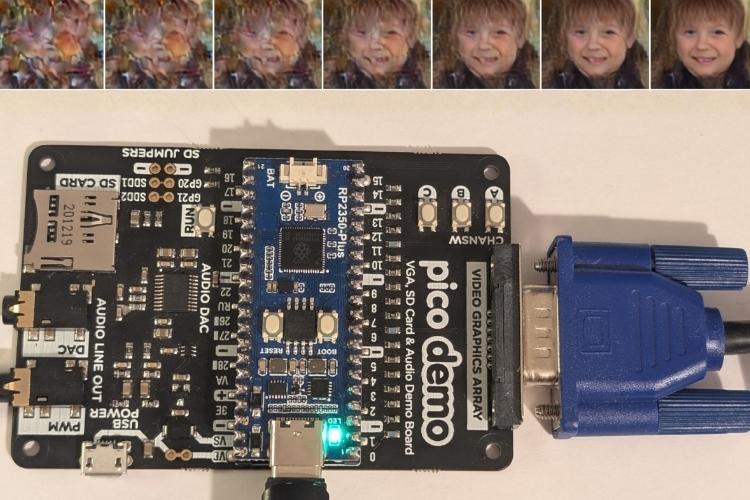
He Trained a 2.9M-Parameter AI Image Generation Model, Ran It on a $1 RP2350 Chip and Open-Sourced the Project Generative AI image models usually require powerful processors and large amounts of memory, but a new project demonstrates that image generation can be pushed onto a small microcontroller. Tim, from Tim’s Blog, has implemented a generative AI image model on the RP2350, the microcontroller used in the Raspberry Pi Pico 2. Running on a Waveshare RP2350-Plus board, the system can generate 128×128… |

|
Arduino VENTUNO Q Opens Pre-Orders at $299 with Dual-Brain Architecture and 40-TOPS AI Arduino has opened pre-orders for the VENTUNO Q, a new edge-AI development platform built around Qualcomm’s Dragonwing IQ8 processor. The board is aimed at developers building robotics, computer vision, industrial automation and other systems where AI needs to interact with the physical world. According to Ankit Singh, Arduino’s India lead, the introductory pricing… |
|
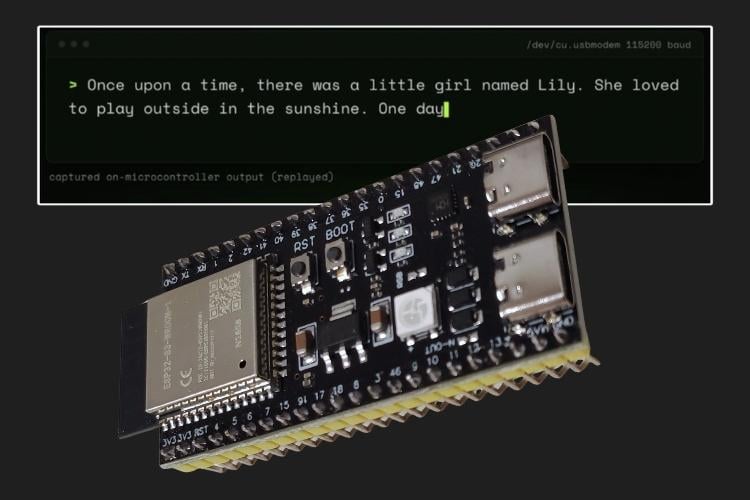
ESP32-S3 Runs a 28.9-Million-Parameter LLM, Borrowing a Memory Trick From Google's Gemma Developer slvDev has published an open-source project that runs a 28.9-million-parameter language model directly on an ESP32-S3, a microcontroller that costs roughly $8. The model runs entirely on the chip itself, with no data sent to a server, generating text at roughly 9 tokens per second and outputting it to a small connected display. The achievement stands out because of how little working… |

|
BrainCo Debuts Brain-to-Robot AI Platform and Data Collection Solution at WAIC 2026 BrainCo, a brain-computer interface company, unveiled a Brain-Controlled Robot AI Platform at the 2026 World Artificial Intelligence Conference (WAIC) in Shanghai on July 17, 2026, according to the company. The platform allows users to direct a robot through neural signals picked up by a lightweight EEG headset, with AI algorithms decoding the signals to identify motor or control intent before… |

|
This Nerf Gun Uses AI to Predict When You’ll Pull the Trigger A hobbyist maker has taken Nerf modding to the next level by integrating machine learning into a custom-built blaster called the Stinger. High-performance "flywheel" blasters usually suffer from a slight delay while the motors spin up to full speed, which can be the difference between a hit or a miss in a fast-paced game. To solve this, creator "stingernerf" bypassed traditional hardware… |

|
Turn Your ESP32-S3 Into an AI Assistant With MimiClaw A community project called MimiClaw has released software that lets an AI assistant run on ESP32-S3 microcontroller boards and respond to commands sent via the Telegram messaging app. The system acts as an intermediary between user messages and an online language model, enabling both conversational responses and hardware control functions such as GPIO, sensors, and actuators. MimiClaw… |

|
Quarky Intellio Launches a Maker-Focused AI & AR Module Unlocking the Future of DIY Robotics Quarky Intellio is a LEGO-compatible AI module made for hands-on learning in Artificial Intelligence, Augmented Reality, and Robotics. It is built on the ESP32-S3 microcontroller and includes a camera, microphone, speaker, rechargeable battery, SD card slot, and multiple connection ports. These features allow users to experiment with vision, sound, and basic edge AI projects using a small, all… |

|
How MIT's Aerial Microrobots Fly as Agilely as Insects Engineers from MIT have developed aerial microrobots that are roughly 450% faster with about 250% better acceleration in comparison to prior demos. “We want to be able to use these robots in scenarios that more traditional quadcopter robots would have trouble flying into, but that insects could navigate,” said Kevin Chen, an associate professor at MIT. The robot's controller is… |

|
ESP32 Offline Voice Recognition Using Edge Impulse Voice recognition is becoming an essential part of the Internet of Things (IoT), allowing us to control, monitor, and interact with devices hands-free. At its core, ESP32 speech to text works by capturing audio through a microphone, processing it, and converting it into text that devices can understand. This text is then used to trigger commands, just like how… |

|
AI Trash Cans That Can Trash Talk and Chase Garbage A Chinese DIY studio, tired of its messy workspace, decided to take smart cleaning to a whole new level. They went ahead and built 20 AI-powered trash bins that can detect, chase, and catch flying garbage, all while giving you lip if you miss. The team gave the trash bins cameras, embedded AI models to recognize thrown objects, and motors for movement. When a piece of trash flies… |

|
ADI and Antmicro’s AutoML for Embedded Builds AI Models for Edge Hardware AutoML for Embedded, developed by Analog Devices (ADI) and Antmicro, is available now to help developers easily build, optimize, and deploy AI models on constrained edge hardware. The tool is built into Visual Studio Code as a plugin. It’s part of the Kenning framework. Whether you're working with ADI’s MAX78002 or MAX32690 AI MCUs, or simulating your project using Renode and the Zephyr RTOS,… |
