



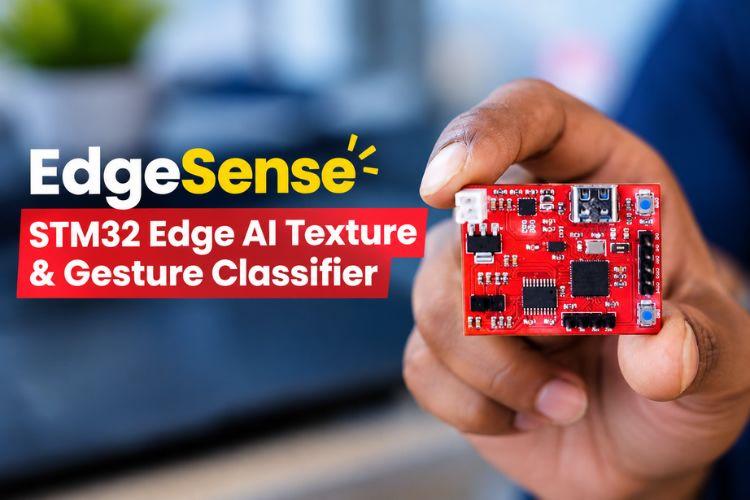
We used the STM32CubeIDE, STM32CubeMX, and STM32 AI Studio to configure the hardware, prepare and optimise neural-network models, and generate embedded C code for deployment. Throughout this project, we explore the circuit design, ToF sensor interfacing, model development, firmware implementation, and deployment of EdgeSense as a standalone STM32-based Edge AI system.
Editor's Pick
Editor's Pick
Latest News
Interview
Product Review
Tutorials
Projects
Videos
Watch our latest project videos
 View All

Qj5Jbhzce9s
The board is built around the ATSAMD21G18A-MFT, a 48-pin Arm Cortex-M0+ microcontroller running at 48 MHz with 32 KB of SRAM. Measurement is handled by the Microchip PAC1811, a single-channel 16-bit digital power monitor rated to 42 V that integrates a high-side current-sense amplifier, a bus-voltage monitor and a hardware accumulation register.
BhaqY_UyMAQ
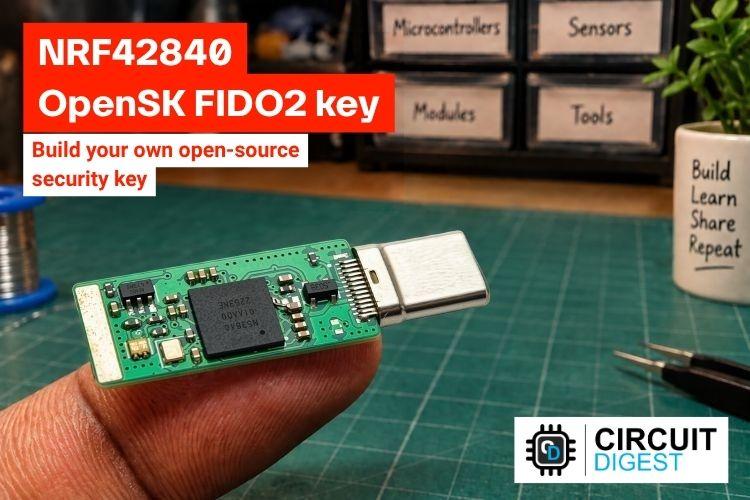
Here's how it works: every time you log in, the website asks the device to cryptographically prove your identity. The device only responds after you physically touch or press a button on it, confirming that a real person, not a script or a remote attacker, is initiating the login. This means that even if someone steals your password, they still can't get into your account without physically holding this key.
cbYXhodho70
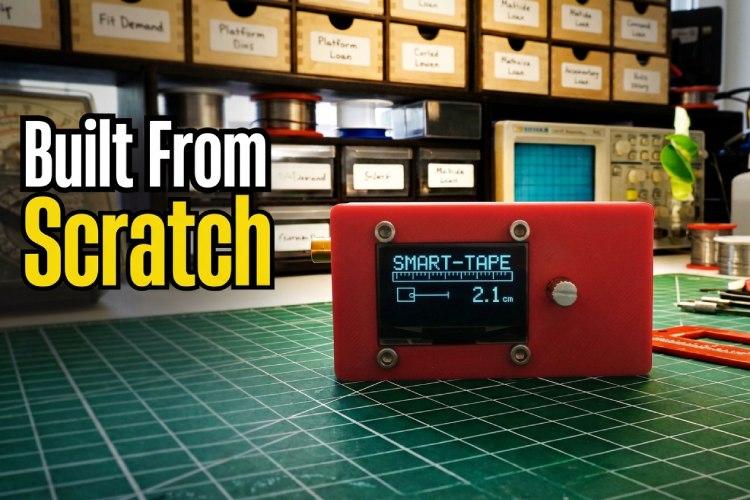
SmartTape is a pocket-sized, battery-powered digital laser measuring tool designed around this idea. It can measure distance, calculate area and volume, determine indirect height using tilt information, track maximum and minimum distances, and work as a digital spirit level. All of these functions are controlled using a single spring-return rotary knob and displayed on a 1.3-inch OLED.
JAN2LOpt2oc
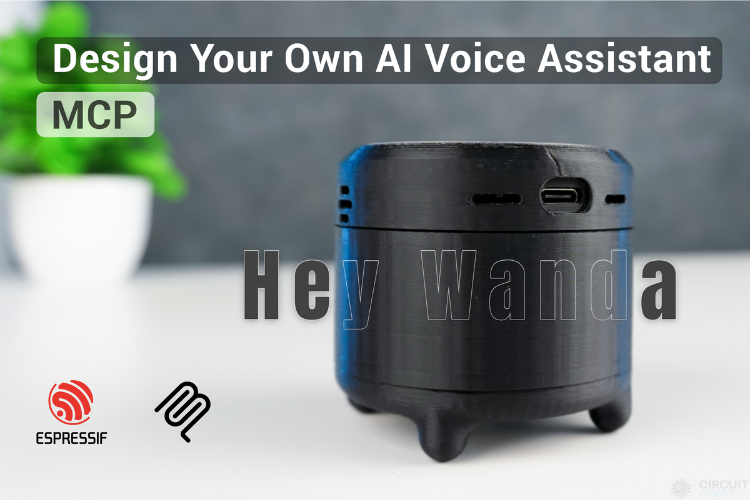
Voice-controlled smart devices have transformed the way we interact with technology, and with the arrival of Espressif’s ESP32-S3 platform, building a compact and intelligent voice assistant is now within reach for makers. To explore the possibilities of on-device AI and low-power voice interaction, I designed a custom ESP32-S3-based voice assistant that integrates Espressif’s Audio Front-End (AFE) framework with the Xiaozhi MCP chatbot system. The result is a self-contained, always-on smart home controller capable of understanding and responding to natural voice commands without needing a phone.
Tech Articles


Electronics Circuits

Optocouplers frequently fail without a sound in labs or during repairs.

You’ve just finished assembling an electronic project and are ready to power it up, only to r

The Joule Thief Circuit is a simple and clever electronic design that can power an LED using a nearly dead battery.