
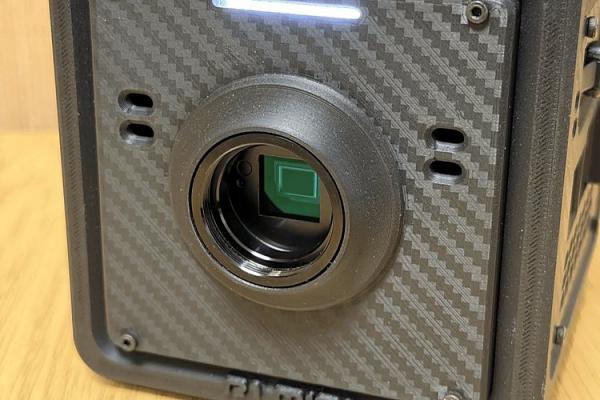
Most digital cameras are closed boxes: you get the buttons, menus and file formats the maker chose. Reddit user jpotter124 built the opposite. The R1 Mini is a 100 mm cube with a Raspberry Pi 5 inside, an interchangeable-lens HQ camera sensor at the front and real buttons for the settings photographers change most. It shoots RAW DNG stills and CinemaDNG video, runs for five to six hours while…
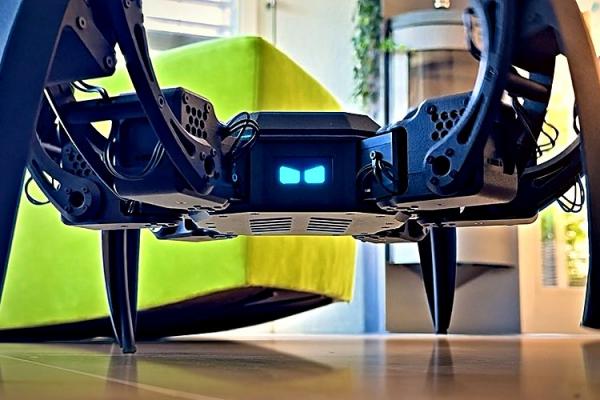
Most hobby hexapods walk by playing back a fixed sequence of leg moves, which is why switching gaits usually means stopping first. The hexapod built by ForgeVolt does not stop. It blends from a fast tripod walk into a tetrapod or ripple gait while it is still moving, leans into curves, and keeps its body level when the floor tilts under it. All of the leg math runs on one ESP32-S3, and the…
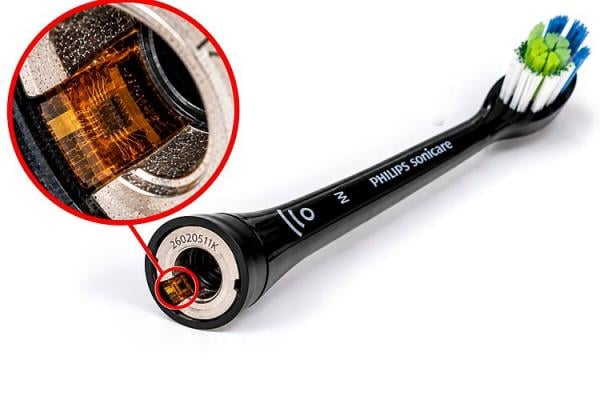
A toothbrush head is a plastic stick with bristles, so why does Philips put a microchip in it? YouTuber Circuit Helper wanted to know, so he built a small NFC reader, read what a Sonicare brush head stores about the person using it, rewrote that data, and finally used an old brush head as a key to unlock his Mac. The chip sits under a small brown dot near the base of the head and needs no…

Dave Jones of EEVblog has spent years telling engineers to be sceptical of hype, so it says a lot that his latest video ends with the line "software engineering is so over". He pointed Claude Code at the compiled firmware of his own 121GW multimeter and asked it to turn the binary back into C source code. By the next morning it had rebuilt both the bootloader and the full meter application,…
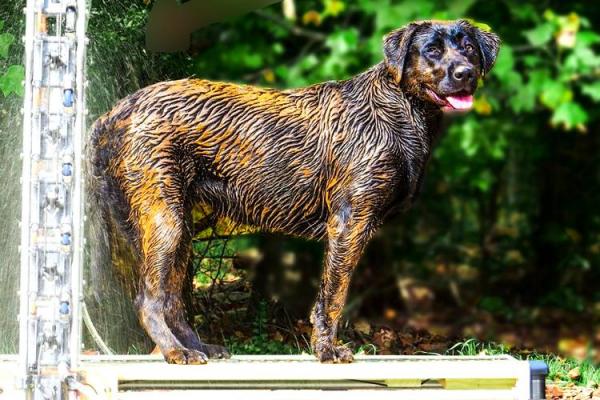
Anyone who has washed a muddy dog knows the real problem is not the mud on the dog. It is the shake that puts the mud on you. Shane Wighton of Stuff Made Here tackled it the way he tackles everything: he built a machine. His new video shows a car-wash-style rig for dogs, with an arch of moving nozzles that scans along a platform and sprayers underneath for the parts a hose never reaches. It…
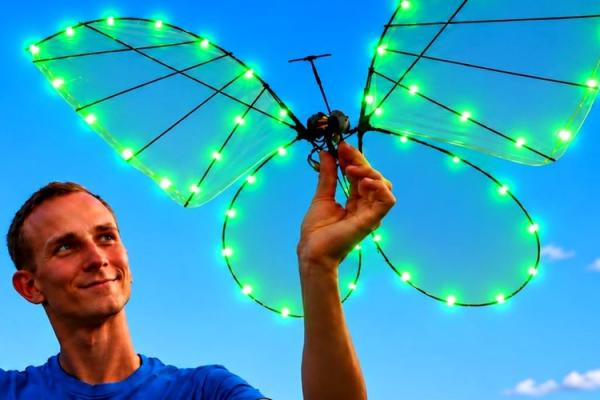
Propellers make flying easy. Flapping wings do not. Maker Max Imagination still built ESP-FLUTTER, a 70 g remote-controlled butterfly that lifts off on its own wings, glows at night with LEDs along the wing edges, and can be flown from a phone browser. The firmware is open on GitHub, and the project was picked up by Hackster on 2 November.
Two servos…
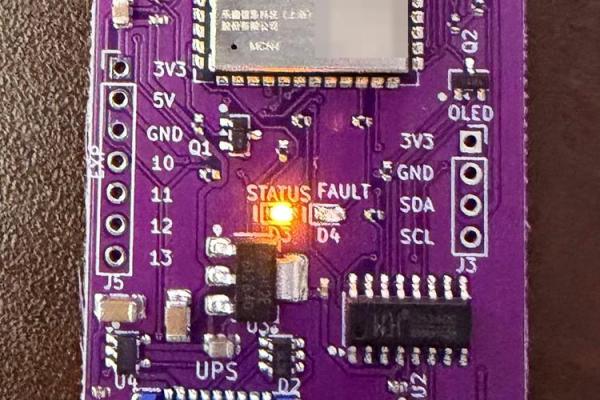
Network cards for big UPS units are expensive, and running a full Raspberry Pi just to watch one UPS can feel like overkill. Reddit user Smooth_Ganache897 hit both problems: a garage UPS keeping a camera alive had a dead battery when it was needed, and a rack-mount APC unit needed a costly network card. The answer is ups-to-esp32, an open-source ESP32-S3 board that plugs into a UPS's USB port…
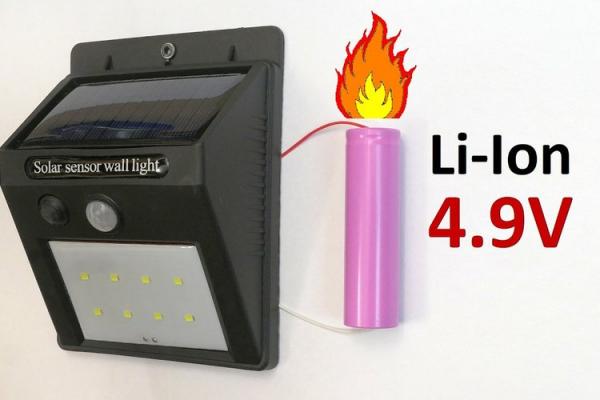
Cheap solar wall lights are on millions of walls, and most people never think about the battery inside. YouTuber DiodeGoneWild opened one that was sold in a Czech supermarket, by a Czech company, with a PIR motion sensor, an "IP44" rating and an 18650 Li-ion cell. What he found inside led him to title the video "LED Solar Sensor Houseburner".
No charger,…
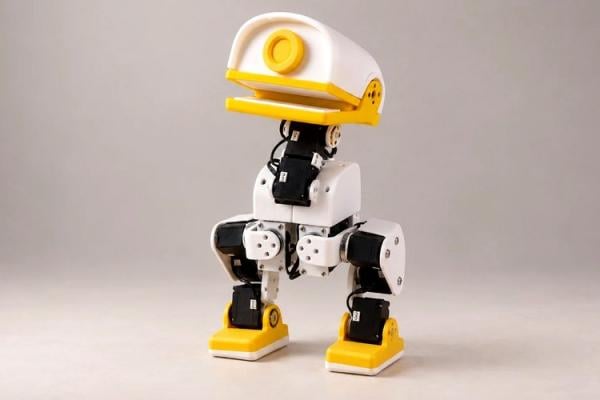
Most small walking robots replay hand-tuned servo sequences. XGO-Duck, an open-source biped from Luwu Dynamics, the team behind the XGO robot dogs, walks on a neural network policy instead. The network runs on the Linux side of an Arduino UNO Q, while the board's STM32 microcontroller handles the 15 serial bus servos and the orientation feedback. This weekend the team posted a clip of the duck…
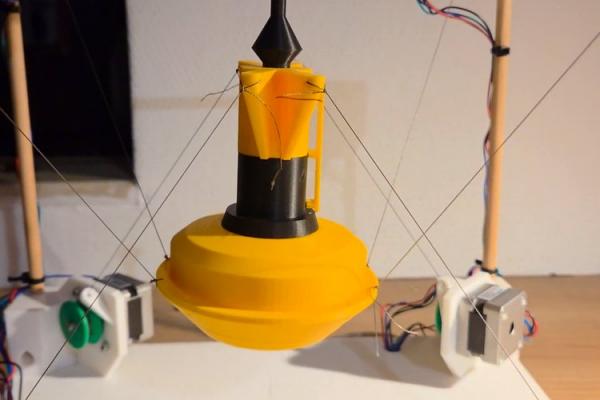
A Belgian maritime pilot, whose job is guiding ships in and out of port, has built a desk piece that brings the sea indoors. His 30 cm 3D-printed west cardinal buoy hangs on eight lines, each wound by its own small stepper motor, and it rolls and heaves with live wave data from a real buoy out at sea. Pick a station off Bermuda and it moves to 1.9 m waves every 8 seconds; for some buoys it…
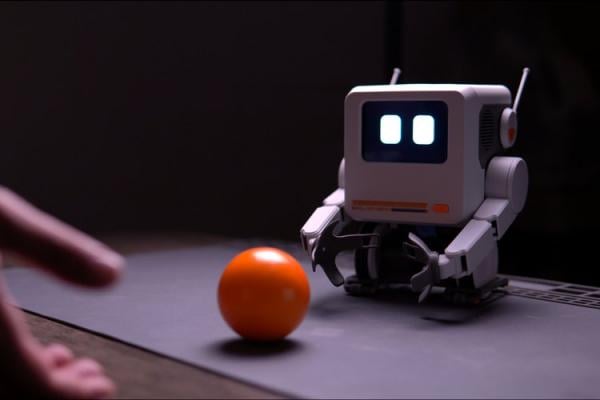
Most hobby robots that "follow a ball" just chase a colour blob. Sector 07 built one that plays a full game of fetch. His 3D-printed robot, called Fetch, uses an Arduino UNO Q and a custom vision model trained in Edge Impulse to find an orange ball, drive to it, grab it with two arms, then look for the owner's hand and bring the ball back, with no remote control. It is his first autonomous…
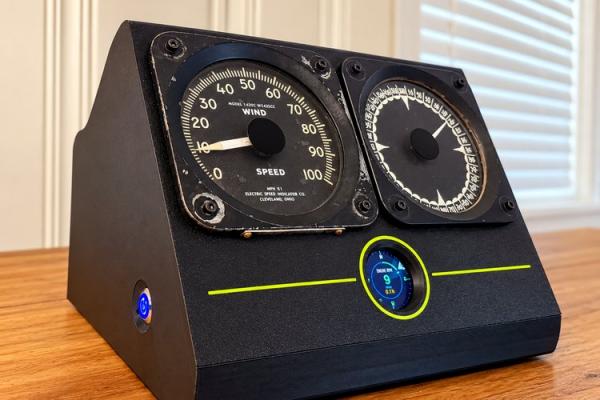
When his local airport tore down its old control tower, one maker got the chance to salvage two vintage wind meters from the controllers' console: a wind speed dial (0-100 mph) and a wind direction dial (0-360 degrees), both heavy steel cans with glass faces and night lamps. Instead of putting them on a shelf, he made them show live wind again, fed from his own weather station and driven by a…
