
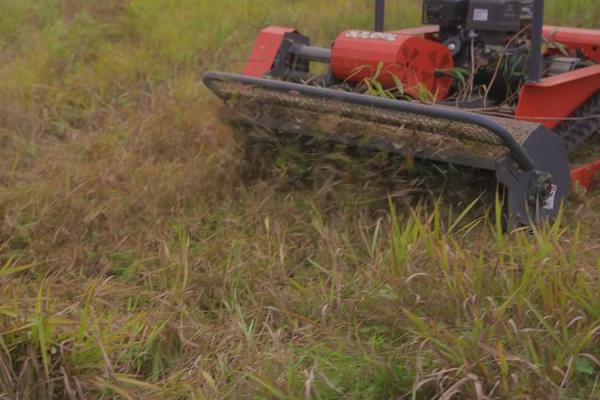
YouTuber jakkuh has about 5 acres of farm grass that has to keep getting cut, and after spending several full days on a ride-on mower he decided a robot should do it. His build video, which passed 170,000 views within a day, takes a remote-control tracked flail mower bought at a local auction and turns it into an autonomous mower that follows a GPS path. He did it with parts usually found in…
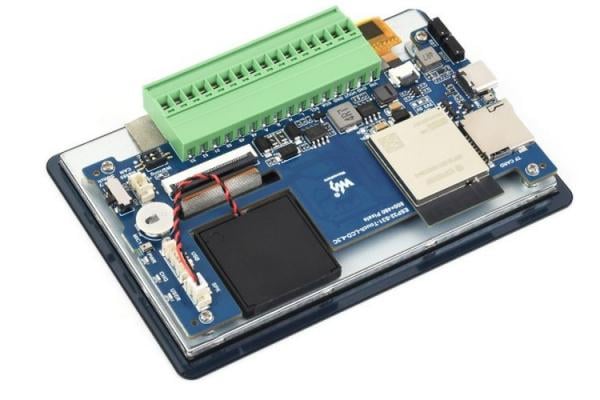
The ESP32-S31 is now turning up on boards makers can buy. Waveshare has just released the ESP32-S31-Touch-LCD-4.3C, an S31 version of its popular ESP32-S3 4.3-inch touch display kit, and on 19 November Espressif released Arduino-ESP32 4.0.0, the first stable Arduino core release that supports the S31. So the obvious question is: should your next project use the ESP32-S31 or stay on the ESP32-…

Search for "LED cube" and you mostly find voxel cubes: a few hundred LEDs hanging in a 3D grid. Maker Ross Harvey built the other kind. His Lucent Cube has a full 64 x 64 RGB LED panel on each of its six faces, 24,576 LEDs in all, and it wraps one continuous animation around every side, reacts to sound, plays games and streams music visualisations. He has now published a full guide to how it…
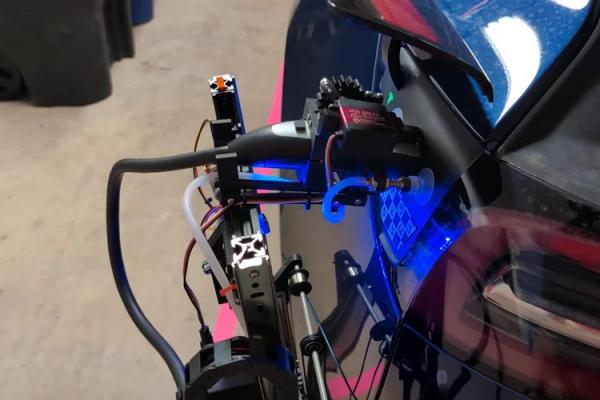
Plugging in an EV every evening takes ten seconds, but it is exactly the kind of chore people forget. Maker Mew463 built a robot that does it for a 2021 Tesla Model 3: it waits under the car, rolls out when the car is parked, lifts the charging handle to the port, plugs it in and later unplugs and drives back to its spot. Most of the robot stays under the car while it charges, and the cable…
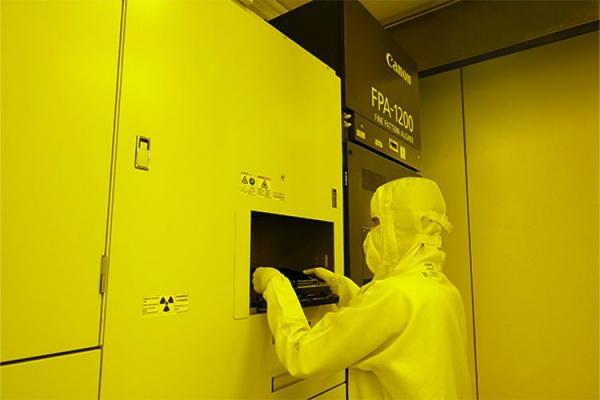
A video claiming that Canon's "$18M stamp" makes ASML's "$180M machine look ancient" has pulled in more than 200,000 views in under a week. The machine behind it is real, but it is not new: Canon launched the FPA-1200NZ2C nanoimprint lithography system on 13 October 2023. What is worth understanding is how it prints chip patterns without the light source that makes EUV so expensive, and how…
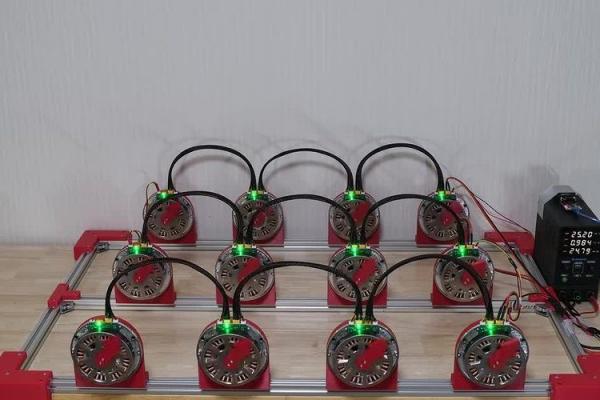
A walking robot dog needs 12 joint actuators, three per leg, and each one has to be strong enough to carry the body yet soft enough to absorb every footstep. Buying 12 commercial quasi-direct-drive actuators gets expensive fast, so maker Koshiro Robot Creator built all 12 himself: CNC-machined aluminium plates, a 3D-printed cycloidal gearbox, and his own field-oriented control (FOC) driver…
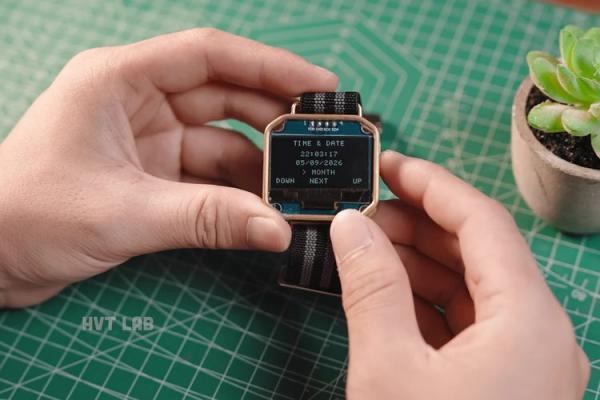
Most DIY smartwatches end up as a dev board strapped to a wrist. Maker Huy Vector of HVT Lab went the other way: he built the case itself from bent and soldered brass tubing, so the electronics sit inside an open metal frame, and the finished watch shows phone notifications and incoming calls over Bluetooth. He puts the parts cost at under $10, and the build video passed 216,000 views in under…
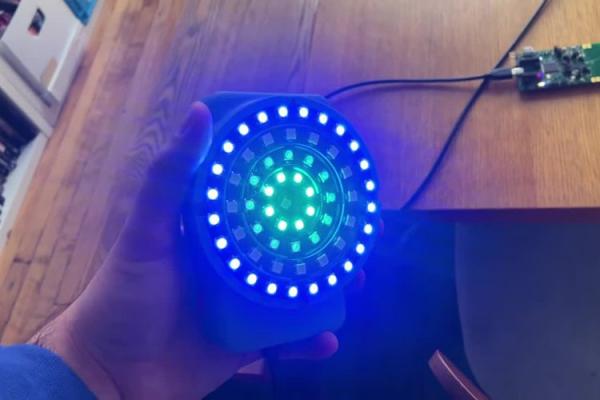
Bluetooth has always been able to tell you roughly whether a device is near or far by looking at signal strength. It has never been good at telling you how far. Bluetooth Channel Sounding, added in Bluetooth Core Specification 6.0 in September 2024, changes that. A new prototype called Free Ranger, built by Tomorrow Lab on NXP's MCX W72, shows what it looks like in practice: a handheld puck…
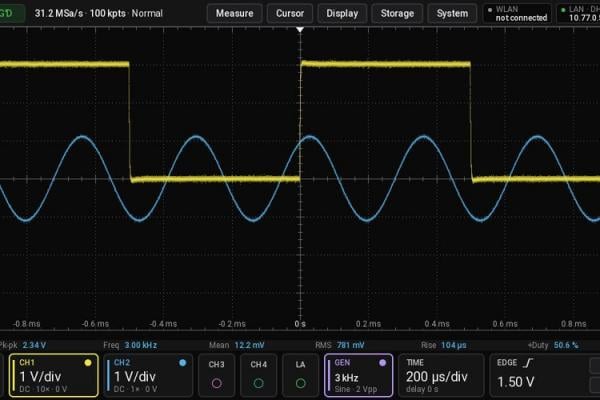
Rigol's DHO800 and DHO900 oscilloscopes are some of the most popular budget scopes on hobbyist benches. A developer known as dekajoule has released OOS, an "open operating system" that replaces the scope's software with a Linux 6.12 kernel and a completely new scope application written in Rust. It boots from the scope's own SD card alongside the stock system, and you can switch back at any…
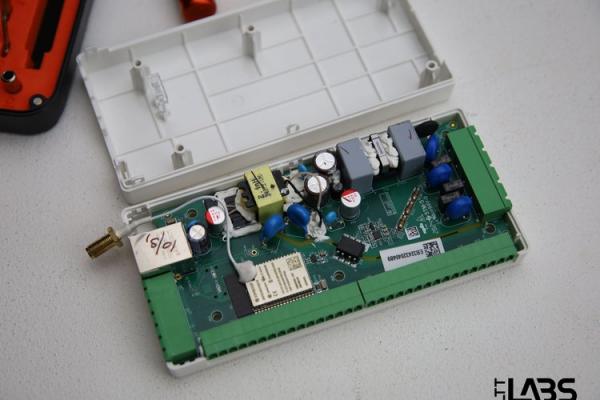
The Emporia Vue 3 is a $199.99 energy monitor that clamps onto 16 circuits in a breaker panel and shows what each one costs to run. Out of the box, every reading goes through Emporia's cloud. LTT Labs has now documented how to cut it off from those servers completely by reflashing the ESP32 inside it with ESPHome, so the data never leaves the home network.
An ESP32 behind five test pads…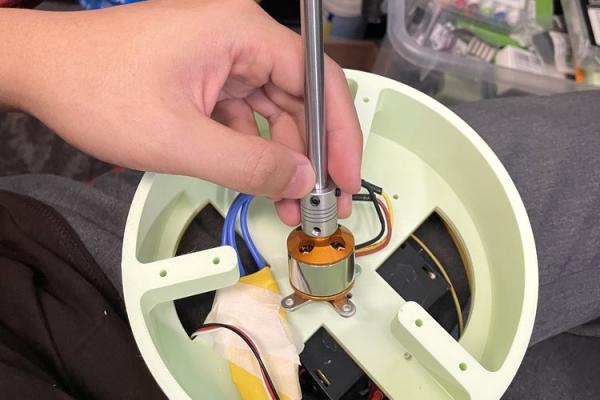
A used lab centrifuge that takes 15 mL conical tubes sells for $800 to $3,000 on eBay. Thomas Vu Nguyen needed one for a home wet lab and built his own instead, the PicoCentrifuge, from a drone motor, a Raspberry Pi Pico and a 3D printer, for about $50 in parts.
The machine is part of Bloom, his open-source project to predict personalised cancer neoantigens from a patient's sequencing…
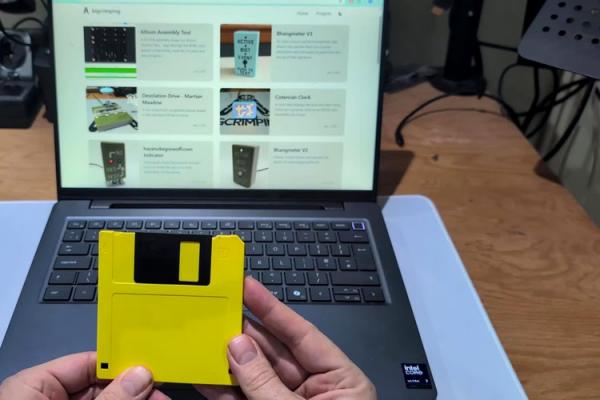
Sony's Mavica cameras saved digital photos straight onto 3.5-inch floppy disks, which was brilliant in the late 1990s and is a real nuisance now that almost no computer has a floppy drive. bigcrimping fixed that with floppy3.5, a battery-powered pocket box with a slimline floppy drive inside. Insert a full disk, press READ, and every photo is copied to a micro-SD card and shown on a web page…
