
Healthcare

|
ROHM Launches an Ultra-Compact Wireless Power Chipset for Wearables ROHM has developed a wireless power supply IC chipset consisting of the receiver - ML7670 - and transmitter - ML7671 - compatible with Near Field Communication (NFC) technology for compact wearables such as smart rings and smart bands as well as peripheral devices like smart pens. The smart ring market has seen rapid growth in recent years, primarily in healthcare and fitness… |
|
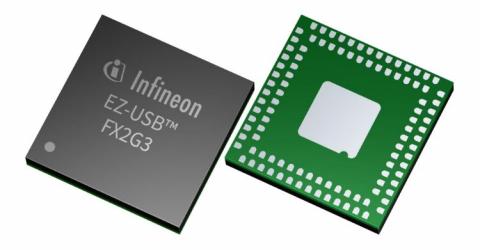
Infineon launches the next-generation of USB 2.0 peripheral controller with the EZ-USB™ FX2G3 Munich, Germany – 20 January 2026 – Infineon Technologies AG (FSE: IFX / OTCQX: IFNNY) is introducing the EZ-USB™ FX2G3, a next-generation USB 2.0 peripheral controller designed to deliver superior performance, robust security, and advanced power efficiency for USB devices. This new controller builds on the trusted EZ-USB™ FX2LP platform and offers a highly adaptable solution for industries… |

|
C.A.R.E. (COGNITIVE AMBIENCE RESPIRATORY ENGINE) By Affan Danish The Story Behind CARE While researching why people weren't buying air purifiers (beyond just the cost), we stumbled upon something fascinating: most people simply don't care enough about air quality. And that's exactly how CARE was born. CARE is an… |

|
IndieSemiC Launches India’s First Indigenous IoT Evolution Board Powered by VEGA Processor A young semiconductor start-up called IndieSemiC made headlines at Semicon India 2025, Delhi, by launching India’s first IoT Evolution Board with Minister Ashwini Vaishnaw. The product comes from a partnership between the startup and C-DAC (Centre for Development of Advanced Computing). It uses a homegrown VEGA processor and supports Bluetooth and LoRa. The board has a wide range… |

|
TI Introduces Predictive Battery Gauges to Maximize Runtime in Portable Devices Texas Instruments (TI) has unveiled two new battery fuel gauges (BQ41Z90 and BQ41Z50). These gauges use Dynamic Z-Track™, a predictive algorithm that is known to deliver industry-leading accuracy in monitoring battery charge and health. Setting them apart from traditional methods, this adaptive tech can achieve state-of-charge and state-of-health readings within 1% error, which helps extend… |

|
USC's Battery-Free Implant Aims to Provide Non-Addictive Pain Relief Reports say chronic pain affects 51.6 million Americans, and the effects are considered “high-impact” for about 17 million of them, influencing their life or work. Traditional methods of pain relief, such as opioid medications, carry the risk of addiction among other side effects. Current spinal cord stimulators are alternatives, but are expensive and require invasive surgery with a need for… |

|
BITS Hyderabad Develops ₹15 Biosensor for Needle-Free Health Testing Researchers have reportedly created a low-cost biosensor at Birla Institute of Technology and Science (BITS), Hyderabad campus. Their biosensor is said to cost only ₹15 to make. What it offers is a way to detect health markers without needles, bypassing traditional blood tests. In a span of five minutes, it can detect chemical compounds called metabolites from blood, sweat, urine, and cells.… |

|
Nordic Integrates Automated TinyML with nRF54 Series Through Neuton.AI Deal Nordic Semiconductor is acquiring Neuton.AI’s core technology and IP. Neuton.AI specializes in automating Tiny ML processes, making it easy for non-experts to build AI models. Nordic plans to integrate Neuton.AI’s platform with its own nRF54 Series chips. These are chips that use very little power, with popularity among battery-operated devices. The combination should allow for smarter devices… |

|
Renesas Introduces RZ/A3M MPU for Advanced and Affordable HMI Systems Renesas Electronics Corporation has unveiled the RZ/A3M high-performance microprocessor (MPU) designed to power next-generation human-machine interface (HMI) systems across various industries. As part of the RTOS-based RZ/A series, the RZ/A3M enables real-time operation essential for responsive and smooth graphical user interfaces. This new addition to the family focuses on cost-sensitive HMI… |

|
Tiny Brain Sensor that Fits Between Hair Strands and Lets You Use Tech Hands-Free Researchers at Georgia Tech have come up with a small and flexible brain sensor that can sit just under the skin, between our hair follicles. It is designed to be comfortable enough to wear all day and does not need any wires or gel to work. These sensors are part of what’s called Brain-Computer Interface (BCI) technology. This new sensor uses tiny microneedles to get a better reading… |

|
This Bug-Sized Wireless Flying Robot can Hover, Survive Collisions, and Adjust Its Route Engineers at the University of California, Berkeley, have developed a tiny flying robot inspired by flying insects. It is less than 1 centimeter in size with only two tiny magnets and weighs only 21 milligrams, making it the smallest flying robot that can be controlled without wires. Unlike normal drones that need batteries and sensors, this robot moves using an external magnetic field. Though… |

|
Kiri-Spoon: An Origami-Inspired Spoon to Help People with Limited Mobility Eat Eating is a basic daily activity, but for people with mobility challenges, it can be difficult to feed themselves. To help with this, a team of researchers came up with the Kiri-Spoon, a special 3D-printed spoon made from a flexible, paper-thin plastic sheet. When in use, the spoon expands into a small bowl that secures food inside. This simple yet clever design… |
