
arduino

|
Human Following Robot Using Arduino and Ultrasonic SensorWorking of Human Following Robot Using Arduino
In recent years, robotics has witnessed significant advancements, enabling the creation of intelligent machines that can interact with the environment. One exciting application of robotics is the development of human-following robots. These robots can track and follow a person autonomously, making them useful in various… |
|
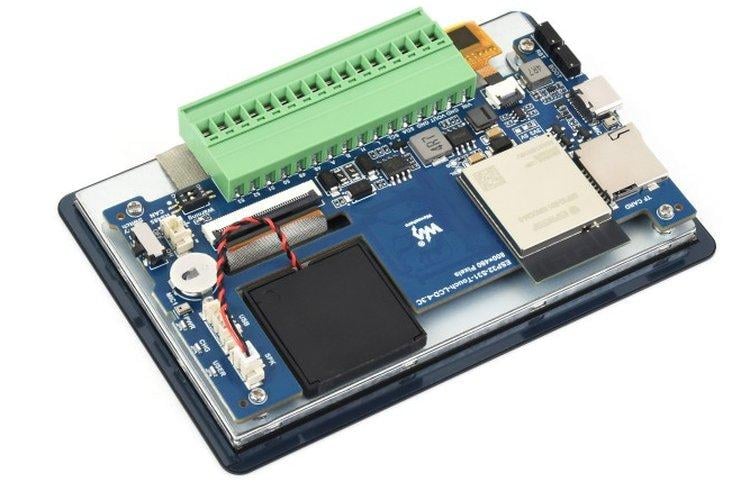
ESP32-S31 vs ESP32-S3: What Changes and Which to Pick Now That Arduino Supports the S31 The ESP32-S31 is now turning up on boards makers can buy. Waveshare has just released the ESP32-S31-Touch-LCD-4.3C, an S31 version of its popular ESP32-S3 4.3-inch touch display kit, and on 19 November Espressif released Arduino-ESP32 4.0.0, the first stable Arduino core release that supports the S31. So the obvious question is: should your next project use the ESP32-S31 or stay on the ESP32-… |
|
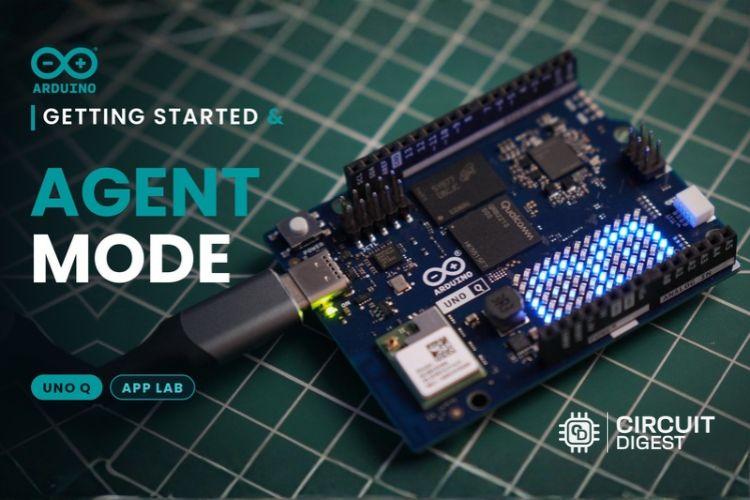
Getting Started with Arduino UNO Q: Exploring App Lab, AI Agent Mode, and More For many engineers and makers, the journey into electronics and microcontrollers probably started with an Arduino board. From making a simple LED blink to reading sensors, controlling motors, and building our first embedded projects, Arduino has been a familiar starting point for learning and experimenting with electronics. But the… |
|
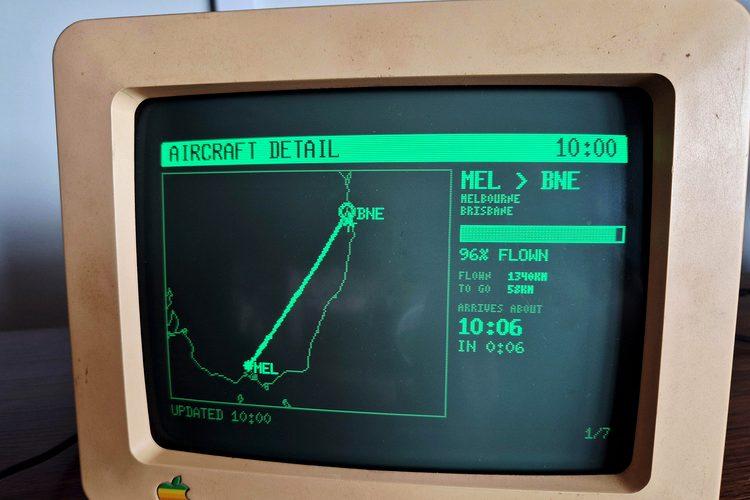
This 1986 Apple II Monitor Is Now a Live Flight Tracker, Driven by an ESP32 and Two Wires Most people who want a flight tracker on a desk reach for a Raspberry Pi and an HDMI screen. Reddit maker Virtual-Bet-4566 went the other way: a 1986 Apple II monochrome monitor, a classic ESP32-WROOM-32 and exactly two wires. The green phosphor CRT now shows a live radar view of the aircraft overhead, and no video converter sits in between. Composite video straight from a DAC pinThe… |
|
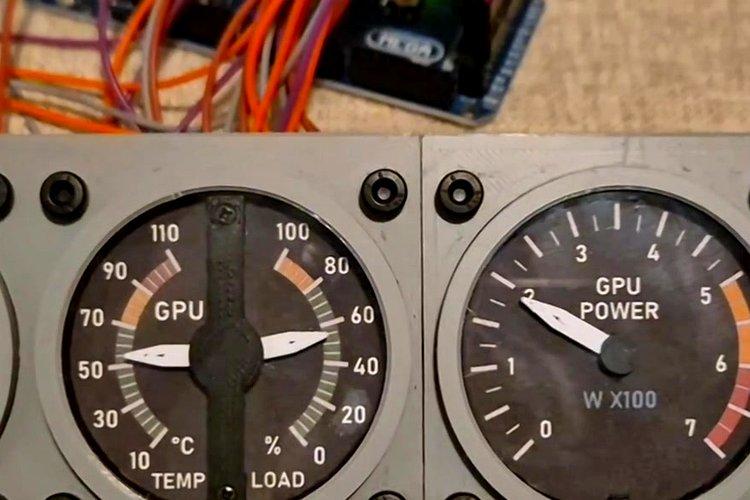
He Built a PC Hardware Monitor That Looks Like a Four-Gauge Aircraft Instrument Panel Old aircraft panels still look better than any flat graph on a monitor. Reddit maker Night-Caps put that look on his desk: four aircraft-style gauges driven by an Arduino that reads live PC hardware data from HWiNFO over serial. The needles move with CPU and GPU temperature, load, GPU power and RAM, and the post landed near the top of r/arduino with about 750 upvotes. Switec steppers… |

|
This DIY Wax Motor Held Its Position to Within 5 Microns for 12 Hours, Just by Melting Wax Wax motors are the quiet actuators inside washing machine door locks, radiator valves and car thermostats: heat a block of wax, it melts and expands, and that expansion pushes a piston. Nobody thinks of them as precision parts. BubsBuilds built his own "waxtuator" to find out how precise one could be, and with careful temperature control it held a gap of less than 5 microns for twelve hours.… |

|
Stuff Made Here Built an Arduino-Run Car Wash for His Muddy Dog, and the Dog Said No Anyone who has washed a muddy dog knows the real problem is not the mud on the dog. It is the shake that puts the mud on you. Shane Wighton of Stuff Made Here tackled it the way he tackles everything: he built a machine. His new video shows a car-wash-style rig for dogs, with an arch of moving nozzles that scans along a platform and sprayers underneath for the parts a hose never reaches. It… |

|
This 3D-Printed Robot Duck Learned to Walk With a Neural Network, and Now It Kicks a Ball Most small walking robots replay hand-tuned servo sequences. XGO-Duck, an open-source biped from Luwu Dynamics, the team behind the XGO robot dogs, walks on a neural network policy instead. The network runs on the Linux side of an Arduino UNO Q, while the board's STM32 microcontroller handles the 15 serial bus servos and the orientation feedback. This weekend the team posted a clip of the duck… |
|
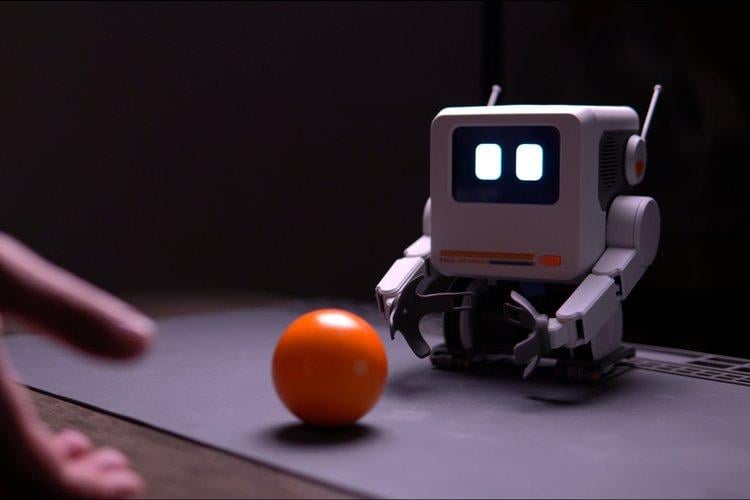
A $300 Robot That Plays Fetch: It Finds the Ball, Picks It Up and Brings It Back on Its Own Most hobby robots that "follow a ball" just chase a colour blob. Sector 07 built one that plays a full game of fetch. His 3D-printed robot, called Fetch, uses an Arduino UNO Q and a custom vision model trained in Edge Impulse to find an orange ball, drive to it, grab it with two arms, then look for the owner's hand and bring the ball back, with no remote control. It is his first autonomous… |
|
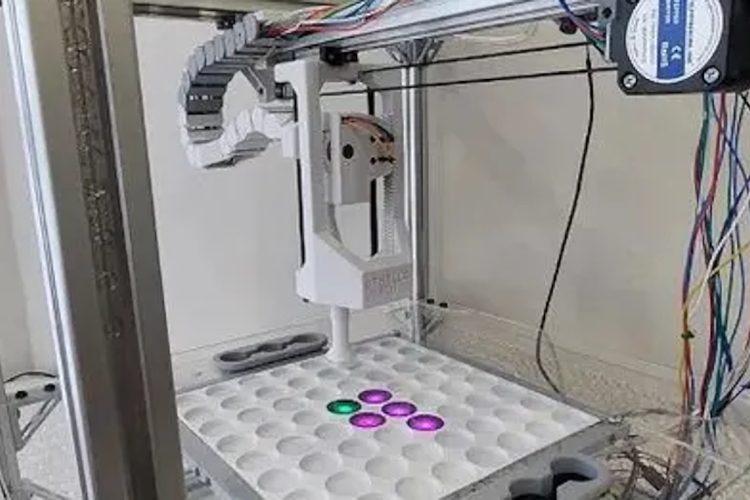
This Robot Plays Othello Without Flipping a Single Disc, Thanks to 64 Color-Changing LEDs In Grade 11, maker Jeneus tried to write an Othello program in C++. It ended up buggy and the computer could only play random moves. Years later, with mechatronics skills, he turned that failure into Othellobot: a gantry robot that watches the board with a camera, picks its move and places clear tokens with a suction cup. The smart part is that it never flips a disc. Every cell has its own LED… |

|
Pac-Man, Space Invaders and Manic Miner Run on a Plain Arduino Uno at 50 fps, With Two Resistors for Video and No Framebuffer An Arduino Uno has 2 KB of RAM, 32 KB of flash and a 16 MHz 8-bit ATmega328P. That is less memory than the 1982 ZX Spectrum had, and nowhere near enough to hold a frame of video. Even so, Smashcat has built a game engine that runs full arcade-style games on it at a locked 50 frames per second, straight to a TV over composite video made with just two resistors. It now runs four games: Manic… |

|
Arduino's 16 GB VENTUNO Q Runs a 744-Billion-Parameter AI Model From an SSD, and It Took 7 Minutes to Name Three Planets Large language models with hundreds of billions of parameters normally live in data centres, on servers with far more memory than any single-board computer. So it is a surprise to see one answer a question on an Arduino. In a project published on Arduino Project Hub, Jim Bruges ran GLM-5.3, a 744-billion-parameter model whose files take up about 419 GB, on an Arduino VENTUNO Q with just 16 GB… |
