
robotics

|
Human Following Robot Using Arduino and Ultrasonic SensorWorking of Human Following Robot Using Arduino
In recent years, robotics has witnessed significant advancements, enabling the creation of intelligent machines that can interact with the environment. One exciting application of robotics is the development of human-following robots. These robots can track and follow a person autonomously, making them useful in various… |
|
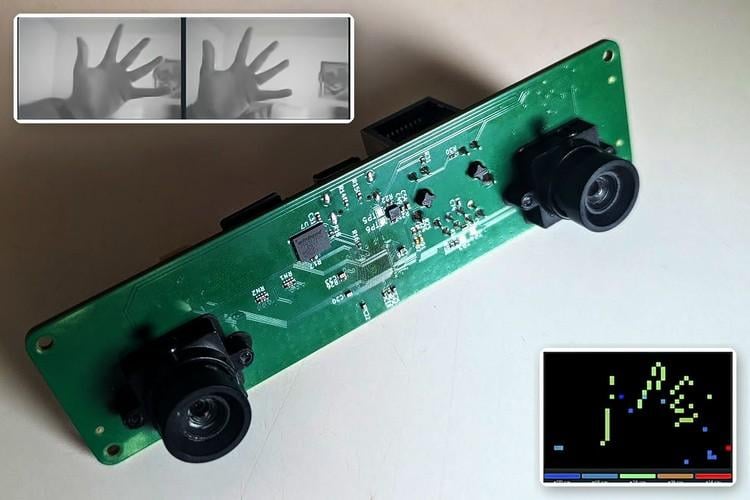
Two Eyes, One Tiny Chip: This Open-Source Board Computes Stereo Depth So Your Arduino Doesn't Have To Hardware hacker machinehum (Rootkit Labs) has built 4reel, a small open-source stereo vision board that gives robots depth perception without a Raspberry Pi or a PC riding along. Two OV9281 global-shutter cameras sit at either end of the PCB, and the depth maths runs on the board's own Rockchip RV1103 chip. Your Arduino or ESP32 just reads the results over UART. Powered by a single-core 1.1… |

|
This ALBATROSS Robot Uses a Teensy 4.1 and Autorotating Wings to Land on Water and Sail With Wind Power Researchers at the Singapore University of Technology and Design (SUTD) have developed ALBATROSS, a robot that can descend from the air, land on water, and then sail using wind power. Its name stands for Airborne Lander with Buoyant AuToROtating Sailing Sensor. The robot is designed to carry sensors to remote lakes, reservoirs, and other water bodies that are difficult to reach by boat. When… |
|
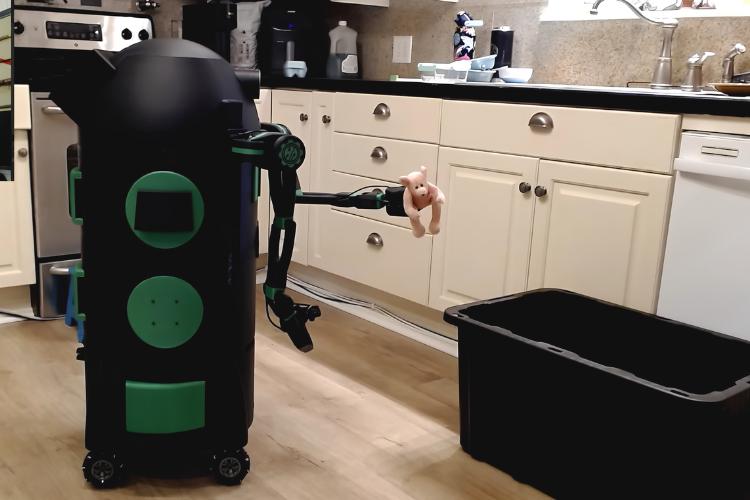
Instead of Training a Robot, He Let a General-Purpose Multimodal LLM Control It to Pick Up and Bin a Toy Harrison Kinsley, the YouTuber behind Sentdex, has shown a Vulcan Robotics Sourccey, a 3D-printed robot he calls “Chonk,” picking up a toy from the floor and dropping it in a bin with no task-specific training. In part three of his “Everything is LLM” series, published Oct 8, a general-purpose multimodal language model made the task decisions. The planning and control came from DeepSeek’s V4.1… |

|
Renesas Expands GaN Portfolio with First Low-Voltage GaN FETs for AI Data Centers and Robotics Renesas Electronics Corporation (TSE:6723), a premier supplier of advanced semiconductor solutions, has expanded its GaN portfolio into low-voltage applications with its first family of 100V enhancement mode (E-mode) GaN-based discrete power transistors. The RTP100E005G1FL, RTP100E2P6G1FL, RTP100E1P8G1FL-DSC and RTP100E1P2G1FL-DSC low-voltage GaN FETs deliver ultra-fast switching speeds and… |

|
This Autonomous Submarine Uses DVL Sound Waves for GPS-Free Underwater Navigation and Exploration CPSdrone is building a DIY autonomous submarine to explore shipwrecks without needing GPS while underwater. Since GPS signals cannot reach the submarine underwater, the team added a Doppler Velocity Log (DVL) to help it navigate. The DVL sends sound waves toward the seafloor and listens for the signals that bounce back. By measuring how the sound changes as the submarine moves, it can… |
|
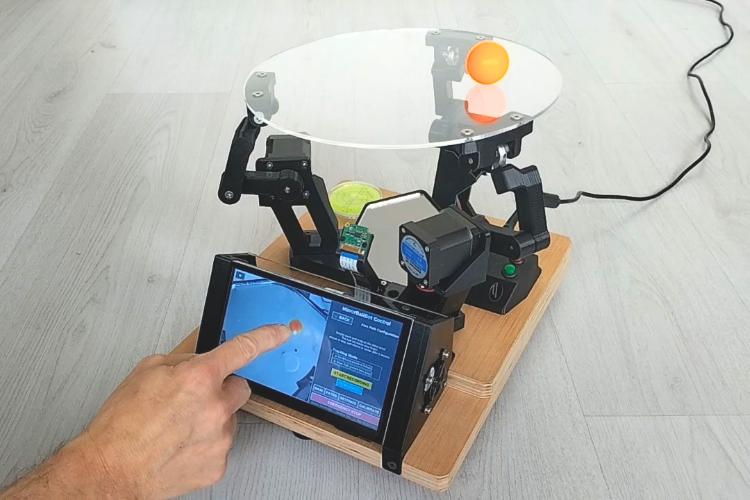
Ball-Balancing Robot Uses a Mirror to Stay Compact; Pi Handles Vision, Leaves Motor Step Timing to 3 RP2040 Chips MirrorBallBot, an open-source ball-balancing robot from a maker using the GitHub handle AndreaFavero71, looks at its platform through a mirror rather than from above. The camera sits to the side and points at a mirror inclined at 27 degrees beneath the platform. The author says that, for the same camera and robot height, this widens the field of view by 58%, which allows a larger platform… |
|
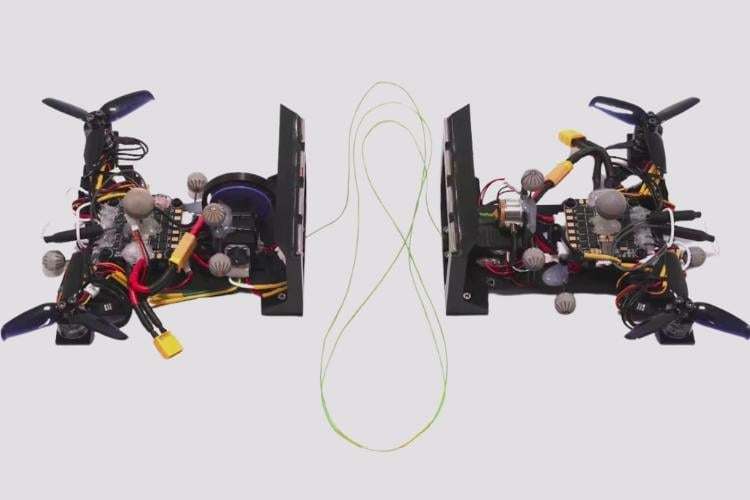
Two Bicopters Linked by a Cable Use a Motorized Winch and Sensor to Transform Into a Quadcopter Mid-Air Researchers led by R.Wang have developed a transformable aerial robot made from two small bicopters connected by a cable, allowing the system to change its shape and interact with objects without using a conventional robotic gripper. Each bicopter uses two brushless motors with tilting propellers, while the cable itself acts as the key mechanical component. One aircraft carries a motorized… |
|
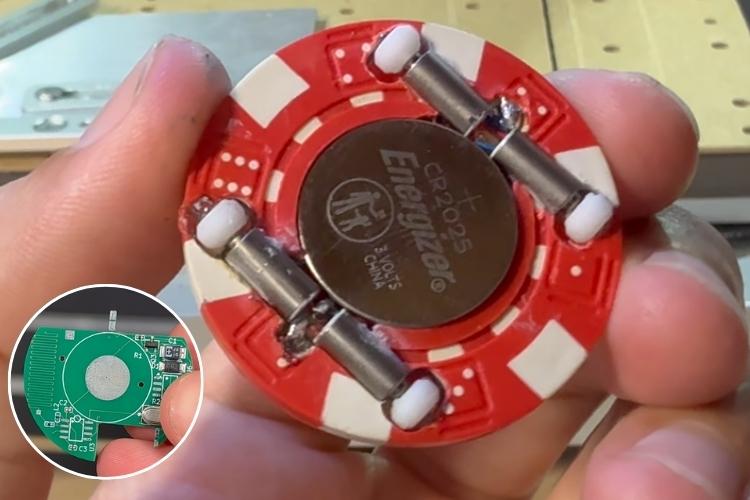
A Tiny Robot Hides Inside a 3.5-mm Poker Chip to Cheat at Roulette With 433 MHz Radio and a Custom PCB Kevin Coda of Concept Bytes Youtube channel built a tiny remote-controlled robot inside a poker chip for Mark Rober's CrunchLabs casino challenge. The project turns a standard poker chip into a miniature mobile robot that can move across a roulette table after receiving a wireless command. To make room for the electronics, the chip was hollowed out using CNC machining and its internal steel… |

|
How to Learn ROS 2: A Practical Roadmap for Robotics Engineers ROS 2 has become one of the most important technologies for engineers interested in robotics. But beginners often struggle with the same questions: Should I learn ROS 1 first? Do I need a physical robot? Which programming language should I know? And is ROS actually used in production?We discussed these questions with Shubham Nandi, co-founder and Chief Research… |
|
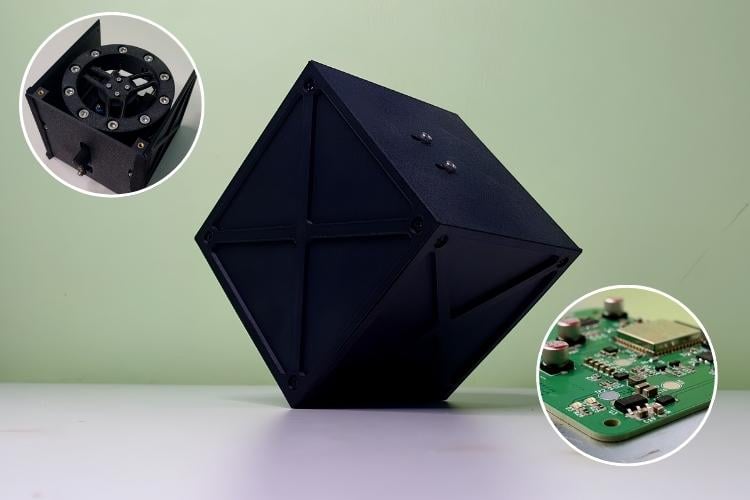
This ESP32-Powered Self-Balancing Cube Jumps With a Spring and Uses a Reaction Wheel to Land on Its Edge A maker from The Tinkering Techie has done a compact self-balancing cube that can launch itself into the air, reorient during the jump, and land upright on one of its edges. Unlike conventional self-balancing robots that continuously drive wheels against the ground, this cube uses an internal reaction wheel to control its orientation. When the motor accelerates or decelerates the spinning… |
|
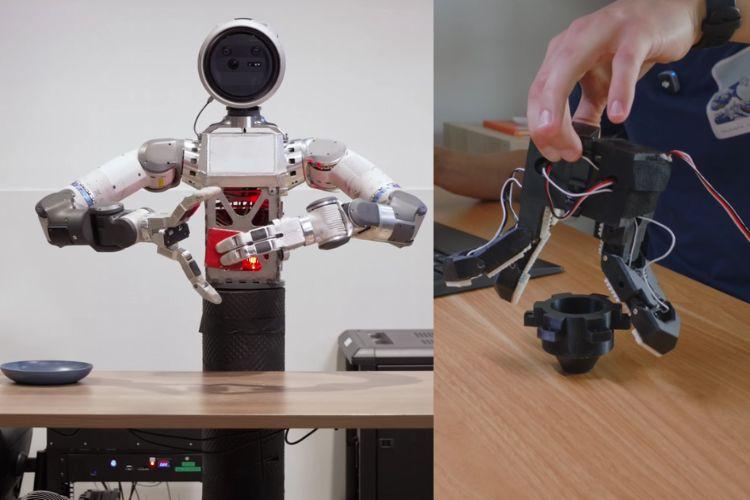
Maker Replicated the Boston Dynamics Gripper Using Daisy-Chained Servos and 3D-Printed Fingers Maker built a Boston Dynamics–style gripper using daisy‑chained bus servos and 3D‑printed fingers. Inspired by the Electric Atlas Humanoid Robots, the design focuses on a simple three‑finger layout with a rotating thumb to move around objects of different shapes. By linking multiple servos over a single UART bus, the build keeps wiring clean while allowing independent control of each joint for… |
