
robotics
|
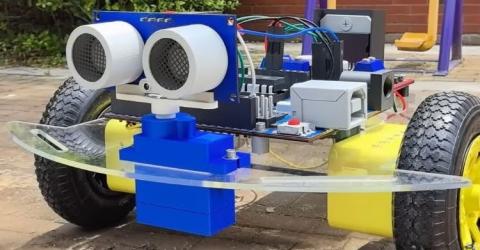
Arduino Obstacle-Avoiding Robot Rebuilt 7 Times Larger A Youtube channel named UncleStem has taken DIY robotics to a completely new level by building a giant obstacle-avoiding robot powered by a fully functional oversized Arduino Uno. The project recreates a classic Arduino obstacle avoidance robot at seven times the original size while still maintaining real working electronics inside. From giant DC motors and oversized jumper wires to a massive… |

|
Building Rocky From Project Hail Mary in Real Life Leviathan Engineering, a tech-focused YouTube channel, has recreated Rocky from Project Hail Mary as a real AI-powered robot by combining mechanical design, on-device speech recognition, and modern AI that responds in real time. The robot runs on a Raspberry Pi 5 (4GB RAM) and uses 10 MG996R servo motors for movement. A major part of what makes this build impressive is the software… |

|
New Robotics Training Method Helps Simulated Skills Work in Reality Researchers at Aston University have developed a new AI-based robot training approach aimed at reducing the long-standing “sim-to-real” gap in robotics. The work focuses on improving how robots transfer skills learned in simulation into unpredictable real-world environments, where differences in material properties, sensor noise, and physical interaction often cause systems to fail despite… |
|
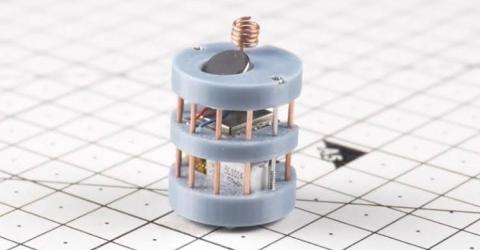
The One-Motor Robot That Can Move in All Directions Is it possible to control a robot using only one motor? yes, a popular YouTube channel, Pro Know, has done a simple yet innovative robot that can move forward, backward, left, and right all with a single motor. Traditionally, robots depend on differential drive systems or steering mechanisms that require multiple motors. However, this project showing how smart design and control logic can… |

|
Conversational Baymax Robot with Animatronics and AI Integration Maker Brae Barnes is developing a conversational Baymax-style robot that combines animatronic motion with an AI-driven speech system. The current prototype focuses on the head assembly, featuring articulated neck movement, blinking eyelids, and the ability to respond to spoken input using a speech-processing pipeline. The goal is to create a robot that not only talks but also conveys… |
|
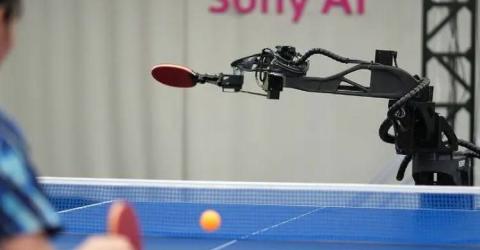
AI Robot Outplays Elite Table Tennis Players With Its 20-ms Reaction Time Sony AI Zurich has unveiled Project ACE, a Revolutionary physical AI system that can compete with and even outperform elite human table tennis players. Led by engineer Peter Dürr , the project pushes artificial intelligence beyond simulations and into the real world, proving that AI can now operate at the extreme speeds required for professional sports. Table tennis is considered one of… |

|
Algorithmic Robotic Golf Club Masters Complex Mini-Golf Shots Engineer and creator Shane Wighton has upgraded his robotic mini-golf system to tackle complex, physics-heavy shots with near-perfect accuracy. The project combines a motorized golf club with a full motion-capture setup, allowing the system to precisely track the ball, club, and course geometry. By scanning real-world mini-golf layouts into a digital model, the system can analyze terrain… |

|
Getting Started with Arduino UNO Q - Beginners Guide From blinking LEDs to building robots, the Arduino UNO was the development board that made electronics feel possible for students, professionals and a lot of hobby makers around the world. While keeping the familiar idea of Arduino UNO and its form factor the same, they have launched this board called the Arduino UNO Q, which is a more capable variant of the original… |
|
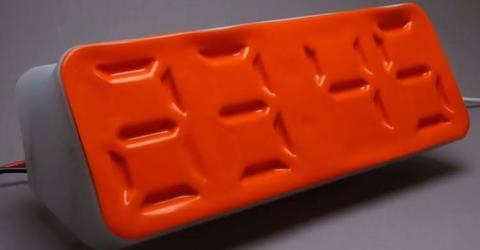
This Clock Displays Time Using Air and Pneumatic RAM A unique experimental clock created by soiboi soft is gaining attention for its unusual way of telling time. While it may look like a fully air powered system, the design actually combines pneumatic logic with electronic control. Instead of relying only on circuits and chips, the clock uses air pressure to form its display, while electronics handle precise timing and control, making it a… |
|
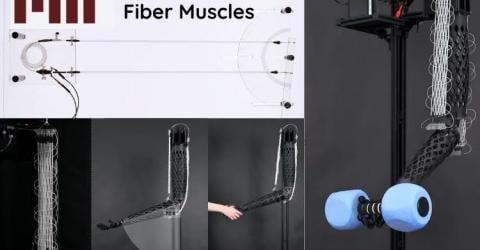
What If Robots Had Muscles Instead of Motors? MIT’s Fiber Actuators The field of soft robotics has taken a significant leap forward with the development of electrofluidic fiber muscles by researchers at the MIT Media Lab. Traditional robotic actuators depends on bulky external reservoirs, heavy compressors, or noisy pneumatic systems, which limit their mobility and integrations. These new fiber muscles solve this by utilizing thin McKibben actuators driven by… |
|
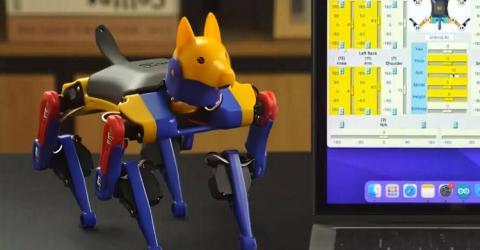
Petoi Bittle X V2: An ESP32 Robot Dog That Can Even Backflip on Command Robotics just got a whole lot more exciting and a whole lot more accessible. Petoi's Bittle X V2 is a palm-sized quadruped robot dog powered by the BiBoard V1, a custom ESP32-based board that packs serious intelligence into a surprisingly compact frame. With nine degrees of freedom delivering smooth, lifelike movement, an interactive back touch sensor that literally responds when you pet it,… |
|
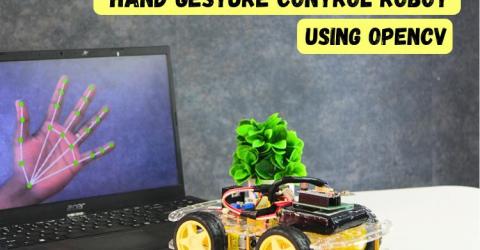
Hand Gesture Control Robot Using OpenCV Gesture control robotics replaces traditional buttons and joysticks with natural hand movements. This approach improves user interaction and reduces mechanical dependency on physical controllers. Sensors capture motion, convert it into digital data, and translate that data into robot movement in real time. This project demonstrates a… |