

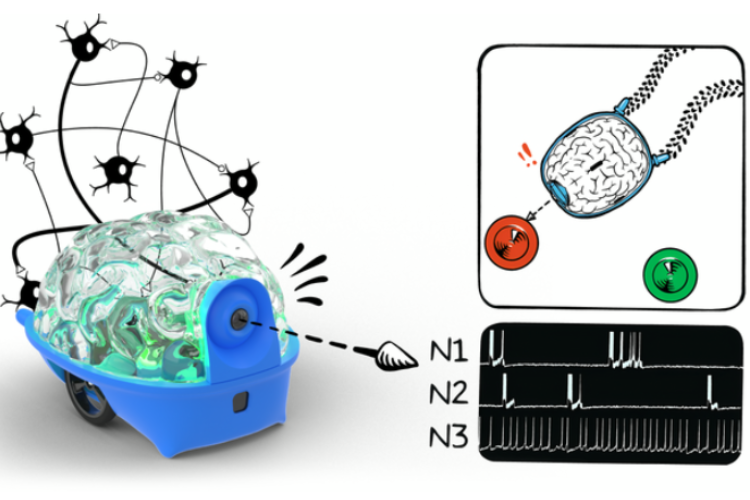
A revolutionary neuroscience robotics project called SpikerBot is creating excitement among technology enthusiasts, engineering students, and STEM researchers across the world. Developed by Backyard Brains, the innovative platform combines neural signal processing, embedded systems, robotics, and bioengineering into a single interactive learning experience. Recently launched on Kickstarter, the project demonstrates how real biological neuron activity can directly control the movement of a robotic creature in real time.
Technically, the system operates using bioelectric signal acquisition and neural spike detection mechanisms that capture tiny electrical impulses generated by neurons. These low-amplitude analog signals are passed through precision amplification and filtering stages to eliminate noise and improve signal clarity before reaching the embedded processing unit. The processed neural data is then interpreted by a microcontroller-based control architecture that communicates with the robot’s actuators and motor drivers, enabling synchronized movement based on live neural activity. The platform introduces users to advanced concepts such as analog-to-digital conversion, signal conditioning, sensor interfacing, low-latency motor control, real-time embedded processing, and closed-loop robotic systems.
Beyond being an educational kit, SpikerBot represents the future direction of brain-computer interfaces (BCI), neuro-inspired robotics, AI-assisted automation, and intelligent biomedical systems. The project demonstrates how biological data can interact with embedded hardware and computational algorithms to create responsive robotic behavior, a principle widely used in modern prosthetics, rehabilitation technology, cognitive robotics, and advanced healthcare devices

Add a comment
No account needed. Your comment appears once a moderator has reviewed it.