
community news
|
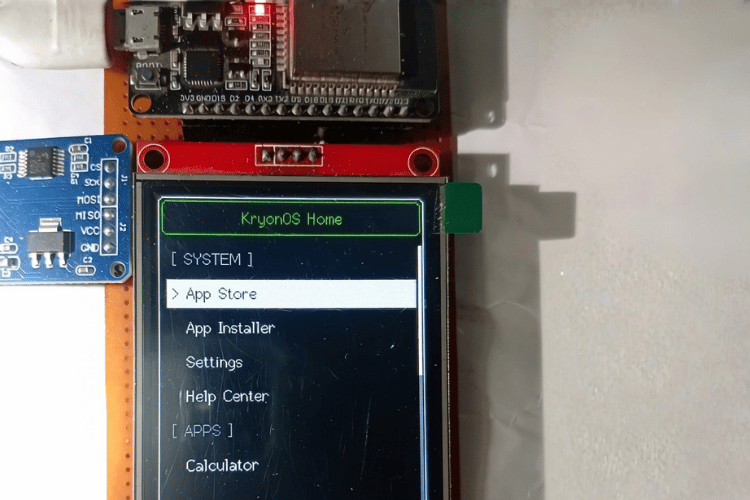
A Solo Dev Built an OS for ESP32 Boards and Gave Its JavaScript Engine Direct Access to the Hardware An open-source project called KryonOS is a GUI operating system for ESP32 microcontroller boards, built for use with a touch display and an SD card module. Built by a single developer who goes by Haris (GitHub handle Haris16-code) and released under the GPL-3.0 license, it adds a real touchscreen interface, a file explorer, and an app store to hardware that normally runs just one fixed program… |
|
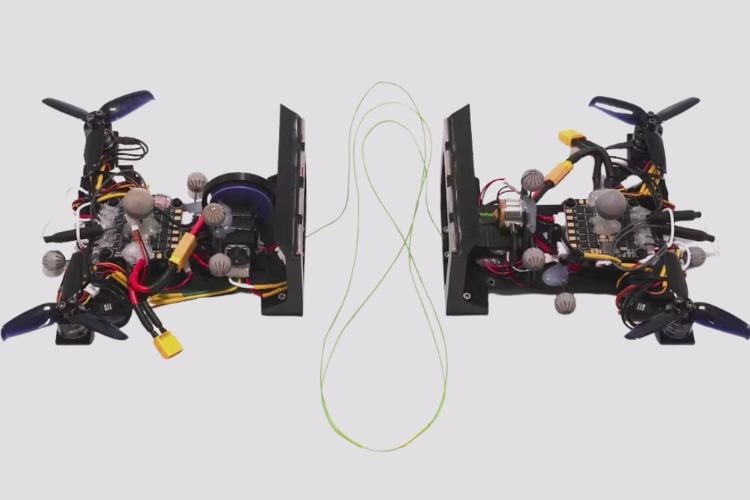
Two Bicopters Linked by a Cable Use a Motorized Winch and Sensor to Transform Into a Quadcopter Mid-Air Researchers led by R.Wang have developed a transformable aerial robot made from two small bicopters connected by a cable, allowing the system to change its shape and interact with objects without using a conventional robotic gripper. Each bicopter uses two brushless motors with tilting propellers, while the cable itself acts as the key mechanical component. One aircraft carries a motorized… |
|
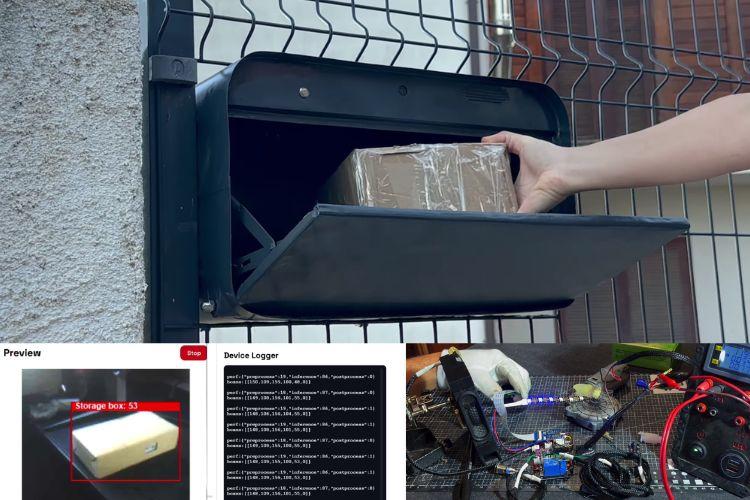
ESP32-Based Smart Mailbox Uses Computer Vision to Detect Packages and Trigger Motorized Doors and Alerts The project documents a fully automated smart mailbox built by Re-Crafting DIY. It integrates advanced electronics to solve practical issues like package theft, weather damage, and inadequate storage space. By repurposing an old car’s wiper motor for the door mechanism, the mailbox features a heavy-duty, motorized front door controlled by a central brain. It might have been a little too much… |
|
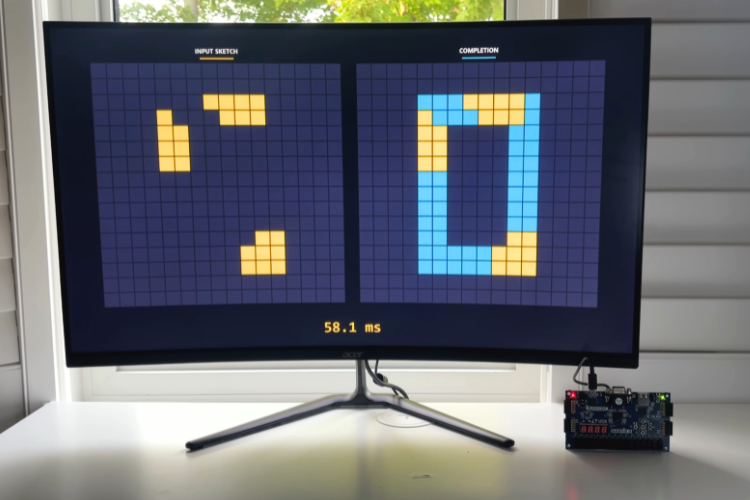
Engineer Recreates Google's TPU Chip Design on a $60 FPGA Using Systolic Arrays and Smart Approximation A YouTube creator running the channel "traffic in the brain" has published a detailed walkthrough of building a small-scale AI accelerator from scratch on a budget FPGA board, recreating the core architectural ideas behind Google's Tensor Processing Unit (TPU).
The project, released September 17, 2026, implements a two-layer attention model, the same… |
|
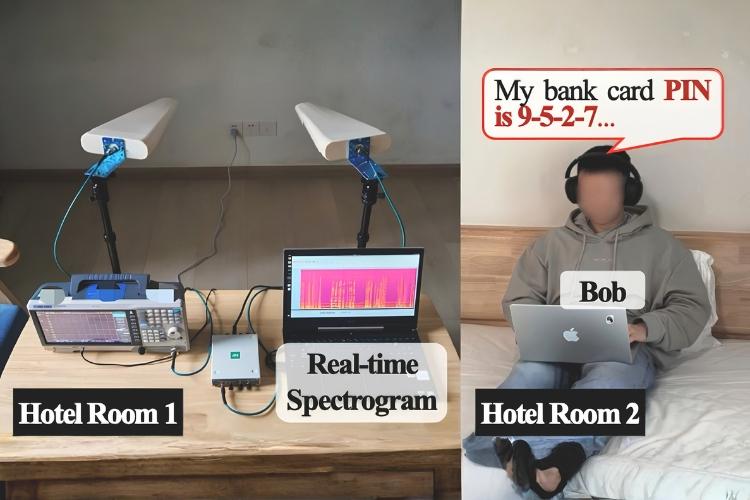
Researchers Show You Can Beam RF at a Stranger's Headphones and Eavesdrop on What They're Listening To A team from the Hong Kong University of Science and Technology (Guangzhou) and Hong Kong Polytechnic University has demonstrated a new eavesdropping technique that turns ordinary consumer electronics into unintentional radio transmitters, using nothing but an external RF signal and the target device's own circuitry. The attack, detailed in a paper accepted to USENIX Security 2026 and… |
|
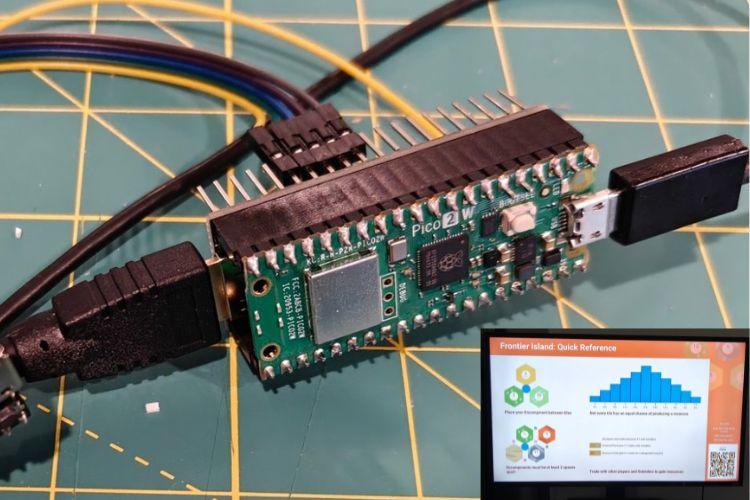
RP2350 Microcontroller Drives Full 1080p HDMI With No Framebuffer Using Scanline Technique Aaron Gayle’s TV‑Top Kiosk project shows how to squeeze a full 1920×1080 HDMI signal out of a RP2350 microcontroller, which is seen in the popular Raspberry Pi RP2350 development board. To reach 1080p, he overclocked the RP2350 to 372 MHz and used its faster peripherals to generate a DVI/HDMI signal at up to 30 Hz in 24‑bit color. The result is a tiny, low‑cost “console” stick, something like… |
|
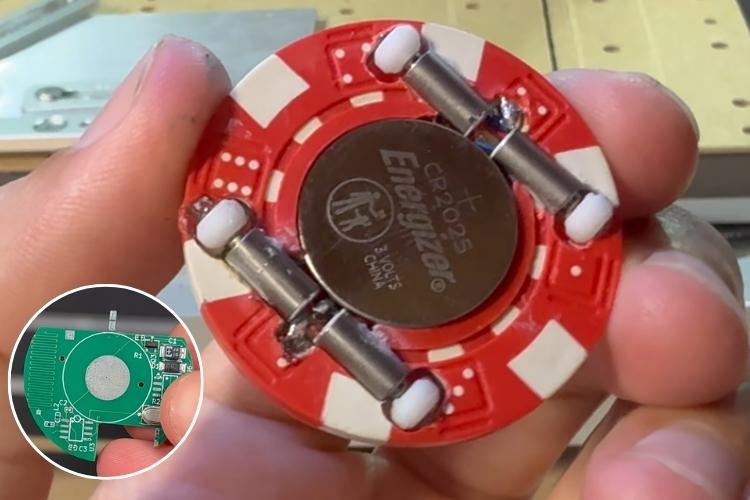
A Tiny Robot Hides Inside a 3.5-mm Poker Chip to Cheat at Roulette With 433 MHz Radio and a Custom PCB Kevin Coda of Concept Bytes Youtube channel built a tiny remote-controlled robot inside a poker chip for Mark Rober's CrunchLabs casino challenge. The project turns a standard poker chip into a miniature mobile robot that can move across a roulette table after receiving a wireless command. To make room for the electronics, the chip was hollowed out using CNC machining and its internal steel… |
|
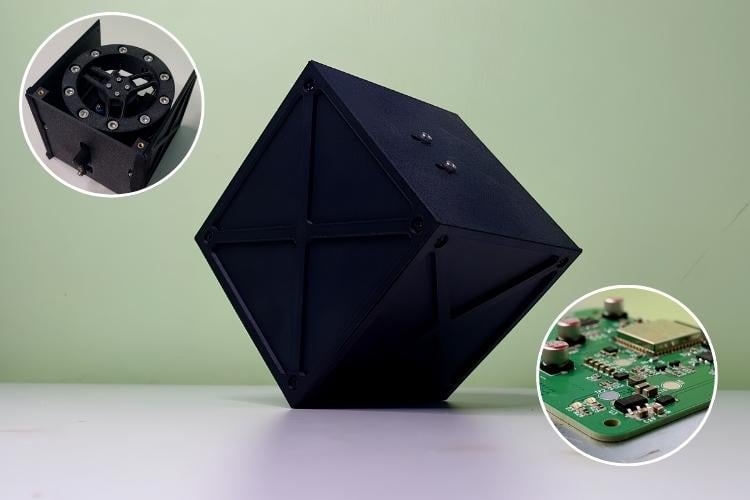
This ESP32-Powered Self-Balancing Cube Jumps With a Spring and Uses a Reaction Wheel to Land on Its Edge A maker from The Tinkering Techie has done a compact self-balancing cube that can launch itself into the air, reorient during the jump, and land upright on one of its edges. Unlike conventional self-balancing robots that continuously drive wheels against the ground, this cube uses an internal reaction wheel to control its orientation. When the motor accelerates or decelerates the spinning… |
|
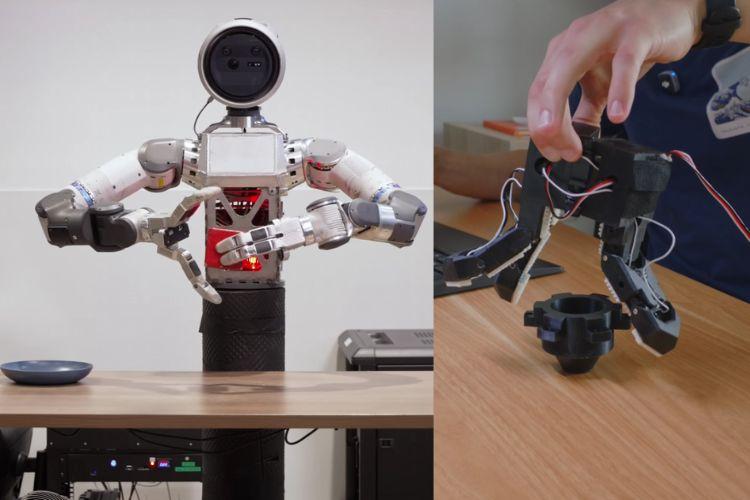
Maker Replicated the Boston Dynamics Gripper Using Daisy-Chained Servos and 3D-Printed Fingers Maker built a Boston Dynamics–style gripper using daisy‑chained bus servos and 3D‑printed fingers. Inspired by the Electric Atlas Humanoid Robots, the design focuses on a simple three‑finger layout with a rotating thumb to move around objects of different shapes. By linking multiple servos over a single UART bus, the build keeps wiring clean while allowing independent control of each joint for… |
|
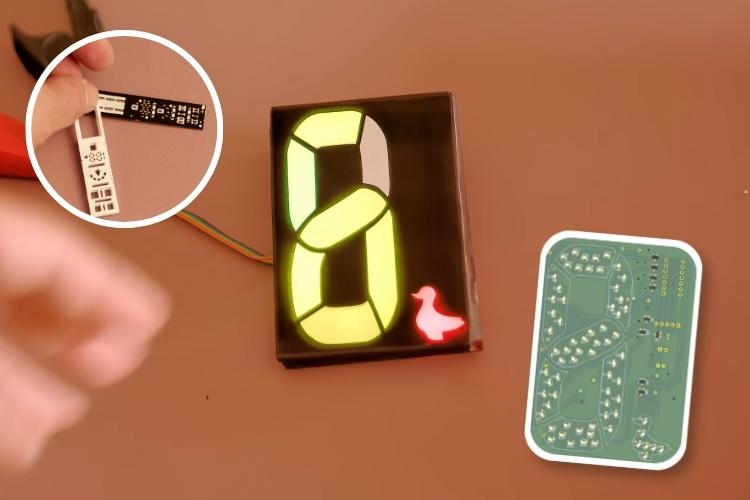
Python Tool Turns Your Image Into a PCB Layout in KiCad With LEDs Placed to Help Make Your Own Display Maker's Fun Duck has published a video that pairs a hands-on teardown of a commercial custom LED display with the release of an open-source Python tool, the Custom LED Display Generator, that automates the design of similar displays from scratch.
The video opens with a physical dissection of a commercial unit, the kind used for glowing logo signs.… |
|
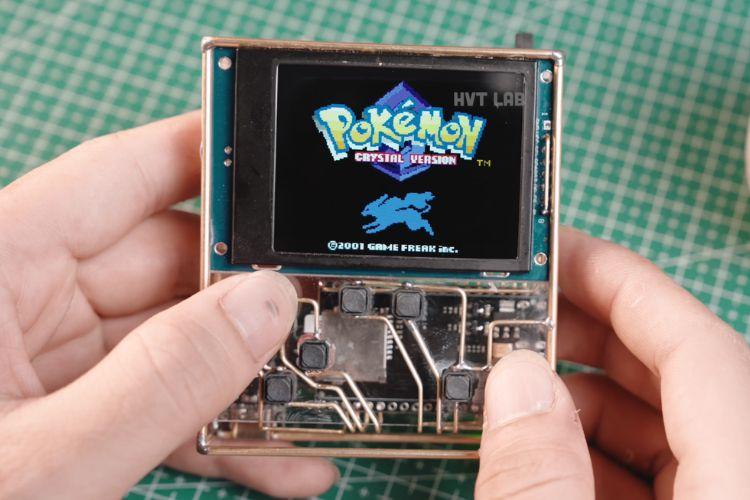
ESP32-S3-Based Pocket-Sized Retro Gaming Console With Brass Wires for the Frame and Wiring This is a pocket-sized retro gaming console built by HVT Lab. It's powered by an ESP32-S3 N16R8 microcontroller and plays classic games from legendary systems like Nintendo, Game Boy, and Sega. It uses a 2.4-inch IPS display, and he made the entire body of the console from 2 mm brass wire, demonstrating a unique blend of DIY electronics and metal craftsmanship. He… |
|
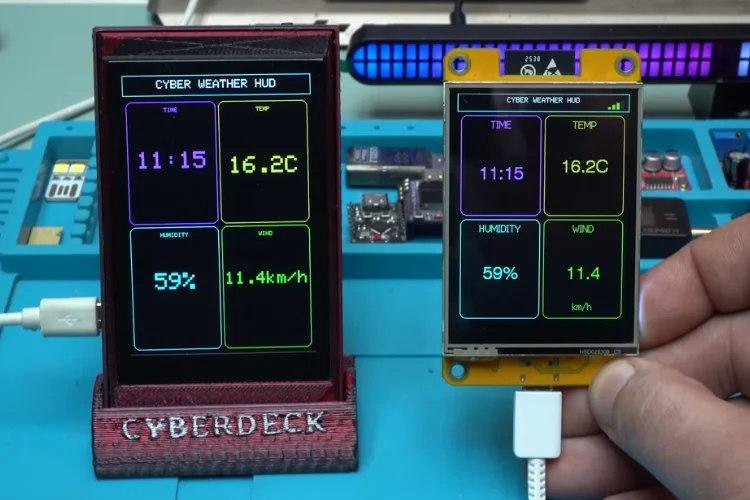
Maker Builds a 5-in-1 Cyber Deck Using an ESP32, 3.5-Inch Touchscreen Display, and Custom 3D-Printed Body Maker from the youtube channel Hacktuber recently made a custom "5-in-1 Cyber Deck" using ESP32. He demonstrated the project using two different ESP32 based development boards. One is a 2.8-inch CYD (Cheap Yellow Display) featuring an integrated touchscreen for quick prototyping, and the other is a 3.5-inch non-touch TFT display connected to an ESP32 C3 Mini, mounted onto a 3D-printed… |
