
community news
|
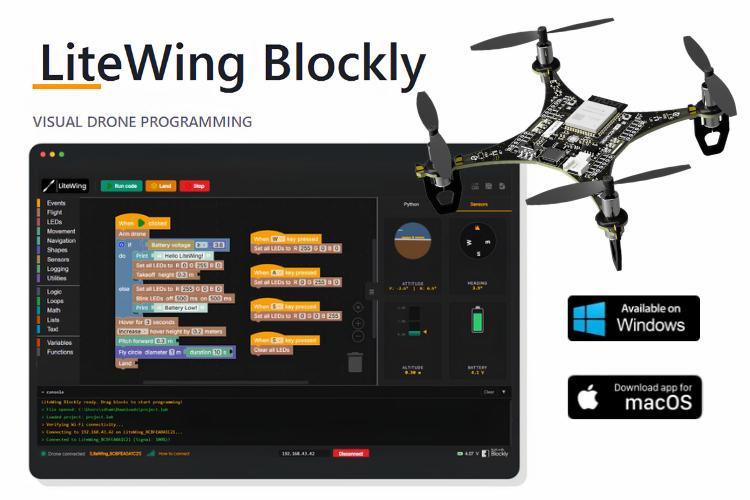
LiteWing Blockly Brings Drag-and-Drop Programming to the LiteWing ESP32 Drone SemiconLab has introduced LiteWing Blockly, a visual programming application that lets users create autonomous LiteWing drone programs with drag-and-drop blocks instead of writing code from scratch. The software is designed to make drone programming more accessible for students, beginners, makers, and educators, while also showing the Python code generated by each block arrangement in real… |
|
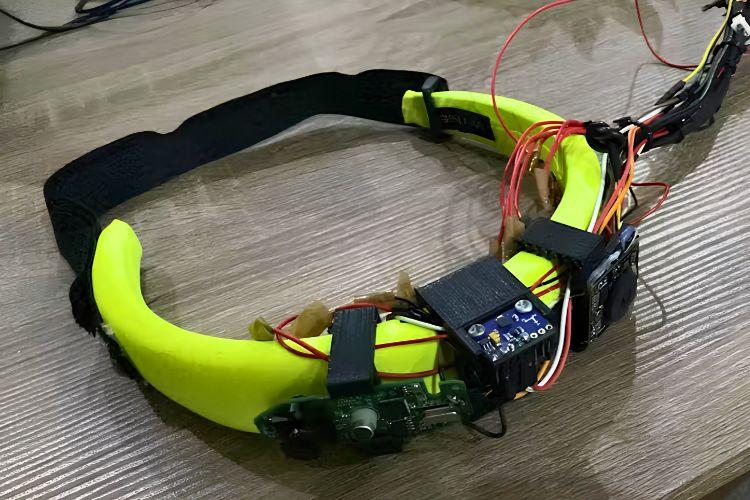
This Arduino UNO Q Headband Uses 13 Vibration Motors for Screen-Free Awareness Through Haptic Feedback Maker pasquale887 has developed HaloSense V1, a wearable haptic headband that helps users sense the direction of people and objects through vibrations instead of looking at a screen. The headband has 13 small vibration motors arranged around the forehead. When a person or target is detected in a particular direction, the motor in the corresponding position vibrates, helping the wearer… |
|
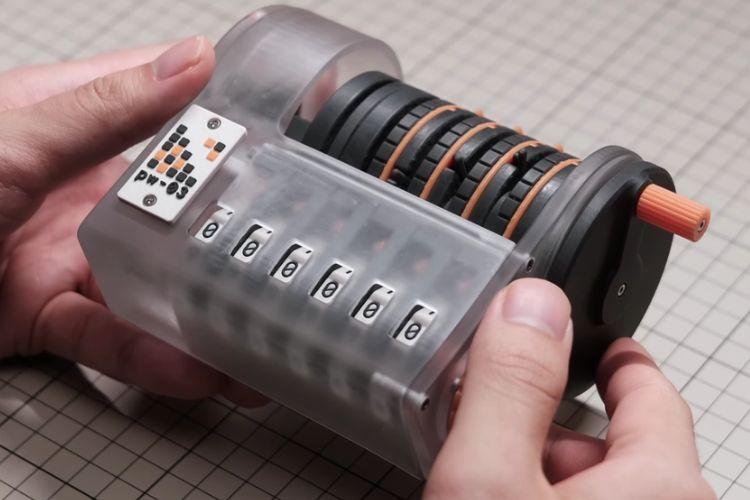
Using Over 130 3D-Printed Parts, This Six-Digit Calculator Lets Gears and a Hand Crank Handle the Logic A maker has built a calculator out of some 3D-Printed parts that can perform up to six-digit addition, subtraction, multiplication, and division that too without any complicated electronics. The machine is made from more than 130 custom designed parts and works entirely through gears, pins, levers, springs, and a hand crank. Its design is inspired by historic mechanical calculators, especially… |
|
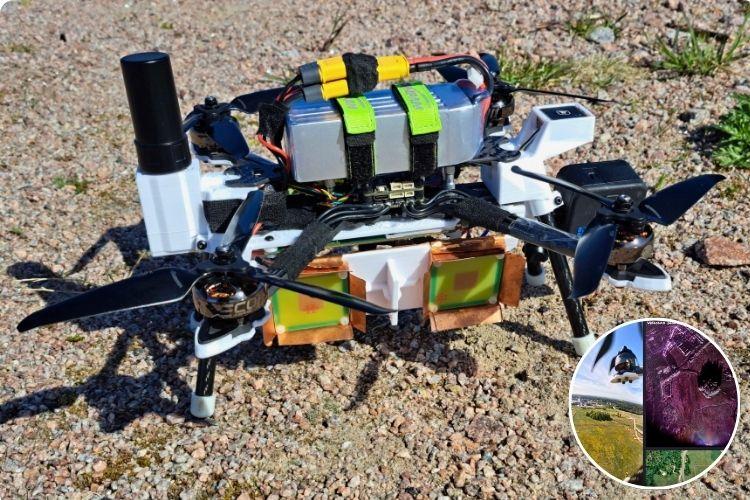
This Open-Source DIY Drone Uses FMCW Radar and RTK GPS for High-Resolution SAR Imaging and Ground Mapping This DIY drone is doing something much more than taking aerial photos. It uses a custom FMCW radar to create detailed images of the ground from the air.This is built by Henrik Forstén.The system sends radio signals toward the ground and measures the signals that bounce back. As the drone flies, it collects thousands of these measurements and combines them using Synthetic Aperture Radar (SAR)… |
|
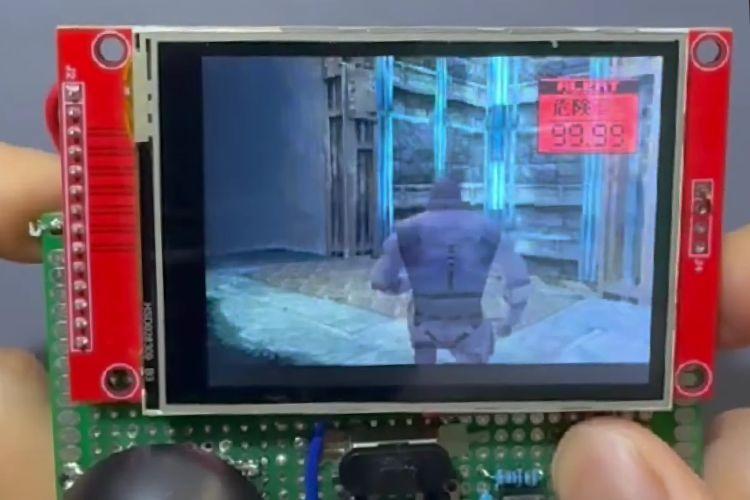
ESP32-S3 Runs a 1998 PlayStation Game With Game Files Loaded From a MicroSD Card on Demand David Montero Crespo, creator of Velxio.dev, has managed to run the classic 1998 PlayStation game Metal Gear Solid on the tiny, low-cost microcontroller board - the Seeed Studio XIAO ESP32S3 Sense. Instead of emulating the old PlayStation hardware, the project rebuilds the game from its reversed C source code and compiles it directly to run on the ESP32-S3’s processor. The game data is stored… |

|
This Autonomous Submarine Uses DVL Sound Waves for GPS-Free Underwater Navigation and Exploration CPSdrone is building a DIY autonomous submarine to explore shipwrecks without needing GPS while underwater. Since GPS signals cannot reach the submarine underwater, the team added a Doppler Velocity Log (DVL) to help it navigate. The DVL sends sound waves toward the seafloor and listens for the signals that bounce back. By measuring how the sound changes as the submarine moves, it can… |
|
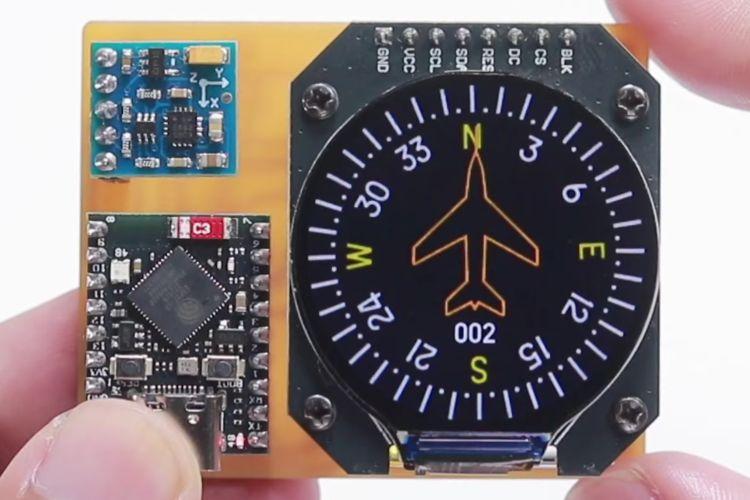
ESP32-S3-Based Compass Uses a 3-Axis Magnetometer for Real-Time heading and Direction Readouts LazyDays Creation built a compact, portable digital compass based on an ESP32-S3 Super Mini and a three-axis magnetometer. He chooses an ESP32-S3 Super Mini because it is capable enough for the project while also including a built-in lithium-battery charging circuit. A round colour display gives the finished device a distinctive watch-like appearance, while the rechargeable battery allows it… |
|
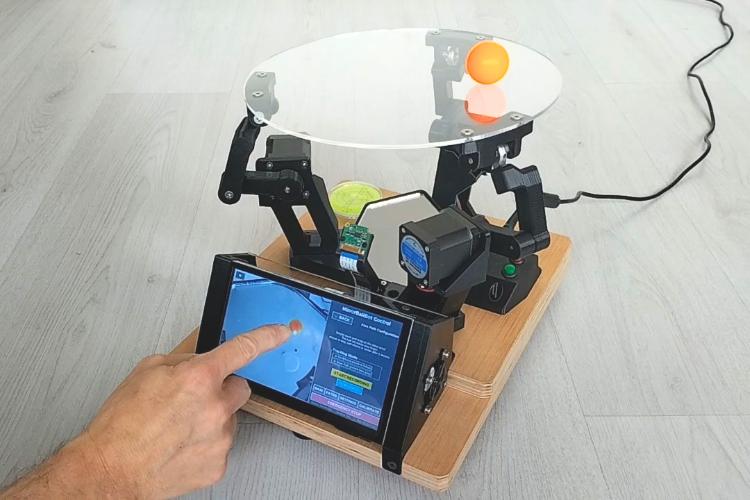
Ball-Balancing Robot Uses a Mirror to Stay Compact; Pi Handles Vision, Leaves Motor Step Timing to 3 RP2040 Chips MirrorBallBot, an open-source ball-balancing robot from a maker using the GitHub handle AndreaFavero71, looks at its platform through a mirror rather than from above. The camera sits to the side and points at a mirror inclined at 27 degrees beneath the platform. The author says that, for the same camera and robot height, this widens the field of view by 58%, which allows a larger platform… |
|
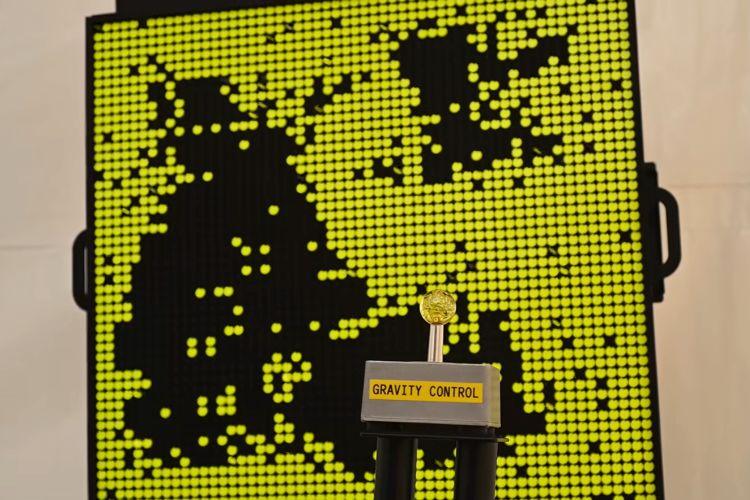
This STM32 Turns 3,000 Mechanical Pixels Into a Real-Time Fluid Simulator With Joystick-Controlled Gravity Maker Tim Alex Jacobs has turned nearly 3,000 old electromechanical flip dots into an unusual real-time fluid simulation display. Instead of using an LCD or LED panel, the project uses eight salvaged flip-dot panels, where every pixel is a small magnetic disk that physically flips between two positions. which is black and yellow. The result is a display that not only shows the movement of the… |
|
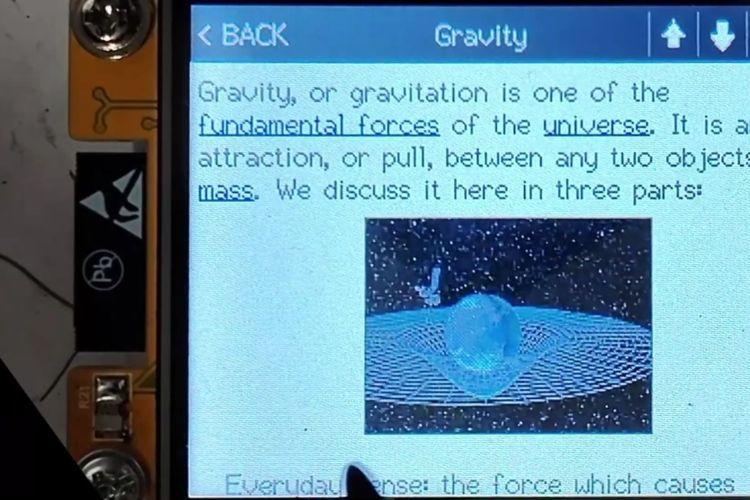
Maker Builds an Offline Wikipedia Using an ESP32 Board and Its Built-In microSD Card Slot to Store Data Alun Morris’s Offline-Wikipedia using ESP32 is an open-source project that turns the inexpensive ESP32-2432S028, commonly called the “Cheap Yellow Display” or CYD, into a standalone Wikipedia reader. The hardware combines an ESP32 microcontroller with a 320×240 ILI9341 color display, an XPT2046 touchscreen, and a microSD card interface. Instead of depending on Wi-Fi or cloud services, the… |
|
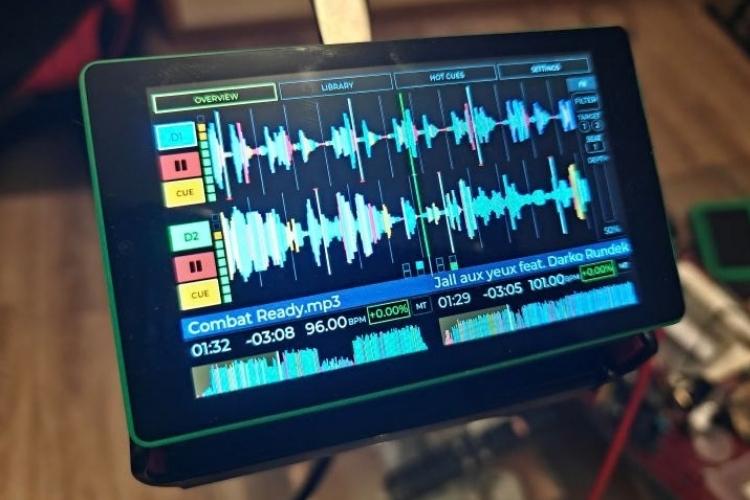
This ESP32-P4 Turns a DJ Controller Into a Laptop-Free DJ System With Two Music Decks and Audio Mixing A maker has built a standalone DJ system using the ESP32-P4, allowing a Pioneer DDJ-FLX4 DJ controller to work without a laptop running DJ software. The open-source Pajoniiir project uses a Guition JC4880P443C_I_W board with an ESP32-P4 and 4.3-inch touchscreen. It reads music from a USB drive exported from Rekordbox and supports MP3, WAV and FLAC files. The system can run two DJ decks at the… |
|
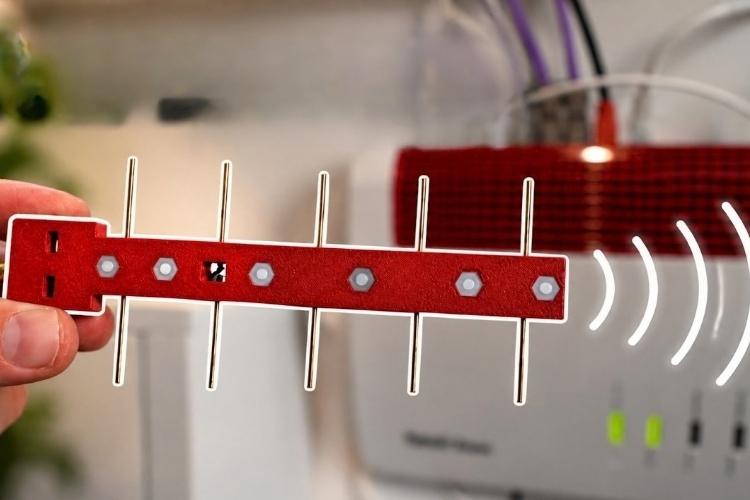
A Maker Built a 2.4GHz DIY Yagi With 1mm Brass Rods That Improved ESP32 RSSI From −65dBm to −52dBm A maker has built and tested a DIY 2.4-GHz directional Wi-Fi antenna using a 3D-printed frame and simple brass rods, showing how antenna geometry can significantly change the performance of an ESP32 wireless link. The experiment uses two ESP32 boards, with one acting as a Wi-Fi transmitter powered by a power bank and the other connected to a computer as the receiver. The receiver measures RSSI… |
