
community news
|
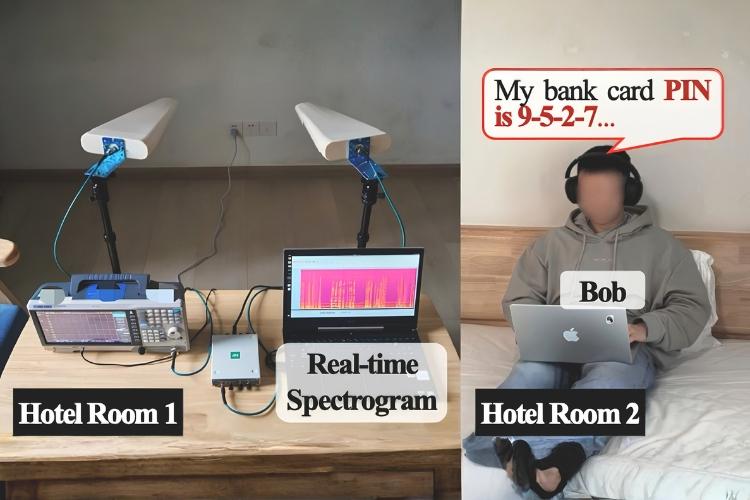
Researchers Show You Can Beam RF at a Stranger's Headphones and Eavesdrop on What They're Listening To A team from the Hong Kong University of Science and Technology (Guangzhou) and Hong Kong Polytechnic University has demonstrated a new eavesdropping technique that turns ordinary consumer electronics into unintentional radio transmitters, using nothing but an external RF signal and the target device's own circuitry. The attack, detailed in a paper accepted to USENIX Security 2026 and… |
|
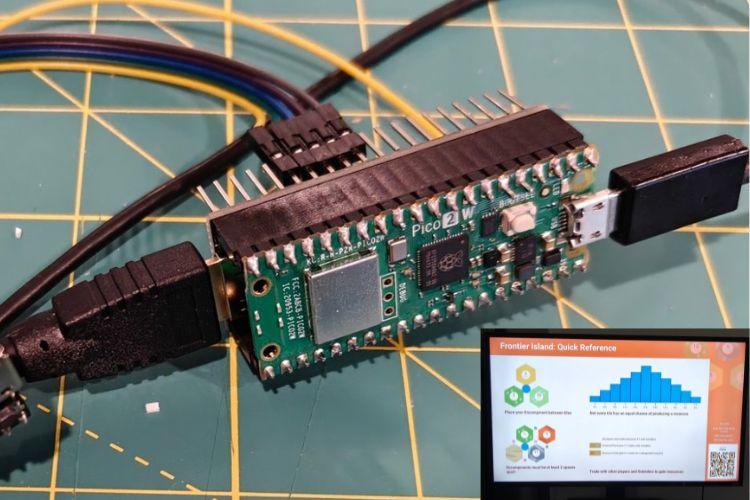
RP2350 Microcontroller Drives Full 1080p HDMI With No Framebuffer Using Scanline Technique Aaron Gayle’s TV‑Top Kiosk project shows how to squeeze a full 1920×1080 HDMI signal out of a RP2350 microcontroller, which is seen in the popular Raspberry Pi RP2350 development board. To reach 1080p, he overclocked the RP2350 to 372 MHz and used its faster peripherals to generate a DVI/HDMI signal at up to 30 Hz in 24‑bit color. The result is a tiny, low‑cost “console” stick, something like… |
|
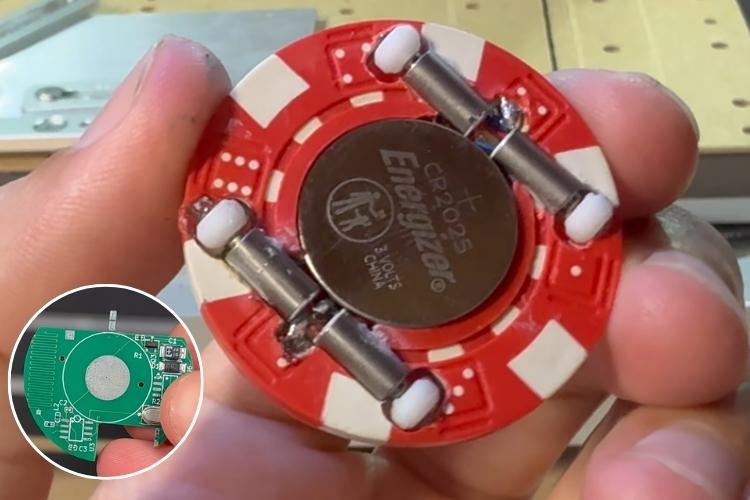
A Tiny Robot Hides Inside a 3.5-mm Poker Chip to Cheat at Roulette With 433 MHz Radio and a Custom PCB Kevin Coda of Concept Bytes Youtube channel built a tiny remote-controlled robot inside a poker chip for Mark Rober's CrunchLabs casino challenge. The project turns a standard poker chip into a miniature mobile robot that can move across a roulette table after receiving a wireless command. To make room for the electronics, the chip was hollowed out using CNC machining and its internal steel… |
|
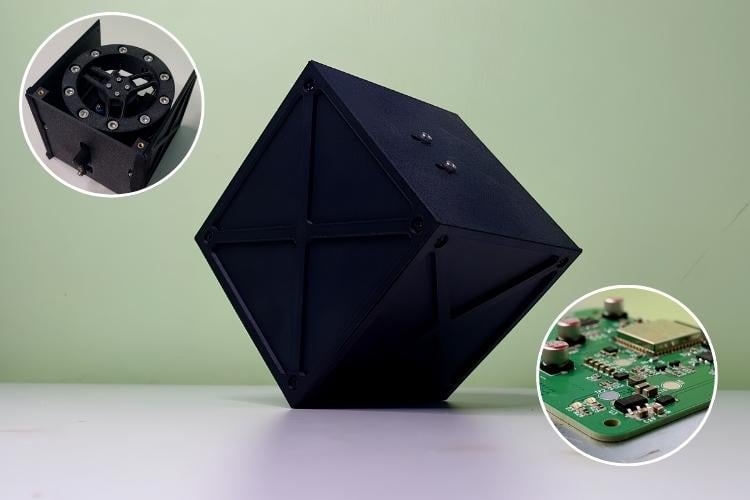
This ESP32-Powered Self-Balancing Cube Jumps With a Spring and Uses a Reaction Wheel to Land on Its Edge A maker from The Tinkering Techie has done a compact self-balancing cube that can launch itself into the air, reorient during the jump, and land upright on one of its edges. Unlike conventional self-balancing robots that continuously drive wheels against the ground, this cube uses an internal reaction wheel to control its orientation. When the motor accelerates or decelerates the spinning… |
|
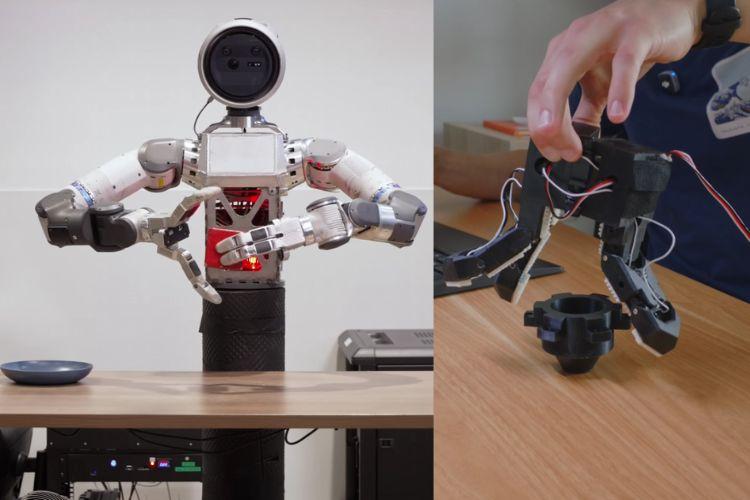
Maker Replicated the Boston Dynamics Gripper Using Daisy-Chained Servos and 3D-Printed Fingers Maker built a Boston Dynamics–style gripper using daisy‑chained bus servos and 3D‑printed fingers. Inspired by the Electric Atlas Humanoid Robots, the design focuses on a simple three‑finger layout with a rotating thumb to move around objects of different shapes. By linking multiple servos over a single UART bus, the build keeps wiring clean while allowing independent control of each joint for… |
|
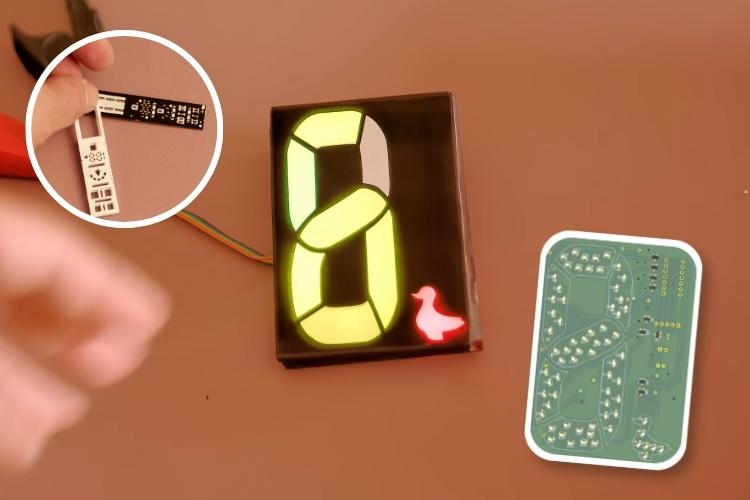
Python Tool Turns Your Image Into a PCB Layout in KiCad With LEDs Placed to Help Make Your Own Display Maker's Fun Duck has published a video that pairs a hands-on teardown of a commercial custom LED display with the release of an open-source Python tool, the Custom LED Display Generator, that automates the design of similar displays from scratch.
The video opens with a physical dissection of a commercial unit, the kind used for glowing logo signs.… |

|
ESP32-S3-Based Pocket-Sized Retro Gaming Console With Brass Wires for the Frame and Wiring This is a pocket-sized retro gaming console built by HVT Lab. It's powered by an ESP32-S3 N16R8 microcontroller and plays classic games from legendary systems like Nintendo, Game Boy, and Sega. It uses a 2.4-inch IPS display, and he made the entire body of the console from 2 mm brass wire, demonstrating a unique blend of DIY electronics and metal craftsmanship. He… |
|
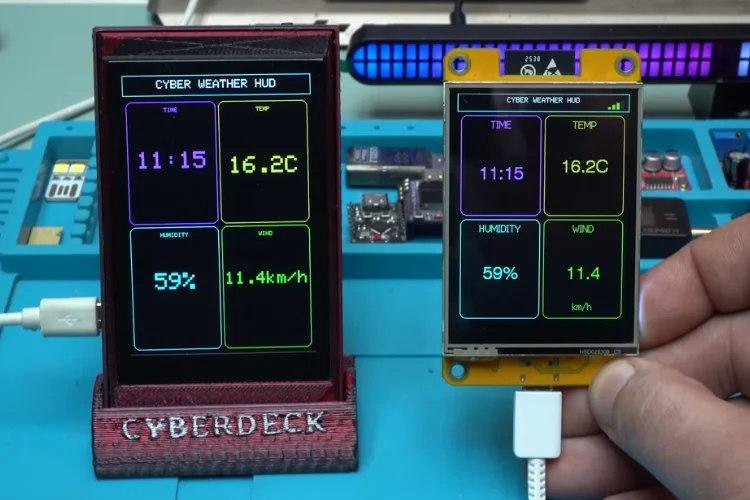
Maker Builds a 5-in-1 Cyber Deck Using an ESP32, 3.5-Inch Touchscreen Display, and Custom 3D-Printed Body Maker from the youtube channel Hacktuber recently made a custom "5-in-1 Cyber Deck" using ESP32. He demonstrated the project using two different ESP32 based development boards. One is a 2.8-inch CYD (Cheap Yellow Display) featuring an integrated touchscreen for quick prototyping, and the other is a 3.5-inch non-touch TFT display connected to an ESP32 C3 Mini, mounted onto a 3D-printed… |
|
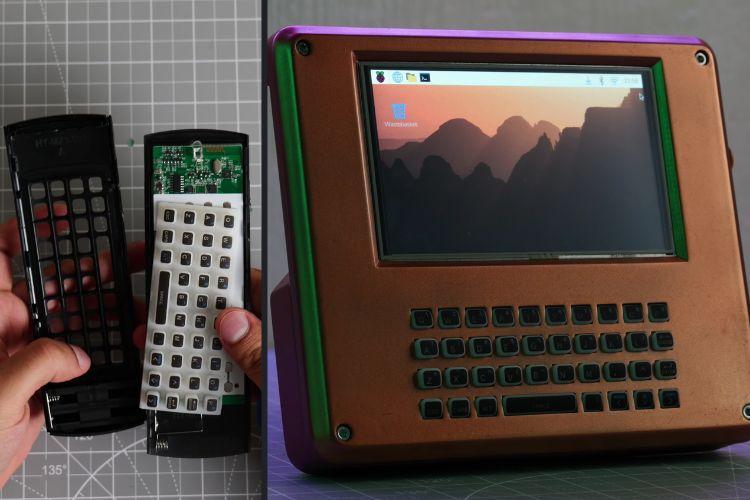
Maker Turns a Normal IR TV Remote into a Functional Keyboard Using I2C for His Handheld PC In his DIY electronics project, maker Mirza Makes transformed an ordinary TV remote into a fully functional keyboard for his portable computer. The idea was to give it a soft keyboard, the kind of ones seen in TV remotes. The build centers around a high-performance Raspberry Pi 5 paired with a compact Elecrow 5-inch TFT touchscreen display to provide a… |
|
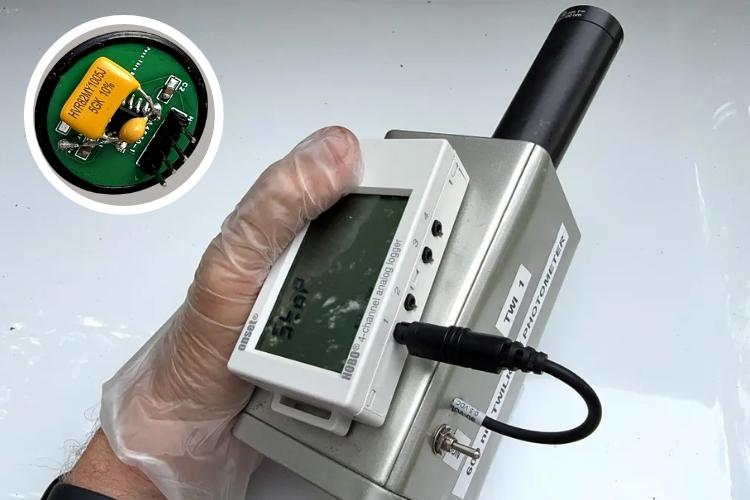
This DIY Twilight Photometer Uses an LED and ADA4530 to Measure the Ozone Layer’s Peak Height from the Ground Forrest M. Mims III has built a DIY twilight photometer that estimates the height of the ozone layer by measuring changes in the brightness of the sky before sunrise or after sunset. The project was inspired by the need for a simpler ground-based method of studying the atmosphere. Mims has worked with professional ozone-measuring instruments and wanted to create a smaller and less complicated… |
|
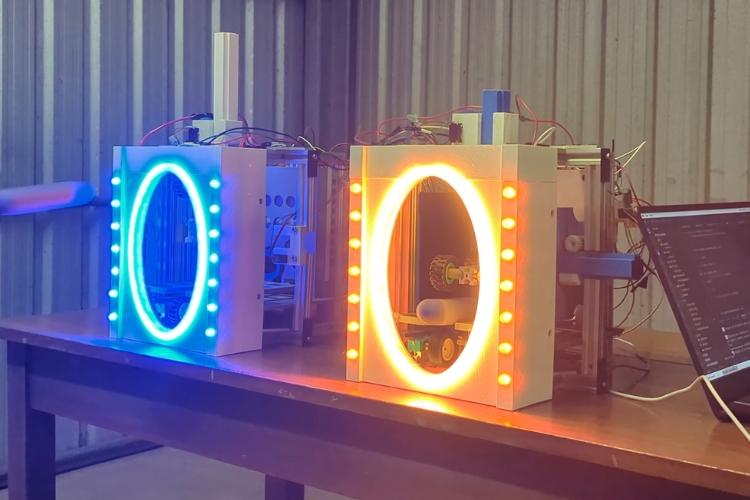
Maker Builds a Linked Portal Illusion Using Arduino Uno R4, Flywheel Launcher, and ToF Distance Sensors A maker from the youtube channel James' Programming has recently built a linked portal illusion using Arduino, 3D‑printed parts, and a custom aluminum frame. The setup uses two identical “portal” frames facing each other: when an object is thrown into one, it appears to instantly emerge from the other, creating a convincing real‑time portal illusion without any video tricks. … |
|
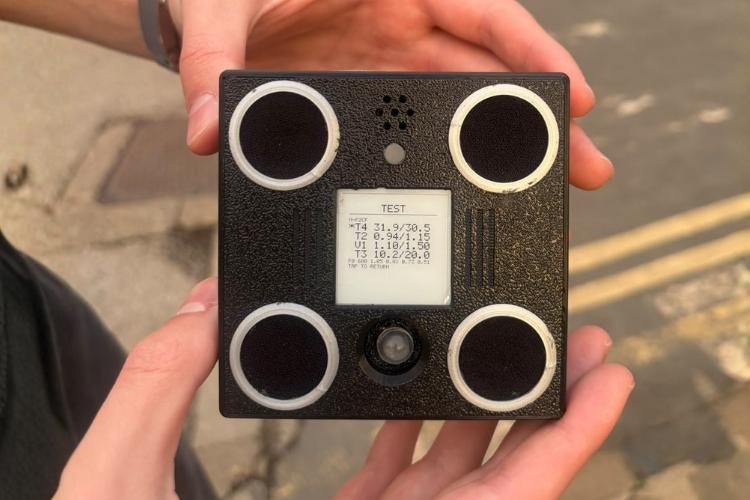
VolAnti: An Open-Source ESP32-S3 Device That Detects Fibre-Optic Drones With No RF Control Link, Using Sound A maker named Agam Rossen has created VolAnti, an open-source acoustic drone detector that identifies nearby multirotor drones by listening to the sound of their propellers. Unlike traditional drone detectors that look for radio-frequency signals, VolAnti focuses on the sound produced by spinning blades. This approach is particularly relevant to fibre-optic-controlled FPV drones, which send… |
