
AC
|
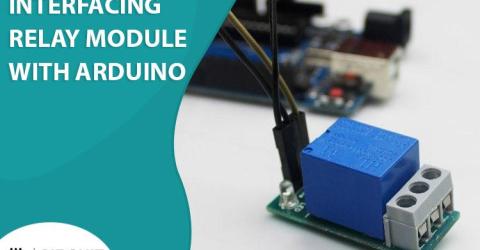
Understanding How a Single Channel Relay Module Works and How to Use it with Arduino to Control AC Loads A single-channel relay is an electronic switch that can be controlled by a low-power electrical signal, such as the output from an Arduino microcontroller. By using an Arduino Uno and a single-channel relay module, you can control high-voltage or high-power devices, such as lights, motors, and appliances, from your computer or mobile… |

|
Smart Phone controlled Home Appliances with Energy Meter using NodeMCU Hello guys Our project is about SMART HOME as with the advancement of technology, who doesn’t love being able to control appliances remotely, with just a few taps on their smartphones? We have come up with a project that will make your home smart, energy-efficient, Increase convenience, it will also allow you to have greater control of your energy use… |

|
IoT Based AC Fan Speed Control using Smart Phone with NodeMCU and Google Firebase In this article, we are building an AC Fan Regulator Circuit, which is able to control the speed of the fan by restricting the flow of current to the fan. The term AC Ceiling Fan Regulator is a mouthful, hence we will simply call it a fan regulator from now on. A fan regulator circuit is a crucial component that is used to increase or decrease the speed of an AC Fan/motor… |

|
Building a Compact and Low Power Solid-State Relay to Control AC Home Appliances using ESP8266 for IoT Applications Relays are common in many switching circuits where controlling (turning ON or OFF) an AC load is required. But due to the electromechanical characteristic, a mechanical relay has a self-life, and also it can only toggle the status of the load and cannot perform other switching operations like dimming or speed control. Apart from this, an electromechanical… |
|
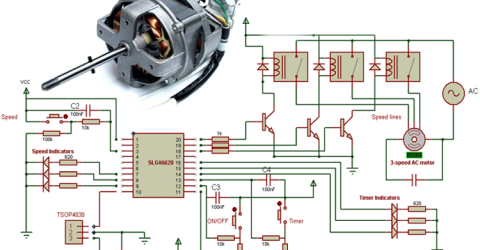
IR Decoder for Multi-Speed AC Motor Control Single-phase alternating current motors are typically found in household items such as fans, and their speed can be easily controlled when using several discrete windings for set speeds. In this article, we build a digital controller that allows users to control functions such as motor speed and operating time. This article also includes an infrared receiver circuit that… |

|
AC Phase Angle Control for Light Dimmers and Motor Speed Control using 555 Timer and PWM Signal Home automation systems are increasingly gaining popularity day by day, and nowadays it's become easy to turn on & off certain appliances by using some simple control mechanism like a relay or a switch, we have previously built many Arduino based Home Automation Projects using relays. But there are many home appliances that require control of this AC power rather than… |

|
All About Transformer Protection and Transformer Protection Circuits Transformer protection is crucial as transformers are one of the most critical and expensive components of any distribution system. It is an enclosed static device usually drenched in oil, and hence, faults occurring in it are limited. But the effect of a rare fault can be hazardous for the transformer, and the long lead time for repair and replacement of transformers makes… |

|
230V AC LED Driver Circuit for Powering 2.5Watts LED Light AC LED driver circuits are overly popular due to the advancement of High current white LEDs. We already made a Transformerless LED driver circuit previously, but in that circuit, we used a dedicated LED driver IC like LNK304 to generate 13.6V 150mA of output current to power LEDs. But in this tutorial, we will not use any dedicated driver ICs, but we will make a 2.5 Watt AC… |

|
AC Lights Flashing and Blink Control Circuit Using 555 Timer and TRIAC Sometimes, we might need an AC bulb flasher circuit that can blink a series of bulbs in a particular time interval for decorative purposes. By controlling the flashing time interval and sequence, we can make a series of bulbs look beautiful for outdoor decoration in Cafeteria, Restaurants, etc. or even used it for heavy Christmas light decoration, so here I have shared a… |

|
Half Wave and Full Wave Precision Rectifier Circuit using Op-Amp A rectifier is a circuit that converts alternating current (AC) to Direct current (DC). An alternating current always changes its direction over time, but a direct current flows continuously in one direction. In a typical rectifier circuit, we use diodes to rectify AC to DC. But this rectification method can only be used if the input voltage to the circuit is greater than… |

|
Introduction to Impedance Matching and How to use an Impedance Matching Transformer for your Design If you are an RF Design Engineer or anyone who has worked with Wireless Radios, the term “Impedance Matching” should have struck you more than once. The term is crucial because it directly affects the transmission power and thus the range of our Radio modules. This article aims to help you understand what Impedance Matching is from the basics and will also help you to design… |

|
AC Fan Speed Control using Arduino and TRIAC WARNING!! The circuit diagram discussed in this project is only for educational purposes. Be advised that working with 220V AC mains voltage requires extreme precaution and safety procedures should be followed. Do not touch any of the components or wires when the circuit is in operation.
It is easy to turn… |
