
AC
|
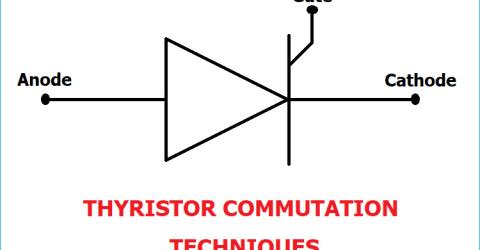
Thyristor Commutation Techniques To turn on a Thyristor, there are various triggering methods in which a trigger pulse is applied at its Gate terminal. Similarly, there are various techniques to turn off a Thyristor; these techniques are called Thyristor Commutation Techniques. It can be done by bringing the Thyristor back into the forward blocking state from the forward conduction state. To bring the… |

|
Introduction to Different Types of Inverters Power inverters are fundamental devices for power electronics that convert DC (Direct Current) into AC (Alternating Current). There are many types of power inverters specific for use in residential, commercial, and industrial systems. It is important to understand the types of power inverters in power electronics to make the appropriate decision about the type of power inverter you would like… |
|
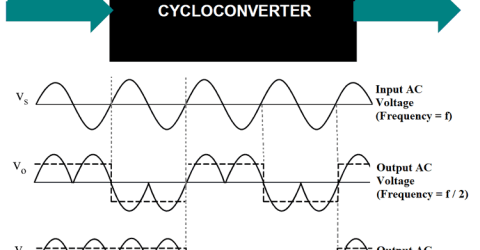
Cycloconverters – Types, Working and Applications Power supplies can be classified into two broad categories: AC power supply and DC power supply. Since only AC power can be generated economically, most electrical machines run on AC power. However, the standard voltage and frequency from generating stations may not suit certain industrial machines. This is where power electronic converters like inverters and cycloconverters… |
|
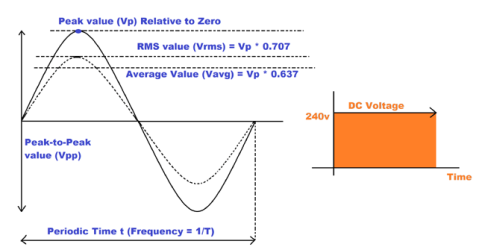
AC Circuit Theory (Part 3): Peak, Average and RMS Values These AC circuits series has taken us on a journey which has seen us discuss what AC really is all about, how its generated, some histories, concepts behind AC, its waveform, characteristics and some properties. Today we will be going over some terms and quantities associated with the Alternating Current. Peak Value of An AC Waveform… |
|
AC Circuit Theory (Part 2): AC Waveforms and their PropertiesAC Waveform
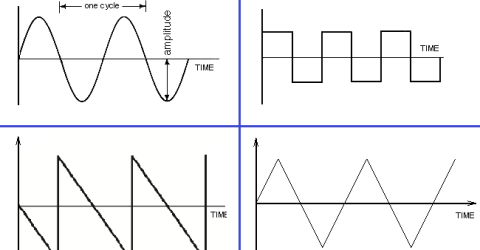
As established in the first part of AC Circuit Theory, when a magnet rotates around a coil or a coil rotates around a magnetic field, an Alternating current or voltage is generated. The rotation of either the magnet or the coil which leads to the periodic alternation in direction and magnitude of the Voltage (or current) leads to the generation of some sort of… |

|
Simple Sine Wave Generator Circuit using Transistor Previously we have built simple Square Wave Generator circuit, today in this tutorial, we are going to show you how to generate Sine wave using few basic components like transistor, resistor and capacitor. Sine wave is most commonly known as waveform for Alternating Current. In this circuit we will also build that alternating waveform, we can adjust the frequency or reduce… |

|
AC Circuit Theory: What is AC and How its GeneratedIntroduction
An electrical circuit is a complete conductive path through which electrons flow from the source to the load and back to the source. The direction and magnitude of the electrons flow however depend on the kind of source. In Electrical Engineering, there are basically two types of voltage or current (Electrical Energy) source which defines the kind of circuit… |

|
Cell Phone Controlled AC using Arduino and Bluetooth In today’s modern world, where ever we go we have lots of electronic devices around us. But, out of all, there is only one device that we personally have in our pockets all the time. Yes, it is our mobile phones. Now Mobile phones have become more than a device used for communication, they are our cameras, they are our maps, they are our shopping karts and what not? … |

|
IR Remote Controlled TRIAC Dimmer Circuit In this project, we are going to make a TRIAC dimmer circuit for AC Appliances. Here we are not going to use a microcontroller. We have used basic components to complete this task. In this project, we will use Triac to control the brightness of the AC bulb with a IR TV Remote. You can also control Fan speed with your TV remote using this Triac Dimmer circuit. … |

|
AC Voltmeter using Arduino In this project, we are going to make an AC Voltage Measuring Device using Arduino, which will measure the voltage of Alternating Current Supply at our home. We are going to print that voltage on serial monitor of Arduino IDE as well as show on the multimeter. Making a Digital Voltmeter is a lot easy than making an analog one because in case… |

|
Broken Wire Detector Circuit using IC CD4069 In this article we are going to make a Invisible Broken Wire Detector which is used to check broken or disconnected wires inside the walls. It detects the broken wire by detecting the presence of AC voltage in the wire. When there will be AC voltage present near it, then it will start beeping and LED will go high while when there will be no AC voltage or if there will… |

|
Voltage Tripler Circuit Voltage Tripler is the circuit where we get the thrice of the peak input voltage, like if the peak voltage of AC voltage is 5 volt, we will get 15 volt DC at the output. Generally transformers are there to step-up or step-down the voltage, but sometimes transformers are not feasible because of their size and cost. This kind of voltage tripler (voltage multiplier) can be… |
