
Test and Measurement
|
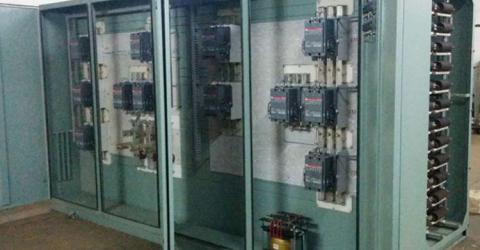
HT Motor Tripping with Overcurrent fault during GRR Control Can Programming in DCS also lead to Tripping of HT Motors? In today’s case study I am going to present a case involving GRR (Grid Rotor Resistance) which is used in Slip ring induction motor. This type of problem is pretty rare in industries and hence would like to share the experience, so that the problem we faced will not be faced by others or can be avoided… |

|
Basics of Smith Charts and how to use it for Impedance Matching RF Engineering is one of the most interesting and challenging parts of Electrical Engineering due to its high computational complexity of nightmarish tasks like impedance matching of interconnected blocks, associated with the practical implementation of RF solutions. In today’s age with different software tools, things are a bit easier but if you go back to the periods… |

|
Capacitor ESR Meter using Oscilloscope Capacitors seem all fine till you get to the point where a power supply fails or refuses to perform optimally. And if the problem is noise, there is a simple fix, you just add more capacitors. But that does not solve it. What could be wrong? The problem arises from the naïve assumption that capacitors (to a large extent) are ‘ideal’ devices, while… |

|
How to Measure Current with an Oscilloscope Measuring current is a simple task – all you need to do is hook up a multimeter to the circuit you want to measure and the meter gives you a clean value to use. Sometimes you can’t really ‘open up’ the circuit to put a multimeter in series with what you want to measure. This is solved quite simply too – you just need to measure the voltage across a known resistance in the… |

|
4-20mA Current Loop Tester using Op-Amp as Voltage to Current Converter Sensors are an integral part of any measurement system as they help in converting the real world parameters into electronic signals that could be understood by machines. In an industrial environment, the commonly used type of sensors is the Analog Sensor and Digital sensors. Digital sensors communicates with 0’s and 1’s following protocols like USART, I2C, SPI etc. And… |

|
32-bit RX23E-A MCU Built-In Analog Front End for Sensing and Measurement Equipment Renesas Electronics Corporation released the RX23E-A Group 32-bit RX microcontrollers (MCUs) For High-Precision Sensing and Measurement Equipment deliver better-than 0.1% Precision Performance in Temperature, Pressure, Weight, Flow and other measurements. The RX23E-A Group 32-bit RX MCUs achieve AFE precision at the highest class in the industry (offset drift: 10 nV/°C, gain… |
|
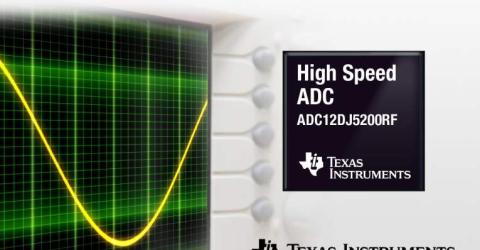
12-bit ADC meets the most demanding requirements of tomorrow's test and measurement, and defense applications Texas Instruments released a new ultra-high-speed analog-to-digital converter (ADC) with the widest bandwidth, fastest sampling rate and lowest power consumption. The ADC12DJ5200RF helps engineers in achieving high measurement accuracy for 5G testing applications and oscilloscopes, and direct X-band sampling for radar applications. The ADC is fastest 12-bit ADC in dual… |

|
Current Sensing Techniques using Different Current Sensors Current is a very critical factor in Electronics or Electrical Engineering. In electronics, current can have a bandwidth from few nano-amperes to hundreds of amperes. This range can be much wider in Electrical domain typically to several thousand amperes, especially in Power Grids. There are different methods to sense and measure current inside a circuit or a conductor. In… |
|
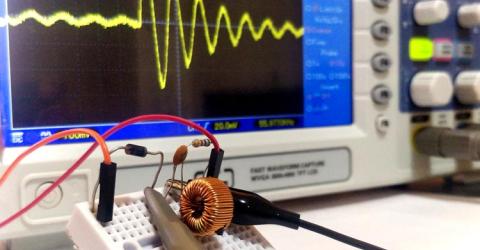
How to measure value of Inductor or Capacitor using Oscilloscope – Resonant Frequency Method Resistors, Inductors and Capacitors are the most commonly used passive components in almost every electronics circuit. Out of these three the value of resistors and capacitors are commonly marked on top of it either as resistor colour code or as numeric marking. Also the resistance and capacitance can also be measured using normal Multimeter. But most of the inductors,… |

|
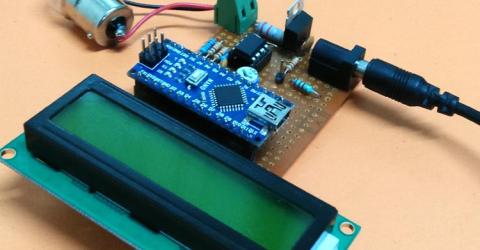
LC Meter using Arduino: Measuring Inductance and Frequency All embedded lovers are familiar with multimeter which a great tool to measure voltage, current, resistance etc. A multimeter can measure them easily. But sometimes we need to measure inductance and capacitance which is not possible with a normal multimeter. There are some special multimeters that can measure inductance and capacitance but they are costly. We already built… |
|
Arduino Wattmeter: Measure Voltage, Current and Power Consumption As electronics engineers, we always depend upon meters/instruments to measure and analyse the working of a circuit. Starting with a simple multimeter to a complex power quality analysers or DSOs everything has their own unique applications. Most of these meters are readily available and can be purchased based on the parameters to be measured and their accuracy. But sometimes… |
|
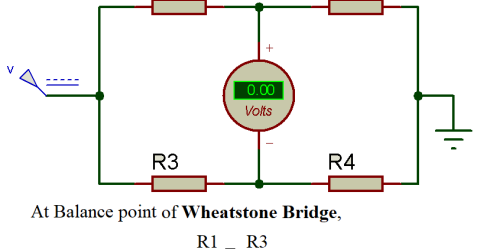
Wheatstone Bridge “The Heart of science is measurement”, and for the measurement the bridge circuits are used to find all kind of electrical and electronics parameter. We have studied about several bridges in Electrical and Electronics Measurement and Instrumentation. The below table shows different bridges with their uses: S.No. Name of Bridge Parameter to be determine 1. Wheatstone… |