

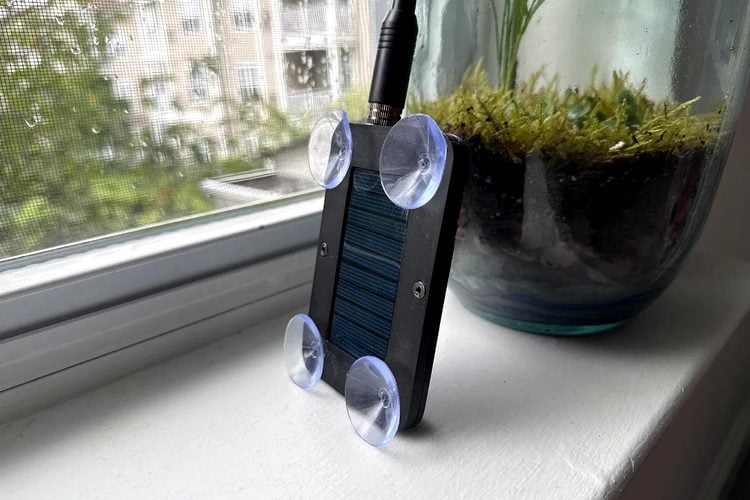
Most Meshtastic nodes end up either in a pocket or stuck on a window, and each needs a different case. Maker Koosh designed one pocket-sized node that does both, with swappable back plates, and posted the files on Printables with a full bill of materials. The post on r/meshtastic passed 280 upvotes in under a day.
The hardware
The node is built on a RAK19003 base board with a RAK4631 core, which pairs a Nordic nRF52840 with a Semtech SX1262 LoRa radio. A 3,000 mAh 3.7 V LiPo gives standalone runtime, and the stock stub antenna is replaced with an external whip on a U.FL-to-SMA lead for real range. In his own range test the maker reached about 5 miles, depending on terrain.
A 0.225 W solar panel is built into every version, so the node always gets a trickle charge whichever back plate is fitted.
Two plates, two jobs
The MagSafe plate snaps onto any MagSafe phone or case for hands-free carry. It is magnetic only and does not charge the phone. The suction-cup plate mounts on windows, dashboards or any smooth surface, and adds a second 0.5 W solar panel. The maker says the add-on roughly triples total solar input, which matters for a node left in the sun for long periods. A print-in-place channel lets you swap plates in seconds without tools.
Real battery numbers
It runs Meshtastic firmware on the US915 region with the LongFast preset, configured as CLIENT_MUTE with LOCAL_ONLY rebroadcast, so it works as a personal node and does not relay other people's traffic. With a 10-minute GPS update interval he measured about 7 to 8 percent battery drain per day on the base 0.225 W panel. He is honest that it is not fully self-sufficient: expect about two to three weeks between charges, depending on the sun.
Our take
Meshtastic keeps coming up in our scouting, and this is a tidy, well-documented build that shows the real trade-off between solar area and portability. For background, read our Meshtastic explainer, and if you want to start from bare LoRa modules, our ESP32 LoRa tutorial covers the basics.
Image credit: Koosh/ Reddit, cropped and resized.
About the author: Aswinth Raj is an electronics engineer and the editor of CircuitDigest, where he has published more than 150 hands-on projects and tutorials across Arduino, PIC, ESP32, Raspberry Pi and EV battery systems. He selects the stories on this page for what engineers and makers can actually learn or build from. Connect on LinkedIn

Add a comment
No account needed. Your comment appears once a moderator has reviewed it.