
DIY
|
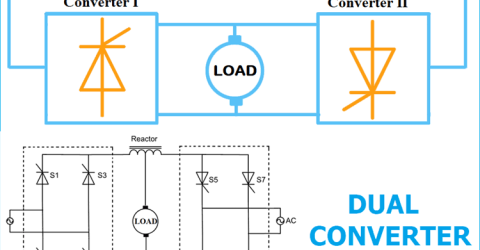
An Overview of Dual Converters In the previous tutorial, we saw how a Dual Power Supply Circuit is designed. Now, we learn about Dual Converters, which can convert AC to DC and DC to AC at the same time. As the name suggests, Dual Converter has two converters, one converter works as a rectifier (Converts AC to DC) and the other converter works as an inverter (converts DC into AC). Both converters are… |

|
What is JFET: Its Construction, Working and Biasing Techniques JFET is a Junction gate field-effect transistor. A normal transistor is a current-controlled device which needs current for biasing, whereas a JFET is a voltage-controlled device. Similar to MOSFETs, as we have seen in our previous tutorial, JFET has three terminals: Gate, Drain, and Source. JFET is an essential component for precision-level voltage… |
|
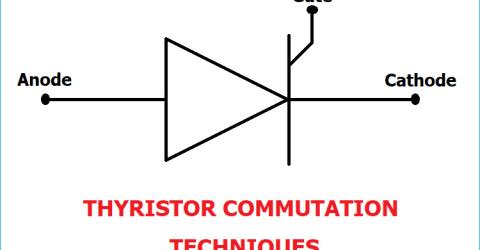
Thyristor Commutation Techniques To turn on a Thyristor, there are various triggering methods in which a trigger pulse is applied at its Gate terminal. Similarly, there are various techniques to turn off a Thyristor; these techniques are called Thyristor Commutation Techniques. It can be done by bringing the Thyristor back into the forward blocking state from the forward conduction state. To bring the… |

|
How to Burn Arduino Bootloader in ATmega328 IC and Program it using Arduino IDE We all know that, Atmega328 IC is used in Arduino UNO board. This IC is the brain of the Arduino board. Actually, Arduino designers wanted to make a handy prototyping board for the beginners so they organized all the components in such way that anybody can access all the pins of the Atmega328 IC and can program it just by connecting it to computer. Arduino board is very… |
|
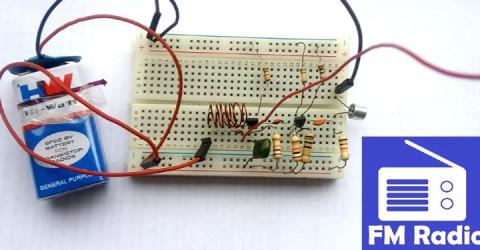
How to Build FM Transmitter Circuit One of the cool projects I always wanted to build is an FM transmitter with a good range. I have always been fascinated by some of the applications of the transmitter, especially when I was younger and, like everyone else, spent most of my time imagining how cool it would be to have some of the equipment and devices used in spy movies. So recently, while going over one of my… |
|
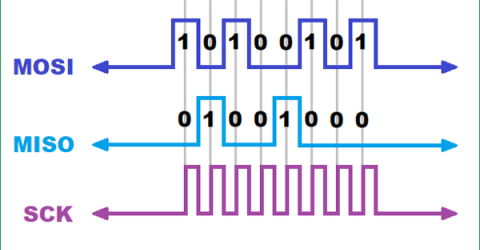
Introduction to Bit Banging: SPI communication via Bit Banging Communication Interfaces are one of the factors that are considered when selecting a microcontroller to be used for a project. The designer ensures that the microcontroller being selected has all the interfaces required to communicate with all the other components to be used for the product. The existence of some of these interfaces, like SPI and I2C on microcontrollers,… |
|
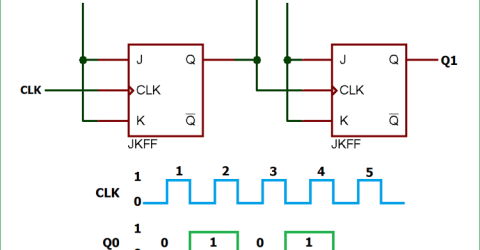
Asynchronous Counter An asynchronous counter (or ripple counter) is a sequential digital circuit in which the outputs of flip-flops are connected in series, so that the output of one flip-flop serves as the clock input to the next stage. Not all flip-flops may change state at the same time as synchronous counters, so asynchronous counters are easier to design but may experience propagation delays. Table of… |

|
Automatic Water Dispenser using Arduino This tutorial describes how to make an automatic water dispenser from Arduino and an ultrasonic sensor. This tutorial describes how to make an automatic water dispenser using an electronic diagram, a code snippet, a list of things, and a demonstration of how to make your water dispenser work. Table of Contents Why Build an Automatic Water Dispenser? Components… |
|
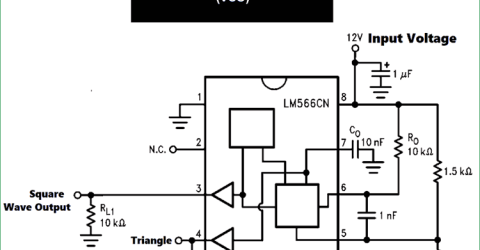
Voltage Controlled Oscillator (VCO) Most of the consumer electronic devices around us, such as mobile phones, TVs, Radios, and MP3 players, are a combination of Digital and Analogue electronics. Wherever wireless transmission/reception, or audio signals are involved in an electronic design, we will need periodic oscillating electronic signals. These signals are called Oscillating signals and are very useful in… |
|
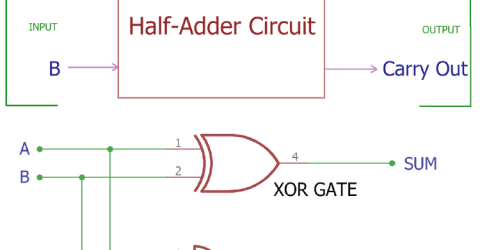
Half Adder Circuit Diagram and its Construction Computers use binary numbers 0 and 1. An adder circuit uses these binary numbers and calculates the addition. A binary adder circuit can be made using XOR and AND gates. The summation output provides two elements: the first one is the SUM, and the second one is the Carry Out. When we use the arithmetic summation process in our base 10 mathematics,… |
|
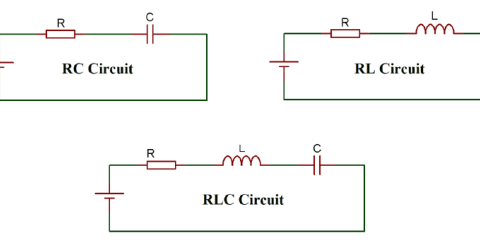
RC, RL and RLC Circuits The entire range of electronic components can be divided into two broad categories: active components and passive components. The Passive components include the Resistor (R), the Capacitor (C) and the Inductor (L). These are the three most used components in electronics circuits, and you will find them in almost every application circuit. These three components together in… |

|
Getting Started with ESP32 using Arduino IDE - Blink LED The internet has reached almost every pocket through smartphones. It is estimated that approximately 3.2 billion people use the internet; however, a surprising 8.4 billion devices also utilise the internet. ESP32 Arduino IDE is emerging as the most popular development combination for IoT projects. Electronic devices are connected to the internet in numbers more than twice… |