
Batteries

|
What is Beyond Lithium-ion Batteries for Electric Vehicles – Scalable and Potential Alternatives for Clean Energy With the ever-increasing consumption of fossil fuels, the governments of various countries are taking steps towards the electrification of vehicles. Last year, the Government of the UK said that it would ban the sales of new cars and vans powered by diesel and petrol by 2030. Despite efforts being made for the decisive shift away from the internal combustion engine what… |

|
New Aqueous Lithium-ion Battery Developed by Toshiba Uses Water as Electrolyte to Increase Safety in Large Scale Energy Storage Systems Toshiba has developed a prototype for a new type of rechargeable lithium-ion battery that uses water as the aqueous electrolyte. This new battery does not have any flammable organic solvents allowing it to operate at low temperatures of even -30°C and demonstrate a low risk over long term usage, even in the event of a fire. It also delivers high durability of 2,000 charge… |

|
New Li-ion Fuel Gauge IC with High Accuracy and Low Quiescent Current for Continuous Internal Self-Discharge Monitoring and Protection The recently unveiled MAX17320 from Maxim Integrated is a high accuracy fuel gauge and protector IC for 2 to 4 series Lithium-ion (Li+) cells (2S-4S). Equipped with Maxim Integrated’s patented ModelGauge m5 EZ algorithm, the new fuel-gauge and protection circuit delivers 40% more accurate state-of-charge (SOC) readings than competitive ICs available in the market… |

|
ESSPOWERING the World With Energy Storage Technology What if we could bring not only energy but affordable energy, to the parts of the world that needed it most? It’s a question that’s often been asked about the developing world, where power grids are still in their adolescence. As a result, blackouts, brownouts, and dangerous energy shortages are natural byproducts of an inability to store power and regulate its use during… |

|
Machine Learning Algorithms to Assess State of Charge and Battery Health More Accurately for Lithium Batteries in Electric Vehicles A team of scientists leads by Dr. Gareth Conduit at the Institute of Materials Research and Engineering at A*STAR, and Nanyang Technological University have used AI for predicting electric vehicle battery states and to give an ‘accurate’ prediction for lithium-ion cells state of charge and health. According to the article published, the data-driven… |

|
Replacing Lithium in Rechargeable Batteries with Potassium for Sustainable Environment Rechargeable Lithium batteries play a vital role in satisfying the worlds growing portable energy demands. These low cost, compact, and lightweight batteries are the primary choices for most portable electronic devices, Electric/Hybrid Vehicles, Solar Plants, etc. However, the availability of Lithium and Cobalt is limited on the earth’s crust and relying completely on these… |

|
Researchers have Improved Lithium Sulphur Batteries to Drive EVs for more than 1000km on a Single Charge Researchers at Monash University have published a research article on how they have developed the world’s most efficient lithium-sulphur (Li-S) battery that could power a smartphone continuously for five days. The battery is suitable for applications like mass power storage and electric vehicles (which can travel 1,000 km without recharging). The ultra-high capacity Li-S… |

|
Supercapacitor vs Battery - Comparison and Case Study There is a long debate that Supercapacitors will overrule the battery market in the future. A few years back when Supercapacitors were made available, there was a huge hype about it and many expected it to replace the batteries in commercial electronic products and even in Electric Vehicles. But, nothing like that actually happened, because both Supercapacitors and… |

|
Future is Supercharged for Lithium-Ion Battery Pack Manufacturers in Asia With the world moving rapidly towards the future of e-mobility, the lithium-ion battery industry is becoming one of the most critical industries that are shaping the energy storage revolution. Lithium-ion batteries are witnessing heavy demand in various applications, as these batteries play an instrumental role in the growth of today’s power and transportation industries.… |

|
Temperature Monitoring System in Electric Vehicles Automotive manufacturers all over the world are focused on vehicle electrification. There is a need for cars to charge more quickly and have a more extended range on a single charge. This implies, electrical and electronics circuit within the vehicle should be able to handle extremely high power and manage losses effectively. There is a need for robust thermal-management… |
|
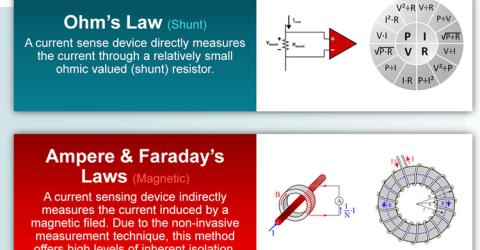
Current Sensing Solutions in EV/HEV Batteries The electric vehicle market is picking up quite rapidly across the globe. Estimates show that the number of electric vehicles on the road around the world will hit 125 million by 2030.Global market for Electric Vehicles (EV) and Hybrid. To control energy flow and optimize efficiency in HEV/EV powertrain subsystems such as Traction Inverters, On-Board Chargers (OBC… |

|
Cell Balancing Techniques and How to Use Them A nominal lithium cell is rated for around 4.2V only, but in its applications like EV, portable electronics, laptops, power banks etc we require a lot higher voltage than its nominal voltage. This is the reason why designers combine more than one cell in series to form a battery pack of higher voltage values. As we know from our previous Electric Vehicle battery article,… |
