
Find the latest electronics industry news covering new electronics components releases in various electronics domains such as embedded, power electronics, analog, digital, IoT and Automotive industries.
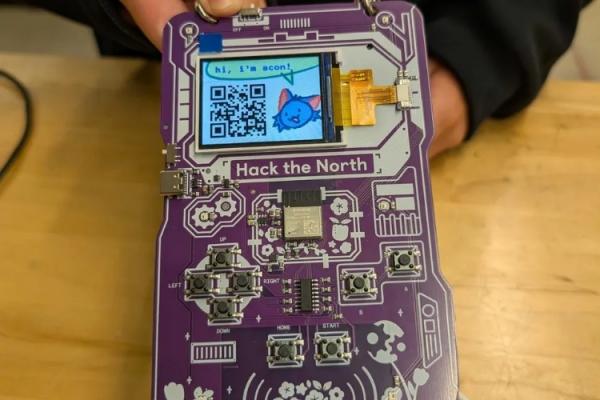
A simple event badge can do more than display a name. Nick Ficara designed and developed programmable electronic badges for Hack the North, a major student hackathon in Canada, after being approached by Alex, a project manager at the event. Unlike ordinary event badges that only display a name or event logo, this ESP32-powered hacker badge works as a small computer that participants can…
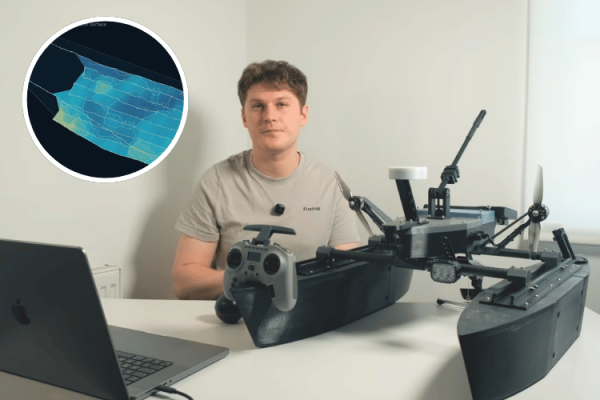
An autonomous 3D-printed catamaran built by hobbyist Cy Antony Ash has mapped the depth of a lake in North Wales, the result of a two-year build. The boat carries a Deeper castable fish finder along a programmed route across Llyn Celyn, so the sonar no longer has to be cast from a rod. Instead of underwater propellers, it uses drone motors mounted above the waterline, which keeps the props…

Researchers at the Singapore University of Technology and Design (SUTD) have developed ALBATROSS, a robot that can descend from the air, land on water, and then sail using wind power. Its name stands for Airborne Lander with Buoyant AuToROtating Sailing Sensor. The robot is designed to carry sensors to remote lakes, reservoirs, and other water bodies that are difficult to reach by boat. When…
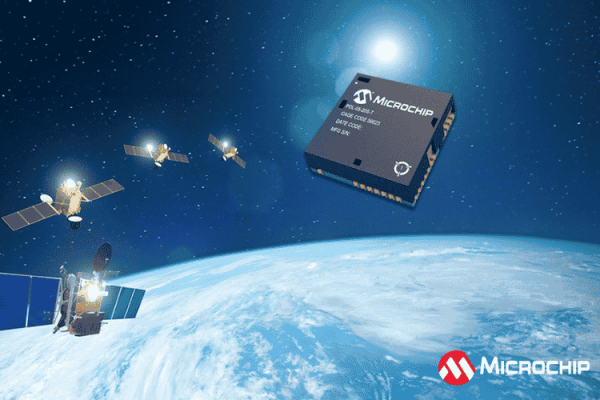
Microchip Technology (Nasdaq: MCHP) today announces the POL-05-20S-T, a radiation-tolerant, Point-of-Load (POL) converter, designed to address the demanding power requirements of space processing applications. The new device uses Gallium Nitride (GaN) power devices to deliver up to 20A of output current with high efficiency and power density.
The converter is supplied in a compact, 25g…
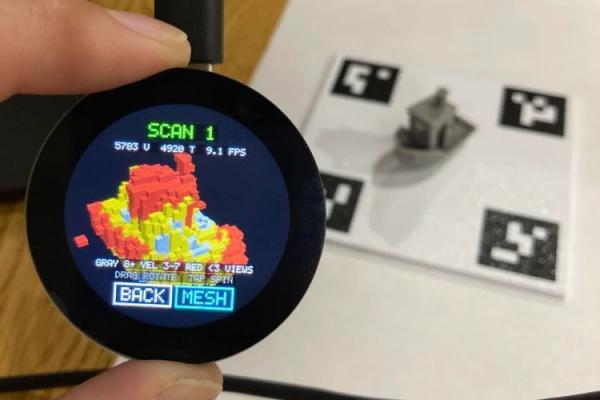
A recent project shared on reddit - r/esp32 showcases how much computer vision potential can be squeezed out of inexpensive, low-power hardware. Built around a Seeed Studio XIAO ESP32-S3 board paired with its dedicated round screen extension, the handheld device doubles as a self-contained 3D object scanner. Originally intended as a platform for an augmented reality game, the creator pivoted…
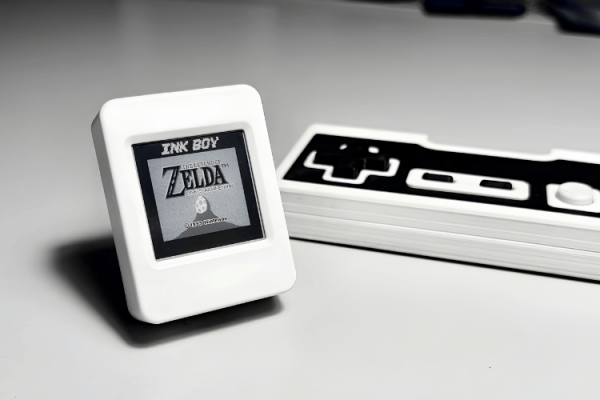
A developer who goes by kuslota has released InkBoy, a custom display driver and firmware that runs a Game Boy emulator at around 30 frames per second on Waveshare’s ESP32-S3-ePaper-1.54 V2 board. Waveshare specifies about 300 ms for a partial refresh on the board’s 200x200 panel, and the stock driver managed barely 2 fps in the developer’s testing. The code is on GitHub under an MIT license…
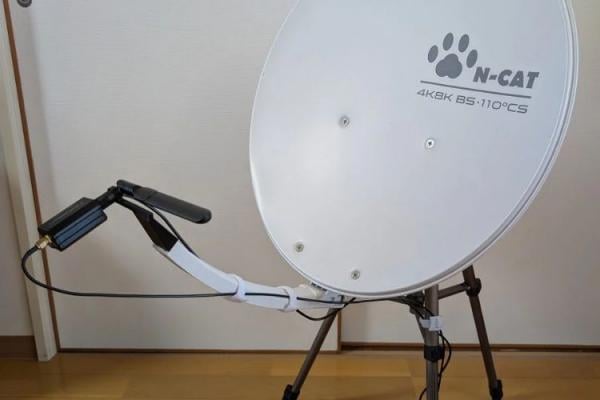
The open-source snappnt project, developed by h-shiono, explores whether an affordable ESP32 board can detect signals from India’s NavIC satellite navigation system. NavIC is used for satellite-based navigation, but this project does not work like a normal GPS tracker. Instead, it captures very short samples of radio signals and uses software to search for a known satellite signal pattern.…
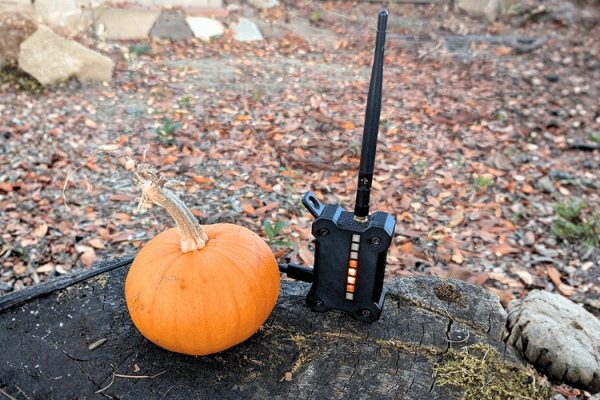
SignalSweep, an open-source project published on GitHub by a developer using the handle B0z0dcl0wn, turns a Seeed Studio XIAO ESP32-C5 into a pocket-sized scanner for trackers, surveillance hardware and drones. It is licensed GPL-3.0-or-later. The C5 is the main target because it can listen to both 2.4 GHz and 5 GHz Wi-Fi alongside Bluetooth LE, and the developer argues that more cameras and…
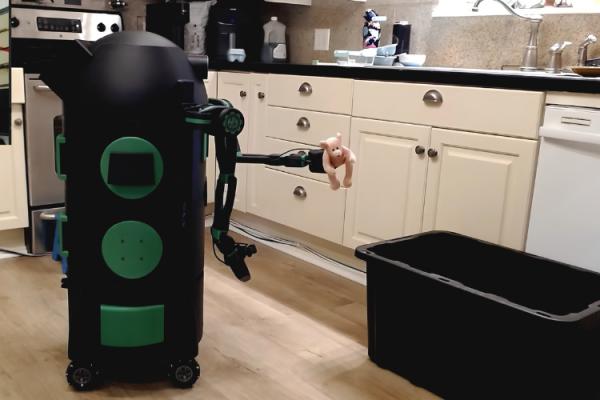
Harrison Kinsley, the YouTuber behind Sentdex, has shown a Vulcan Robotics Sourccey, a 3D-printed robot he calls “Chonk,” picking up a toy from the floor and dropping it in a bin with no task-specific training. In part three of his “Everything is LLM” series, published Oct 8, a general-purpose multimodal language model made the task decisions. The planning and control came from DeepSeek’s V4.1…
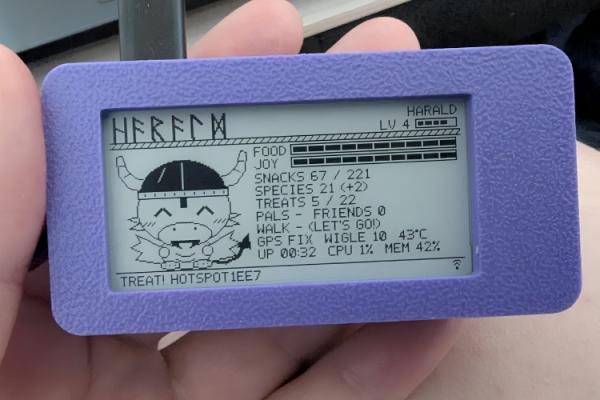
What if your virtual pet could find food from the Wi-Fi and Bluetooth signals around you? Meet Harald, a virtual dragon created by a Raspberry Pi enthusiast. Built using a Raspberry Pi Zero 2 W and a Waveshare V4 e-paper display, Harald treats nearby Wi-Fi networks and Bluetooth devices as food. Discovering new devices makes the dragon happier, turning everyday wireless activity into a virtual…
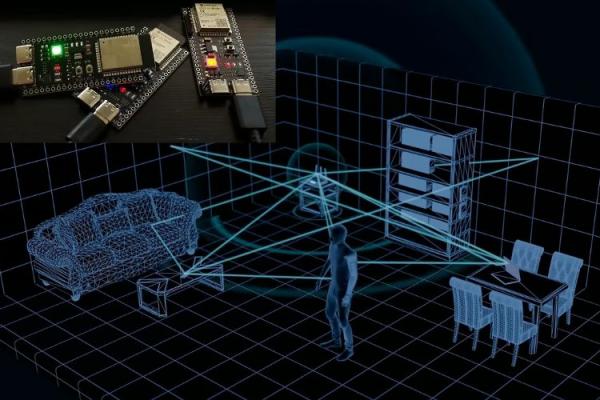
Better Stack from Youtube recently used an open-source project called RuView and explored how Wi-Fi signals can be used to detect human presence and movements without relying on a camera. He describes how Wi-Fi signals change as he travels through a room and bounce off walls, furniture, and people. When someone moves, their body alters the signal's strength and phase across different frequency…
Before VGA became common, many computers used TTL RGB video to send digital colour signals to their monitors. Today, finding a compatible monitor for this older hardware can be difficult, making it harder to use and restore vintage computers. A new DIY project by Charlysan offers a solution with an RP2350-based TTL RGB to DVI converter. It captures the video output from older computer hardware…
