

An asynchronous counter (or ripple counter) is a sequential digital circuit in which the outputs of flip-flops are connected in series, so that the output of one flip-flop serves as the clock input to the next stage. Not all flip-flops may change state at the same time as synchronous counters, so asynchronous counters are easier to design but may experience propagation delays.
Table of…
The brain of an embedded device, which is the processing unit, is a key determinant of the success or failure of the device in accomplishing the task(s) for which it is designed. The processing unit is responsible for every process involving from input to the system, to the final output, thus selecting the right platform for the brain becomes very important during the device…

Manu Madhusudanan is the CEO and Co-founder of an innovative technological healthcare company called Cooey. Started in April 2015 Cooey now operates in US, Japan, Singapore and India revolutionizing the ways how caretakers and patients recorded and monitored their health vitals by leveraging the power of IOT, machine to machine communication, Machine learning etc. Hailing…

In electronics, a regulator is a device or mechanism which can regulate power output constantly. There are different kinds of regulators available in the power supply domain. But mainly, in the case of DC to DC conversion, there are two types of regulators available: Linear or Switching.
A linear regulator regulates the output using a resistive…

Yuki Sato is the Founder and CEO of Cambrian Robotics Inc., which is based out of Tokyo. He has been into computers and electronics right from the age of 10 and has equipped himself with a handful of multidisciplinary skills. He and his company Cambrian Robotics are working on bridging the gap between technology and developers by building development tools and kits. He is…
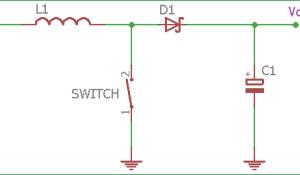
In electronics, a regulator is a device or mechanism which can regulate power output constantly. There are different kinds of regulators available in the power supply domain. But mainly, in the case of DC to DC conversion, there are two types of regulators available: Linear or Switching.
A linear regulator regulates the output using a resistive…

Op-Amp (Operational Amplifier) is the backbone of Analog electronics. An operational amplifier is a DC-coupled electronic component which amplifies Voltage from a differential input using resistor feedback. Op-Amps are popular for its versatility as they can be configured in many ways and can be used in different aspects. An op-amp circuit consists of few…

A microcontroller is essentially a small computer on a chip, like any computer, it has memory and usually programmed in embedded systems to receive inputs, perform calculations and generate output. Unlike a processor, it incorporates the memory, the CPU, I/O and other peripherals on a single chip like shown in the layout below.
…
Op-Amp, short for operational amplifier is the backbone of Analog electronics. An operational amplifier is a DC-coupled electronic component which amplifies Voltage from a differential input using resistor feedback. Op-Amps are popular for its versatility as they can be configured in many ways and can be used in different aspects. An op-amp circuit consists of…

Power electronic switches like BJT, SCR, IGBT, MOSFET, and TRIAC are very important components when it comes to switching circuits like DC-DC converters, Motor Speed Controllers, Motor Drivers, and Frequency Controllers etc. Each device has its own unique property and thus they have their own specific applications. In this tutorial we will learn about the TRIAC, which is a…

Wireless Charging is the process of recharging battery powered electronic devices without directly tethering them using wires and cables to a power source. The process gives users the freedom of charging their phone on the go without the need to plug to power outlet. This means wireless charging enabled smartphones and other devices could be charged by simply placing them on…

Most of the consumer electronic devices around us, such as mobile phones, TVs, Radios, and MP3 players, are a combination of Digital and Analogue electronics. Wherever wireless transmission/reception, or audio signals are involved in an electronic design, we will need periodic oscillating electronic signals. These signals are called Oscillating signals and are very useful in…
