
Multimeter
|
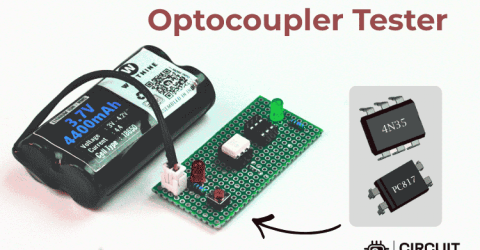
Build a Simple Optocoupler Tester Circuit for Fault Detection Optocouplers frequently fail without a sound in labs or during repairs. The package appears to be undamaged, but there may be no output from the LED source or the photosensitive output stage. Testing for failure with a multimeter is only partially effective, whereas a dedicated optocoupler testing circuit provides clear results in just seconds. For related tutorials… |

|
DIGI-HOME: A Cute Home Companion, Making Your Home Smart, Safe and Connected By Vikas Singh Thakur IntroductionIn today's fast-paced world, managing home security, daily routines, and connectivity can be challenging, especially for busy individuals, elderly users, or those living alone. DIGI-HOME is a compact Home companion built on the Adafruit Memento board (powered by ESP32-S3), designed to make homes smarter, safer, and more interactive. By combining vision… |
|
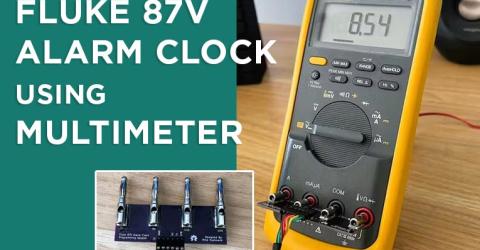
From Multimeter to Alarm Clock: Fluke 87V Transformation Prepare to be impressed by Mike Kushnerik's remarkable project, the Fluke 87V Alarm Clock. In this captivating journey of creativity and innovation, Mike has taken an old multimeter and turned it into a remarkable alarm clock. Join us as we explore the evolution of this extraordinary project, filled with ingenious upgrades that showcase the… |
|
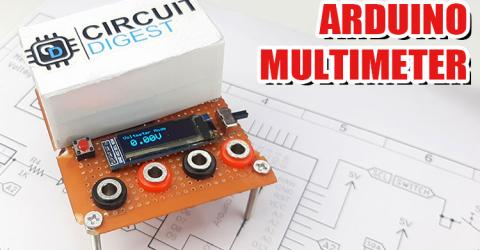
Easy To Build DIY Digital Multimeter using Arduino to Test Voltage, Resistance, LED, Diode and Continuity Discover how you can build a professional digital multimeter using Arduino that measures up to 24V DC voltage, checks resistance, conducts diode testing, and performs continuity tests. This comprehensive Arduino based multimeter project provides full circuit diagrams, programming code, and even a 3D printed enclosure design. A… |
|
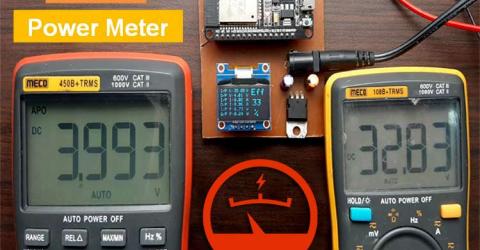
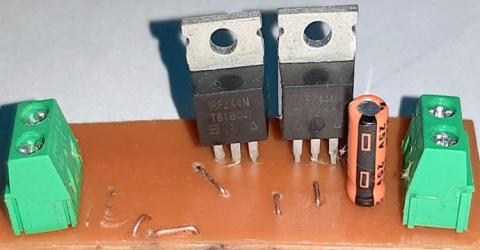
ESP32 Based Power Meter - Measuring Input Power and Output Power to Calculate Efficiency We are all aware of a basic voltmeter, ammeter, and wattmeters, the three basic things you need to measure values on any electronic projects or circuits. Measuring voltage and current with the help of a multimeter can be a good way to start, but one of the biggest problems I face while testing a circuit is, measuring power efficiency. So, today we… |
|
Over Voltage, Over Current, Transient Voltage & Reverse Polarity Protection Circuit using RT1720 Hot Swap Controller with Fault Timer Oftentimes in an electronic circuit, it's absolutely necessary to use a special protection unit to protect the circuit from overvoltage, overcurrent, transient voltage, and reverse polarity and so on. So, to protect the circuit from these surges, Richtek Semiconductor introduced the RT1720A IC which is an oversimplified protection IC designed to meet the needs. The low-cost… |
|
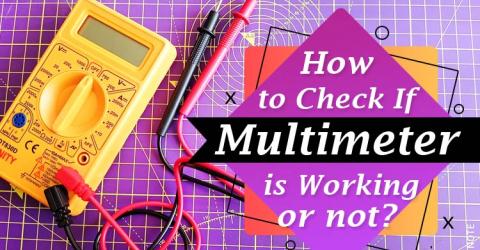
How to Test if Multimeter is Working & Tips to Use it Properly Multimeters are a super handy piece of electrical test equipment and as the name suggests, they can measure a variety of parameters such as voltage, resistance, current, and many more. Apart from this, it can also be used to debug faulty circuits, learn about other people's electronic designs, and even test a battery. Hence the 'multi'-'meter' name. But how do you use a… |
|
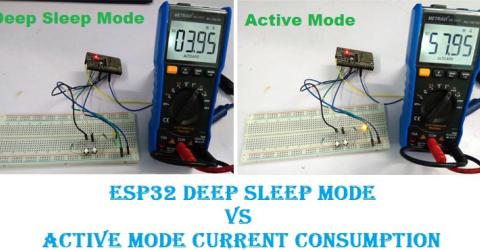
ESP32 Active Mode and Deep Sleep Mode Power Consumption Comparison ESP32 is one of the most popular Wi-Fi based microcontroller modules and it is a popular choice in many Portable IoT Applications. It is a powerful controller that supports Dual Core Programming and also has in-built Bluetooth Low Energy (BLE) support making it a good choice for portable applications like in iBeacon devices, GPS Trackers, etc. However, in Battery-powered… |
|
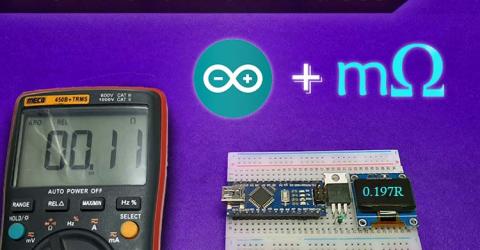
Build Your Very Own Low Resistance Meter with Arduino If you are a maker like me and looking for some interesting projects online, a milliohm meter is one easy and useful thing you can make. The basic principle of this circuit is based around a constant current source, which we have covered in one of our previous articles. A milliohm meter is a device that can be used to determine the values of small resistors, the resistance… |
|
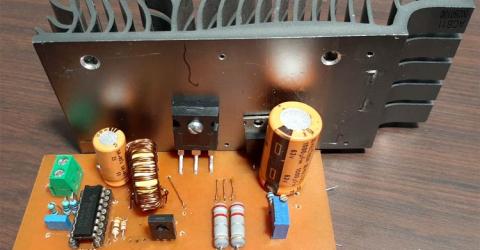
Designing a High Power, High Efficiency Boost Converter using TL494 In this article, we are going to design a TL494 Boost converter, and calculate and test a high-efficiency boost converter circuit based on the popular TL494 IC, which has a minimum supply voltage of 7V and a maximum of 40V, and as we are using the IRFP250 MOSFET as a switch, this circuit can handle a maximum current of 19Amps, theoretically (Limited by Inductor… |
|
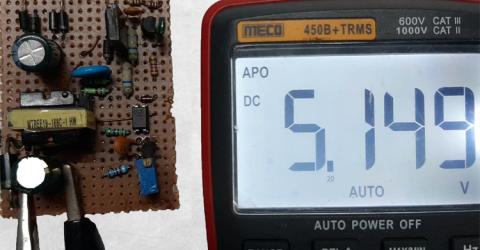
How to Test a SMPS Power Supply Board To verify product functionalities and design parameters, a power supply circuit requires sophisticated testing methods and electronic test equipment. It is necessary to gather better knowledge about the SMPS testing requirements to fulfill product standards. In this article, we will learn how to test SMPS circuit and talk about some of the most basic tests for SMPS and the… |
|
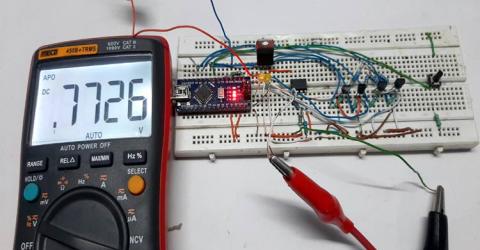
Programmable Gain Amplifier using MOSFET and Transistor In the measurement industry, a very crucial functional block is a Programmable Gain Amplifier (PGA). If you are an electronic enthusiast or a college student, you have probably seen a multimeter or oscilloscope measuring very small voltages very preciously because the circuit has a built-in PGA alongside a powerful ADC that helps with the precise measurement process. … |
