
Audio Amplifiers

|
What is Amplitude Modulation? Complete Guide with Formula, Circuit Diagram & Practical Demo Amplitude modulation (AM) was first introduced to enable long-range wireless audio communication, representing a major advancement over wireless telegraphy using spark-gap transmitters. Understanding what is amplitude modulation and how it works is fundamental for electronics engineering students and professionals working with radio frequency circuits. This… |
|
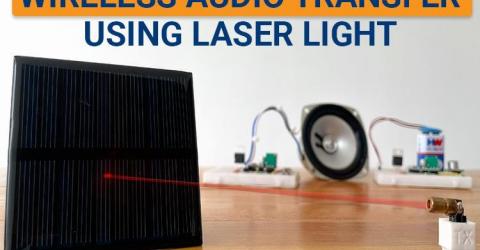
Wireless Audio Transfer Using LASER Light In this article, we are going to discuss how to transfer audio through laser light. This is a fun little project, and the concept is similar to what we see in fibre optics cable. We will use a laser light to send data from one point to another. To be particular, in this project here, we are going to transfer our voice from one point to another by shining a laser light on a solar panel. This… |
|
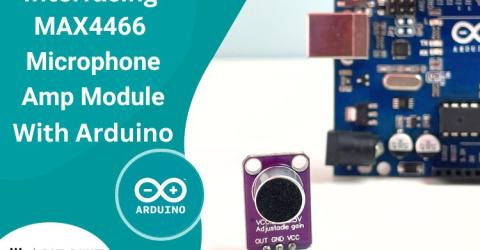
Interfacing MAX4466 Microphone Amplifier Module with Arduino As you may know many of our everyday appliances or devices such as smartphones, home automation systems, smart speakers, headphones and many others have their own built-in microphones to capture the audio data. And if we look at them there are different types of microphones available, such as condenser, ribbon, dynamic and MEMS. Most modern devices like smartphones… |

|
How to Build a High Efficiency Class-D Audio Amplifier using MOSFETs Audio content has come a long way over the past decades, from a classic tube amp to modern-day media players, technological advancements have changed the way digital media is consumed. Among all these innovations, portable media players have become one of the first choices among consumers, because of their vibrant sound quality and long battery life. So how does it work, and… |

|
Automotive-Qualified 200 V Qspeed Diodes from Power Integrations Excel in Audio Amplifiers Power Integrations announced that its 200 V Qspeed™ diodes – LQ10N200CQ and LQ20N200CQ – are now available with AEC-Q101 automotive qualification. Qspeed silicon diodes use merged-PIN technology to offer a unique balance of soft switching and low reverse recovery charge (Qrr). This results in low EMI and reduced output noise, which is especially important for in-… |