
Amplifier
|
Instrumentation Amplifier Circuit using Op-Amp Almost all types of sensors and transducers convert real world parameters like light, temperature, weight etc into voltage values for our electronic systems to understand it. The variation in this voltage level will help us in analyzing/measuring the real world parameters, but in some applications like biomedical sensors this variation is very small (low-level signals) and… |

|
Digital Audio Volume Control Circuit using PT2258 IC and Arduino A potentiometer is a mechanical device using which one can set the resistance according to the desired value, thus changing the current passing through it. There exist many applications for a potentiometer, but mostly, a potentiometer is used as a volume controller for audio amplifiers. The digital volume control circuit is an electronic circuit that accurately adjusts… |
|
Programmable Gain Amplifier using MOSFET and Transistor In the measurement industry, a very crucial functional block is a Programmable Gain Amplifier (PGA). If you are an electronic enthusiast or a college student, you have probably seen a multimeter or oscilloscope measuring very small voltages very preciously because the circuit has a built-in PGA alongside a powerful ADC that helps with the precise measurement process. … |

|
Half Wave and Full Wave Precision Rectifier Circuit using Op-Amp A rectifier is a circuit that converts alternating current (AC) to Direct current (DC). An alternating current always changes its direction over time, but a direct current flows continuously in one direction. In a typical rectifier circuit, we use diodes to rectify AC to DC. But this rectification method can only be used if the input voltage to the circuit is greater than… |

|
High Power High Efficiency Buck Converter Circuit using TL494 A buck converter circuit (step-down converter) is a DC-to-DC switching converter that steps down voltage while maintaining a constant power balance. The main feature of a buck converter is efficiency, which means that with a buck converter on board, we can expect extended battery life, reduced heat, smaller size, and improved efficiency. We previously made a few simple Buck… |

|
Simple 2x32 Watt Audio Amplifier with TDA2050 If you are thinking about building a simple, cheap, and moderately high power amplifier circuit that can deliver up to 50-watt peak RMS power into a loudspeaker, then you are in the right place. In this article, we are going to use the most popular TDA2050 IC to design, demonstrate, build, and test the IC to achieve the above requirements. So without further ado, let's get… |

|
Superheterodyne AM Receiver - Working with Block Diagram and Schematics A superheterodyne receiver uses signal mixing to convert the input radio signal into a steady intermediate frequency (IF) that can be worked with more easily than the original radio signal, which has a different frequency, depending on the broadcasting station. The IF signal is then amplified by a strip of IF amplifiers and then fed into a detector that outputs the audio… |
|
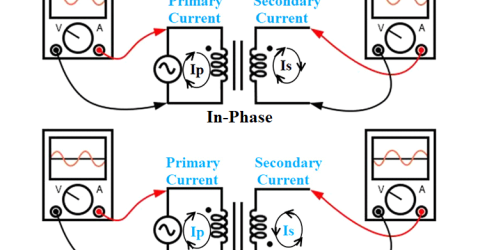
Understanding Dot Convention in Transformers From large power stations to compact SMPS circuits, transformers can be found almost everywhere. Though there are many types of transformers and their exact working differs based on the application, the basic working of the Transformer remains the same. When examining transformer circuit schematics, you'll notice "dot" symbols placed on transformer windings. These dots… |
|
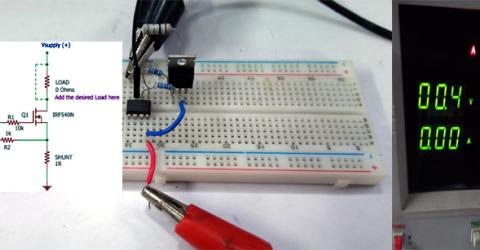
Design a Voltage Controlled Current Source Circuit using Op-Amp In a voltage-controlled current source circuit, as the name implies, a small amount of voltage across the input will proportionally control the current flow across the output loads. This current source circuit using an op amp is commonly used in electronics to drive current-controlled devices like BJT, SCR, etc. We know that in a BJT, the current flowing through the base of… |

|
IoT Based Smart Reminder System Have you ever set an important reminder on your phone only to miss it because the device was in silent mode, left in another room, or buried under tons of notifications? While smartphones have made reminders convenient, they are not always used in every situation, especially for elderly people, students, or professionals with busy schedules.To solve this problem, we… |

|
Arduino Based FM Radio using RDA5807 Today almost everyone uses their mobile phones to listen to music, news, podcasts, etc. But not long ago we were all depending on local FM Radios to get the latest news and songs, slowly these Radios are losing popularity but in emergencies when the internet is down, radios place an important role to transmit information to the users. Radio signals are always present in the… |

|
12V Audio Power Amplifier using TIP35C – Class A Amplifier Loudspeakers are heavy loads, and they normally require high current to be driven which is provided by an external circuit. This is because sometimes the produced sound output, let's say from a microphone or the pickup coils of the guitar, do not produce high current high amplitude output, therefore, it is not suitable to drive a loudspeaker. This is why we have something… |
