
A new desktop machine called PewCB One wants to bring PCB fabrication into the same room as the engineer designing it. Instead of exporting a design and waiting on a fab house, PewCB One promises to turn Gerber files into a populated double-sided circuit board without leaving your desk.
The system is built around a 20 W, 1064 nm pulsed laser that ablates copper and solder mask off specially made ceramic blanks, cutting traces and spacing down to 0.1 mm. That's fine enough for common QFN packages and 0201 passives, according to the company. Once the board is cut, the same laser cuts a disposable metal stencil aligned to the pads, so solder paste can be applied without a separate frame or manual alignment.
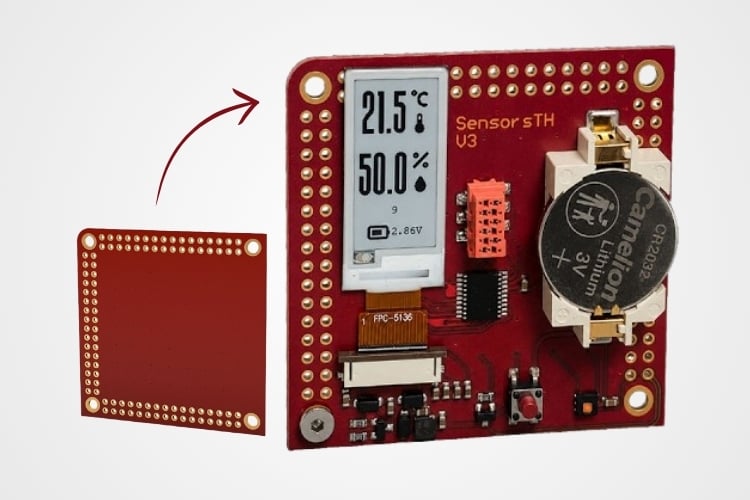
The more interesting part, at least on paper, is how PewCB sidesteps one of the hardest problems in desktop fabrication: making double-sided boards without drilling and electroplating your own vias. Its blanks arrive with a via grid and rows of plated through-holes already built into the ceramic, so designers route to the nearest available via instead of creating the interlayer connection themselves. No prior desktop method, laser-based or otherwise, appears to have solved this cleanly, which is likely why outlets covering the launch flagged it as the system's standout feature.
There are real tradeoffs. The ceramic pulls heat away fast enough that a standard soldering iron struggles, so hot air or reflow is required. Board size tops out at 84 x 84 mm, and via placement is limited to the pre-built grid rather than being fully freeform. The company itself frames the ~30-minute turnaround as an estimate, noting it could run longer in practice.
Early-bird units are listed at $5,000, including a 30 percent deposit and 20 blanks, with deliveries expected roughly 90 days out. That price point puts it well outside impulse-buy territory for most hobbyists, who can already get boards for a few dollars from established fab houses within a day or two. Whether it earns its keep will likely come down to how often a given team or lab needs same-day iteration badly enough to justify owning the hardware outright, and how the device performs once units actually ship.

Add a comment
No account needed. Your comment appears once a moderator has reviewed it.