
By textbook definition, Embedded Electronics can be defined as a system that “Integrates Hardware circuitry with software programming techniques to provide real-time solutions”. From age old pocket calculators to advanced automobile and security devices the applications of Embedded System continue to show a strong progress.
In this section we will discuss about the various embedded controllers and embedded development platforms including, but not limited to Arduino, Raspberry Pi, NodeMCU, ESP32, Microchip, AVR, ARM, MSP430, STM32, STM8S, Nuvoton etc. It also updates the readers with latest Embedded News and technology trends to help them plan and design their Embedded Projects with ease.

Traditional alarm clocks have remained fundamentally unchanged for decades. The ESP32 speaking alarm clock built in this tutorial replaces the beep at a scheduled time and expects the user to interpret the reason for the beep. While functional, this approach lacks intelligence and context. Modern embedded systems enable the creation of smarter devices that…
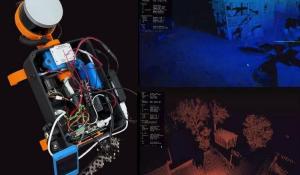
A YouTube channel named 9nl has developed an open-source project on GitHub that is gaining attention for its approach to 3D reconstruction using point cloud data. The system combines both hardware and software elements, where a compact embedded platform such as the Raspberry Pi can be used for capturing spatial data through connected sensors like cameras or LiDAR. This data, consisting of…

In a major step toward bringing artificial intelligence directly into physical devices, Arduino has unveiled the VENTUNO Q, a new high-performance single-board computer powered by processors from Qualcomm’s Dragonwing IQ8 series. Announced ahead of Embedded World in Germany, the platform is designed to democratize edge AI, robotics, and intelligent automation for developers, educators, and…
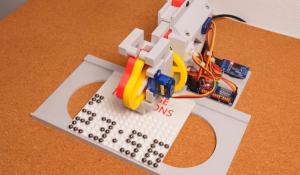
A neatly designed electromechanical clock shared on YouTube is drawing interest from hobbyists and electronics enthusiasts alike. The project is inspired by the marble clock concept originally created by Ivan Miranda, but the creator redesigned it into a smaller version that can easily fit on a desk. Instead of simply copying the original build, the maker simplified the structure while keeping…

HackyFi, one of the tiniest yet most capable USB-C development dongles built for hackers, makers, educators, and security researchers. Powered by the Raspberry Pi RP2350A microcontroller, the ultra-compact device integrates a 0.85-inch LCD screen, dual programmable buttons, RGB status LED, 2MB onboard flash, and a microSD card slot all inside a keychain-sized form factor. Designed to challenge…

The ESP32 Bus Pirate project has received a major update, further transforming it into a powerful and affordable embedded systems debugging platform. Originally inspired by the Classic Bus Pirate, this firmware-based implementation allows low-cost ESP32-S3 development boards to function as multi-protocol communication tools. Like the original hardware tool, it supports common interfaces such…

A split second can decide who wins and who loses and this DIY project proves that even milliseconds can be engineered. By building a compact sensor rig with affordable electronic components, the creator achieved a measurable 10% boost in muscle reaction speed. The system relies on surface electromyography (sEMG) sensors to detect the tiny electrical signals produced by muscles at the exact…

A community project called MimiClaw has released software that lets an AI assistant run on ESP32-S3 microcontroller boards and respond to commands sent via the Telegram messaging app. The system acts as an intermediary between user messages and an online language model, enabling both conversational responses and hardware control functions such as GPIO, sensors, and actuators.
MimiClaw…

February 10, 2026 – Mouser Electronics, Inc., the industry's leading New Product Introduction (NPI) distributor with the widest selection of semiconductors and electronic components™, is providing engineers with the latest information in its extensive edge computing resource center. Reshaping how digital intelligence interacts with the physical world, edge computing moves computation closer to…

STMicroelectronics (NYSE: STM), a global semiconductor leader serving customers across the spectrum of electronics applications, today announced the Stellar P3E, the first automotive microcontroller (MCU) with built-in AI acceleration for automotive edge intelligence. Designed for future software-defined vehicles, the Stellar P3E simplifies multi-function integration for X-in-1 Electronic…

What if a small sensor could understand space in three dimensions? A maker recently showed how a Time-of-Flight (ToF) sensor can be turned into a basic 3D scanner. The sensor sends out infrared light and measures how long it takes to return, a method known as time-of-flight distance measurement. By using a multi-zone depth array, it captures several distance readings at the same time, creating…

A recent video by Axiometa explores an unusual electronics challenge: driving addressable NeoPixel LEDs entirely in hardware, without any microcontroller or code. Since WS2812-style LEDs normally rely on tightly timed digital data from MCUs, the project asks whether basic components like counters, timers, and logic gates can replicate the protocol. The goal was to generate the required pulse…
