
By textbook definition, Embedded Electronics can be defined as a system that “Integrates Hardware circuitry with software programming techniques to provide real-time solutions”. From age old pocket calculators to advanced automobile and security devices the applications of Embedded System continue to show a strong progress.
In this section we will discuss about the various embedded controllers and embedded development platforms including, but not limited to Arduino, Raspberry Pi, NodeMCU, ESP32, Microchip, AVR, ARM, MSP430, STM32, STM8S, Nuvoton etc. It also updates the readers with latest Embedded News and technology trends to help them plan and design their Embedded Projects with ease.
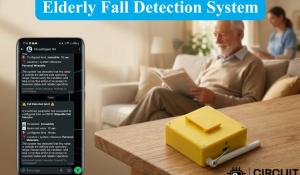
When an ageing parent falls at home, the immediate injury is usually only half the danger. The real danger begins during the critical time they spend waiting on the floor for help. Lying immobile for extended periods can rapidly lead to severe dehydration, hypothermia, and muscle breakdown, even in homes where family members are regularly around. Expecting an injured…
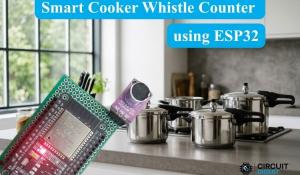
Almost every kitchen has a pressure cooker, but we've all had trouble handling them. It’s too easy to turn on the stove, get distracted by work, TV, or housework, and forget to turn it off. If we miss a whistle count, food gets burned, utensils get spoiled, and there are chances of accidents in the kitchen. But then again, being in the kitchen and manually counting…
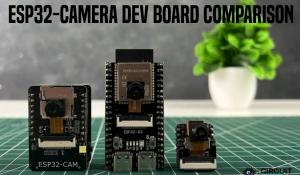
ESP32 Cameras have become a popular choice for building low-cost wireless cameras, smart surveillance systems, and even small AI projects. But today, there are several options available, from the original ESP32-CAM to newer ESP32-S3-based camera boards and compact boards like the XIAO ESP32-S3 Sense. At first glance, they may look similar, but there are…
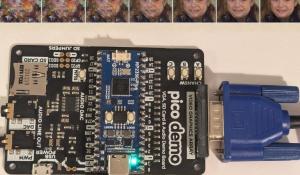
Generative AI image models usually require powerful processors and large amounts of memory, but a new project demonstrates that image generation can be pushed onto a small microcontroller. Tim, from Tim’s Blog, has implemented a generative AI image model on the RP2350, the microcontroller used in the Raspberry Pi Pico 2. Running on a Waveshare RP2350-Plus board, the system can generate 128×128…
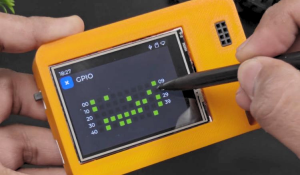
This project transforms a compact MaTouch Lite development board into a fully functional, portable touchscreen computer. The project uses an ESP32-S3 microcontroller, featuring 16MB of flash and 8MB of PSRAM, which provides the necessary performance to run a graphical environment. By integrating a 2.4-inch resistive touchscreen and a microSD card for storage, the creator successfully…
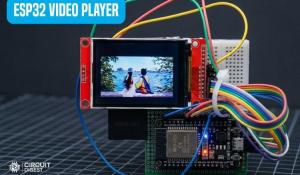
Playing smooth, full-motion video on low-power microcontrollers has been challenging due to memory and processing limitations. But with the dual-core speed, high SPI clock rates and an optimized decoding library on the ESP32, you can turn a simple development board into a working video player. If you want to create custom animations or add dynamic visual UI elements…

A tiny satellite prototype weighing just 21 grams is showing how far small-scale electronics can be pushed when size and weight become the main design targets. The compact device, developed as a suborbital satellite prototype, measures only 28 × 28 × 33 mm and packs an ESP32-C3 Mini microcontroller, environmental sensors, an inertial measurement unit (IMU), onboard…
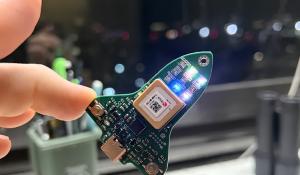
What if a tiny electronic device could look at the sky without a camera or telescope and tell you which planets are currently above the horizon? That is the idea behind Whats Up V2, a compact GPS-based circuit built around an STM32G031K8 microcontroller. The device uses a u-blox SAM-M10Q GPS module to obtain its location and precise UTC time, while nine SK6812-EC20 addressable RGB LEDs provide…
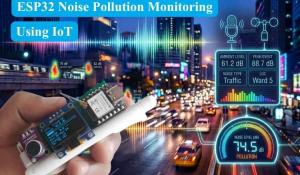
Urban areas are now affected by acoustic disturbances; major Indian cities such as Mumbai, Kolkata, and Delhi rank among the noisiest in the world, driven by dense traffic, construction, festivals, and industrial activity. Extended exposure to these noise levels leads to health issues, including disturbed sleep, increased stress, cardiovascular risk, hearing damage,…
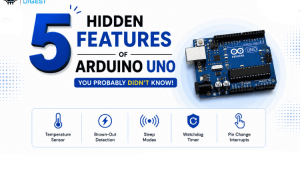
The Arduino UNO R3 is often the first board people use to learn electronics and programming. Connect an LED, read a sensor, control a motor, upload a sketch, and it can seem like you’ve already discovered everything the board can do.But there is much more going on underneath.At the heart of the UNO R3 is the ATmega328P microcontroller. That small chip contains hardware features that many…

An open source project called Meowtion packs two on device AI models onto a single microcontroller with only 256KB of RAM, using a scheduling trick rather than model compression to make it fit. Built by Jerome Graves and documented on Hackaday.io, the wearable collar tracks a cat's eating, drinking, and resting behaviour to flag early changes that can precede illness.
The collar runs on…
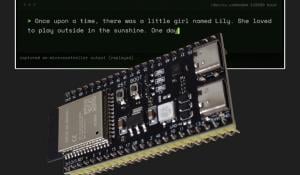
Developer slvDev has published an open-source project that runs a 28.9-million-parameter language model directly on an ESP32-S3, a microcontroller that costs roughly $8. The model runs entirely on the chip itself, with no data sent to a server, generating text at roughly 9 tokens per second and outputting it to a small connected display. The achievement stands out because of how little working…
