
Touchscreen Controller
|
vPlayer: An OpenSource Video Player, That’s More Than Just a Screen
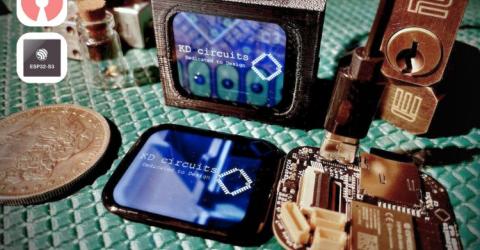
The vPlayer is a smartwatch-sized 1.69" touchscreen device powered by the ESP32-S3, designed for endless creative possibilities. With WiFi, Bluetooth, USB-C, and an SD card slot, it’s perfect for video playback, IoT projects, live camera monitoring, and more. … |
|
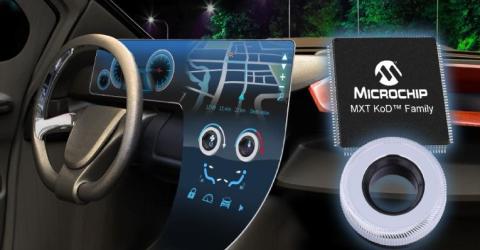
New maXTouch Knob-on-Display Touch Controller Family Eliminates the Need for Custom Touch Sensor Patterns and Enables Innovative HMI Solutions Microchip Technology Inc. has announced the new maXTouch Knob-on-Display (KoD) family of touchscreen controllers that supports the detection and reporting of capacitive rotary encoders and mechanical switches on top of a touch panel. This new technology enables the mounting of the knob directly onto the display without an opening in the panel or… |

|
Capacitive Multi-Touch Screen Controller Based on Arm Cortex-M4 Core supports New-Generation AMOLED Energy-Saving Displays STMicroelectronics has introduced the new FingerTip FTG2-SLP touchscreen controller that supports both synchronous and asynchronous display operations which gives the OEMs the ability to maintain seamless user interactions as the refresh rate changes dynamically. This new controller is also ideal for smartphones with flexible AMOLED displays that… |
|
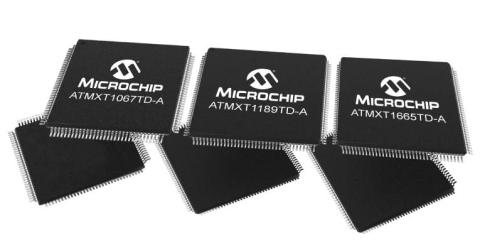
Accelerate EMI Qualification of Automotive Touchscreens with New Capacitive Touch Controllers Microchip has released three new maXTouch touchscreen controllers to address electromagnetic interference (EMI) and electromagnetic compatibility (EMC) challenges faced by developers of automotive touchscreens. The new TD family of touch controllers comes with new differential mutual signal acquisition method that significantly increases the Signal-to-Noise Ratio (SNR). This… |
|
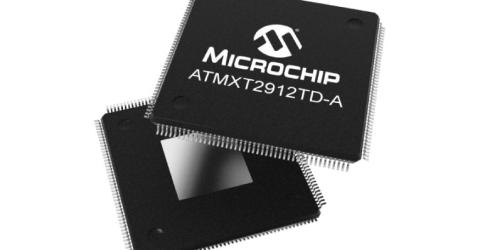
Single-chip maXTouch Touchscreen Controllers for 20-inch Automotive Touchscreens As touchscreen displays in the car grow larger, drivers expect screens to operate with the same touch experience as mobile phones. However, screens in automobiles need to meet stringent head impact and vibration tests, and so need to have thicker cover lenses that potentially impact the touch interface performance. As screens get larger, they are also more likely to… |