
embedded systems

|
Pac-Man, Space Invaders and Manic Miner Run on a Plain Arduino Uno at 50 fps, With Two Resistors for Video and No Framebuffer An Arduino Uno has 2 KB of RAM, 32 KB of flash and a 16 MHz 8-bit ATmega328P. That is less memory than the 1982 ZX Spectrum had, and nowhere near enough to hold a frame of video. Even so, Smashcat has built a game engine that runs full arcade-style games on it at a locked 50 frames per second, straight to a TV over composite video made with just two resistors. It now runs four games: Manic… |

|
Renesas Takes Its RX MCUs to 600 MHz and Swaps Flash for MRAM With the New 22nm RX74M and RX74N Renesas has launched the RX74M and RX74N, the first RX-family microcontrollers built on a 22nm process and the first to use embedded MRAM instead of conventional flash. Both run an RXv3e core at up to 600 MHz, and Renesas says they deliver more than twice the performance of the 240 MHz RX72M and RX72N they succeed. The RX74M targets factory automation gear like AC drives, industrial robots and… |
|
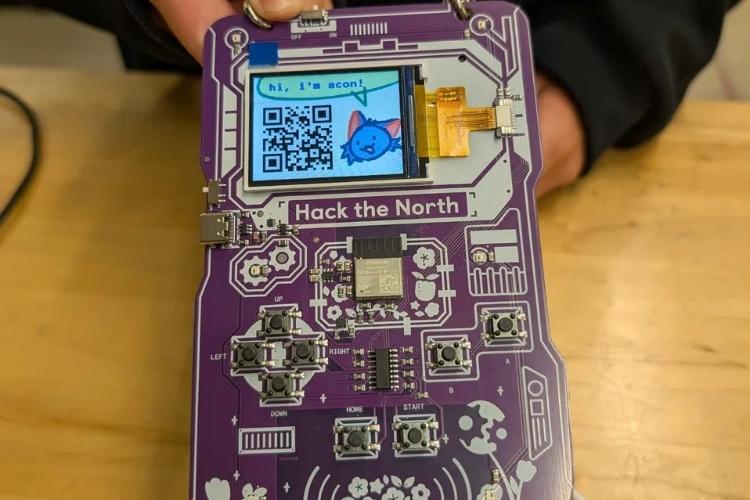
These ESP32-Powered PCB Badges Run Among Us and Let Hackathon Participants Build Their Own Games A simple event badge can do more than display a name. Nick Ficara designed and developed programmable electronic badges for Hack the North, a major student hackathon in Canada, after being approached by Alex, a project manager at the event. Unlike ordinary event badges that only display a name or event logo, this ESP32-powered hacker badge works as a small computer that participants can… |
|
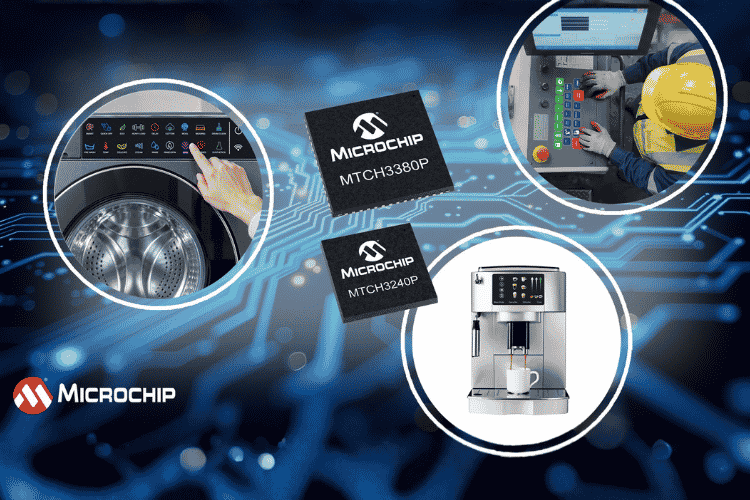
Microchip Introduces its First Turnkey Touch Controllers for Buttons, Sliders and Wheels with Parallel Sensing As appliance and equipment manufacturers look for ways to reduce system costs, many are replacing displays with Human Machine Interfaces (HMIs) using high-end decoration and illuminated capacitive-touch buttons, sliders and wheels. These interfaces often require a large number of touch sensors which can increase acquisition time and reduce the signal-to-noise ratio (SNR) when using… |
|
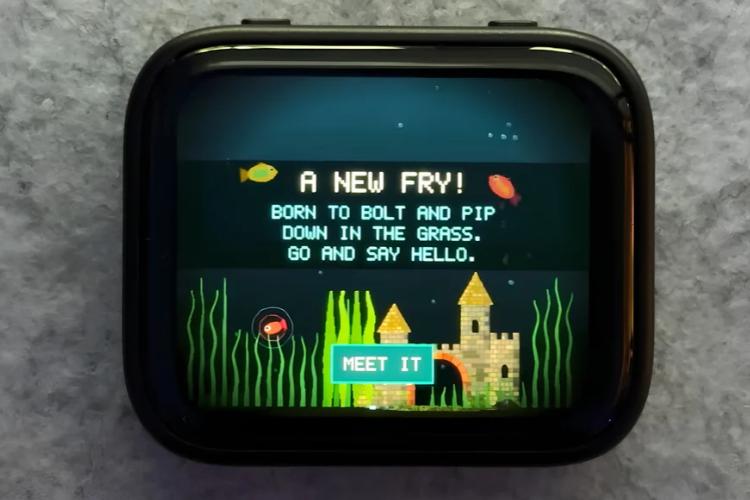
Open-Source Pocket Tank Runs a 14.3M-Parameter AI Model on an ESP32-S3 to Give Virtual Fish Their Own Brains Pocket Tank is an open-source virtual fish tank that uses a small AI model to control its virtual fish. It runs on an ESP32-S3 and creates a small aquarium where fish can eat, explore, rest, follow other fish, play, and interact with each other. Each fish has different values such as hunger, energy, curiosity, stress, boredom, and trust, which can change how it behaves. The project was created… |
|
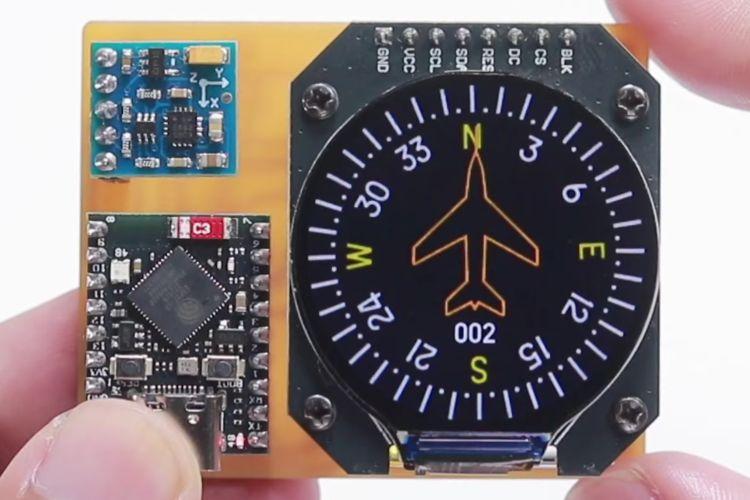
ESP32-S3-Based Compass Uses a 3-Axis Magnetometer for Real-Time heading and Direction Readouts LazyDays Creation built a compact, portable digital compass based on an ESP32-S3 Super Mini and a three-axis magnetometer. He chooses an ESP32-S3 Super Mini because it is capable enough for the project while also including a built-in lithium-battery charging circuit. A round colour display gives the finished device a distinctive watch-like appearance, while the rechargeable battery allows it… |
|
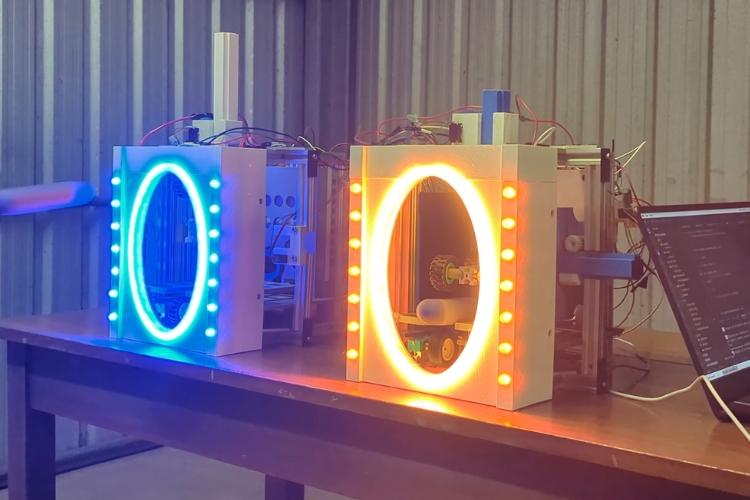
Maker Builds a Linked Portal Illusion Using Arduino Uno R4, Flywheel Launcher, and ToF Distance Sensors A maker from the youtube channel James' Programming has recently built a linked portal illusion using Arduino, 3D‑printed parts, and a custom aluminum frame. The setup uses two identical “portal” frames facing each other: when an object is thrown into one, it appears to instantly emerge from the other, creating a convincing real‑time portal illusion without any video tricks. … |
|
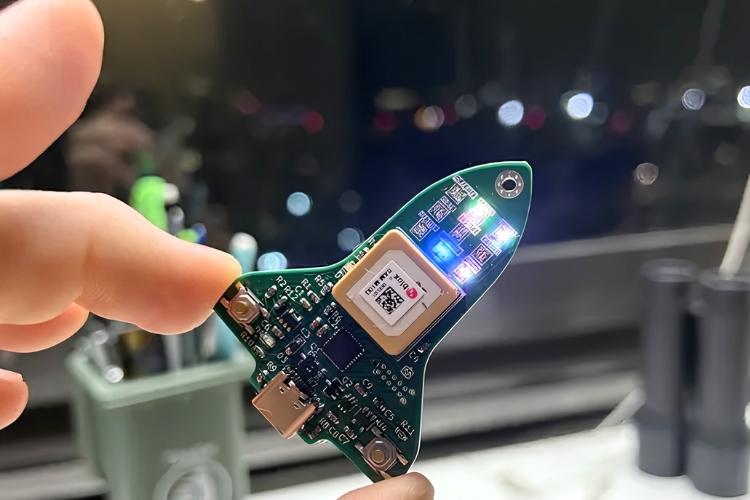
This STM32 GPS Device Shows Which Planets Are Above You Offline, Fitting 5 Years of Orbits in 64KB What if a tiny electronic device could look at the sky without a camera or telescope and tell you which planets are currently above the horizon? That is the idea behind Whats Up V2, a compact GPS-based circuit built around an STM32G031K8 microcontroller. The device uses a u-blox SAM-M10Q GPS module to obtain its location and precise UTC time, while nine SK6812-EC20 addressable RGB LEDs provide… |

|
Getting Started with Arduino UNO Q: Exploring App Lab, AI Agent Mode, and More For many engineers and makers, the journey into electronics and microcontrollers probably started with an Arduino board. From making a simple LED blink to reading sensors , controlling motors, and building our first embedded projects, Arduino has been a familiar starting point for learning and experimenting with electronics. But the… |
|
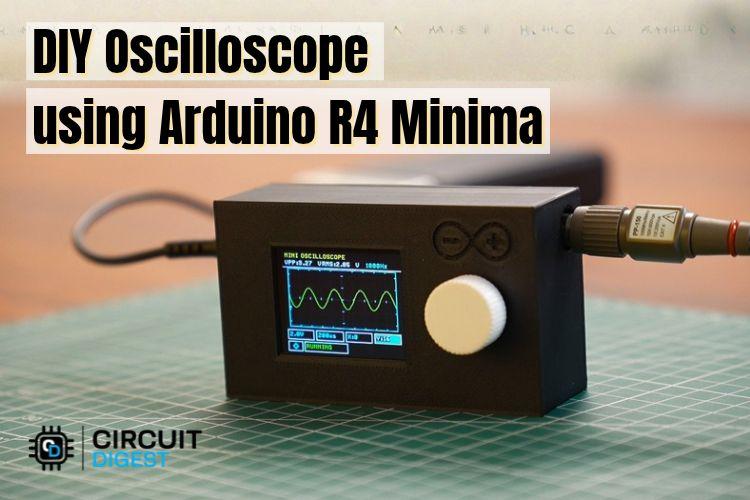
How to Build a DIY Oscilloscope using Arduino UNO Minima? When working with electronics, a multimeter can tell you the voltage at a particular moment, but it cannot show you how that voltage changes over time. To observe these changes and understand what's happening inside a circuit, we need an oscilloscope. But instead of investing in a dedicated instrument, what if we could build a simple one ourselves using a… |
