
 Vedhathiri
Author
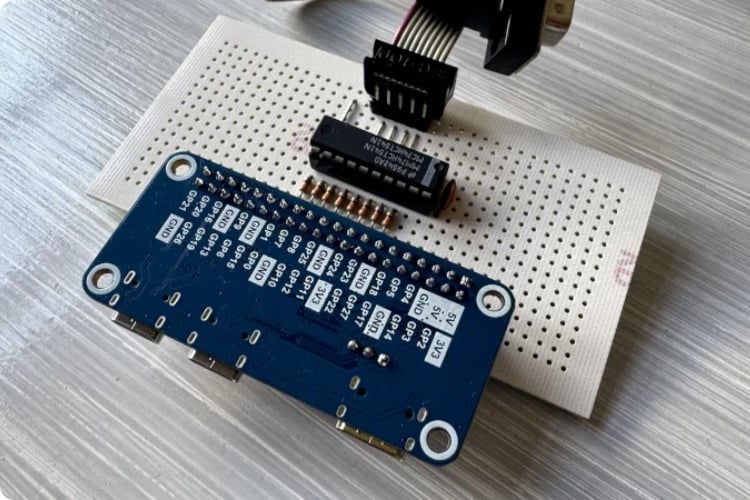
Before VGA became common, many computers used TTL RGB video to send digital colour signals to their monitors. Today, finding a compatible monitor for this older hardware can be difficult, making it harder to use and restore vintage computers. A new DIY project by Charlysan offers a solution with an RP2350-based TTL RGB to DVI converter. It captures the video output from older computer hardware and converts it into a digital video signal that modern displays can support.
The project uses the Raspberry Pi RP2350 microcontroller on a Waveshare RP2350-PiZero board. Its Programmable I/O (PIO) hardware samples the incoming TTL video signals and stores the captured image in a framebuffer. The microcontroller then uses PicoDVI software to generate DVI-compatible video output through the board’s HDMI connector. The circuit also needs level-shifting hardware, which can be built using resistors, to adapt the input signals. A USB serial terminal allows users to manage the converter, and the project also includes a graphical interface script.
What makes this project interesting is how it uses a low-cost microcontroller to bridge the gap between older computer hardware and modern displays. Instead of relying on a dedicated video-conversion chip, it combines the RP2350’s programmable I/O with software-based DVI generation. This offers a practical option for retro-computing enthusiasts who want to bring vintage systems back to life without searching for increasingly rare TTL monitors.