
DIY
|
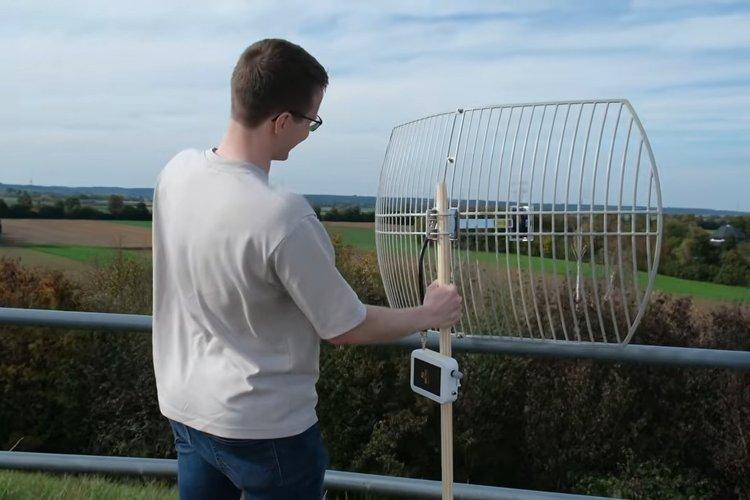
A 60-Euro Dish and a Coin-Sized Tag Pushed Bluetooth to About 13 km, Over 1,000 Times Its Usual Range Most of us give up on Bluetooth once we walk into the next room, so this result is worth a second look. The team behind the YouTube channel nktbuilds set out to make an ordinary coin-sized Bluetooth tag reach a receiver 12 km away, about 1,200 times the 10 m or so where a normal Bluetooth link gives up. They did it without adding a single milliwatt of transmit power. A 60-euro grid dish, a… |
|
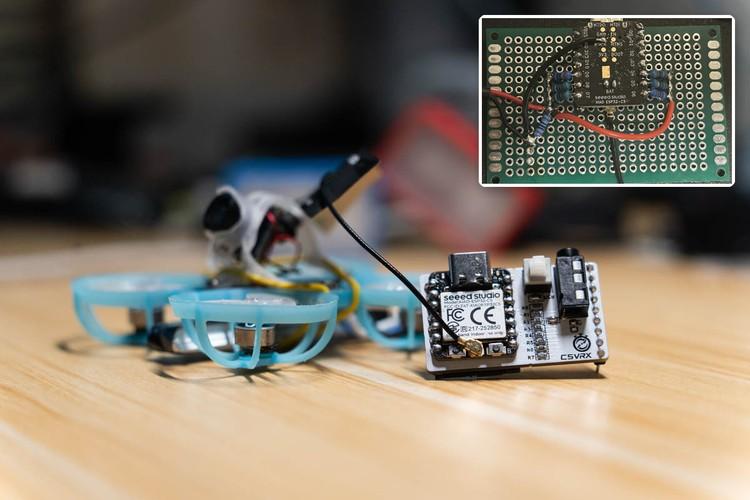
Seven Resistors and an ESP32-C5: This Open-Source FPV Receiver Uses the Wi-Fi Radio to Catch Analog Drone Video Analog FPV goggles normally need a dedicated 5.8 GHz receiver module, but Leon (Twotoz) has built one out of a Seeed Studio XIAO ESP32-C5 and seven resistors. His open-source C5VRX-5 firmware uses the ESP32-C5's own dual-band Wi-Fi radio to pick up the FM video from a drone's analog VTX, demodulates it, and pushes composite PAL or NTSC video out of six GPIO pins into your goggles, a DVR or a… |
|
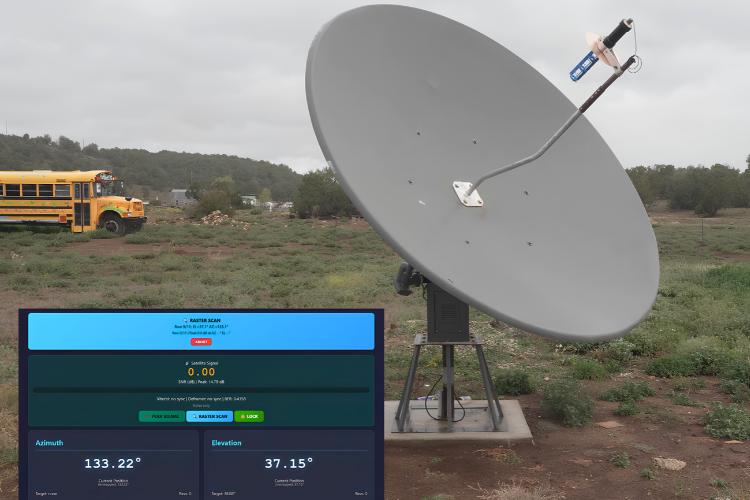
Turning a Backyard into an 8-Foot Satellite Ground Station with Raspberry Pi to Capture Weather Images from Space Cranktown City has built a DIY satellite ground station that uses an 8-foot satellite dish to follow satellites as they move across the sky and receive the radio signals they transmit. Unlike a manually operated dish, this system can calculate a satellite's position and automatically move the dish to follow it. One of the project's biggest achievements is receiving full-disk weather images… |
|
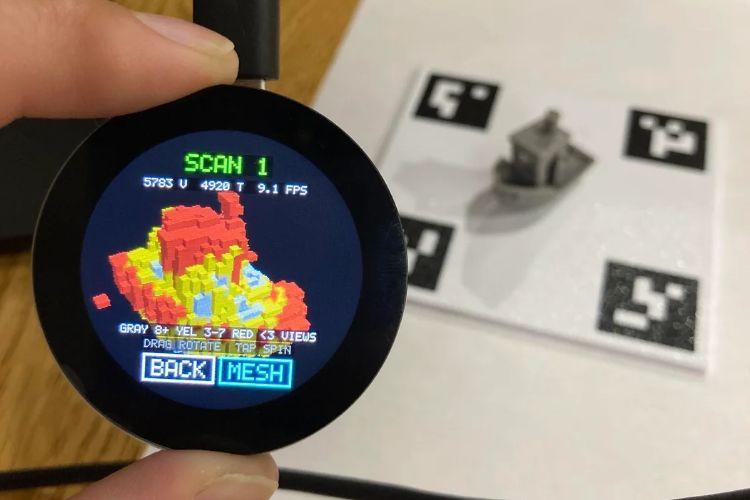
ESP32-S3 3D Scanner Brings Budget Space Carving and 3D Mesh Generation to Embedded Hardware Projects A recent project shared on reddit - r/esp32 showcases how much computer vision potential can be squeezed out of inexpensive, low-power hardware. Built around a Seeed Studio XIAO ESP32-S3 board paired with its dedicated round screen extension, the handheld device doubles as a self-contained 3D object scanner. Originally intended as a platform for an augmented reality game, the creator pivoted… |
|
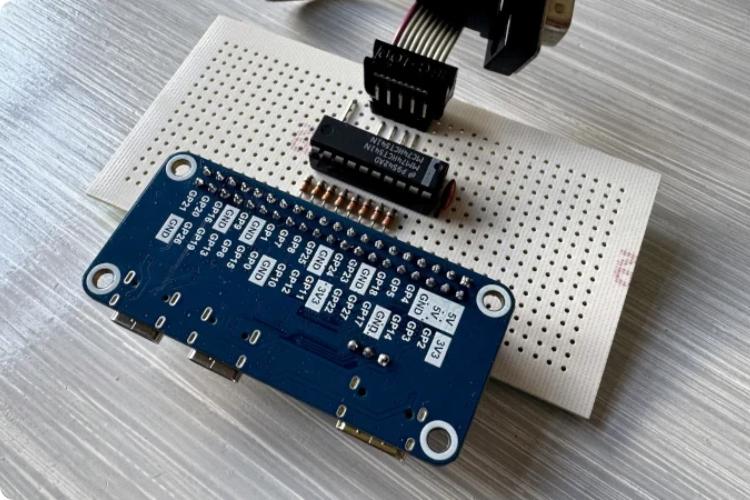
This DIY Video Converter Uses an RP2350 to Turn Vintage TTL RGB Signals Into DVI-Compatible Video Before VGA became common, many computers used TTL RGB video to send digital colour signals to their monitors. Today, finding a compatible monitor for this older hardware can be difficult, making it harder to use and restore vintage computers. A new DIY project by Charlysan offers a solution with an RP2350-based TTL RGB to DVI converter. It captures the video output from older computer hardware… |
|
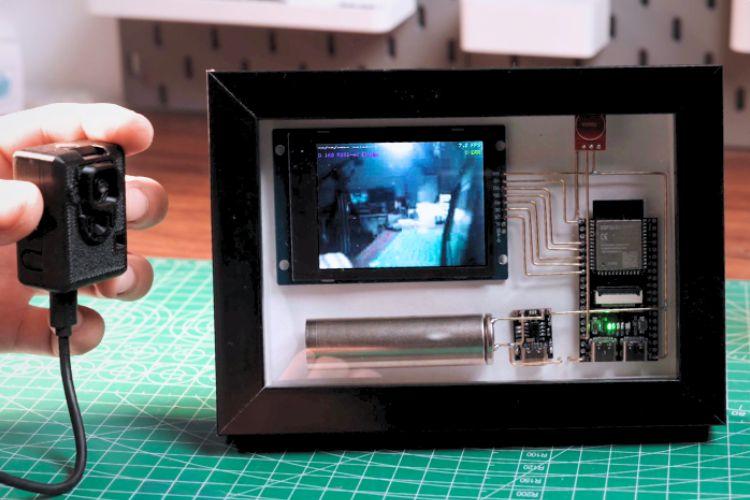
Maker Built a DIY ESP32 Security Camera With a Picture Frame Display and Shared the Custom Firmware Building a custom, low-cost home security setup no longer requires expensive commercial hardware or subscription fees. Using two inexpensive ESP32 microcontroller boards, HVT Lab and Huy Vector from Youtube recently built a fully functional, self-contained wireless video surveillance system. The setup features a dedicated ESP32-CAM module mounted at an entry point such as a front gate which… |
|
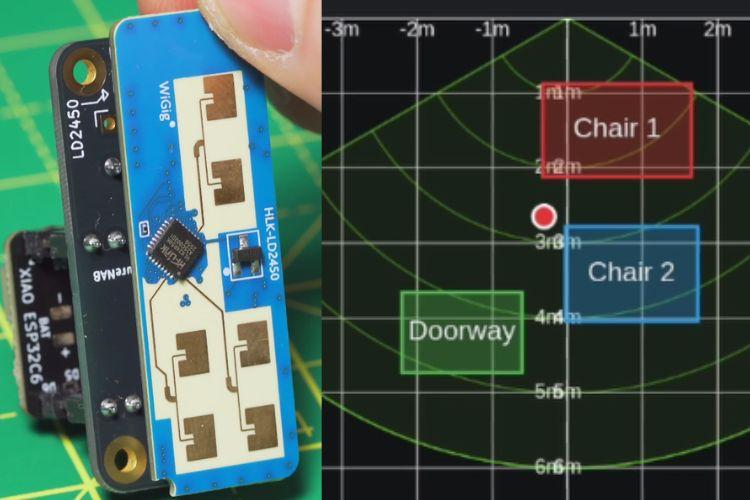
This DIY Open-Source mmWave Presence Sensor Features ESP32-C6 With Precision 2D Spatial Tracking Traditional infrared presence sensors are cheap, but unreliable for smart homes, often turning off lights if you remain still for even a few seconds. Millimeter-wave (mmWave) radar modules offer a far superior alternative by detecting micro-movements like breathing and even tracking a person's exact 2D position in a room. However, commercial mmWave presence sensors can cost anywhere from $40… |
|
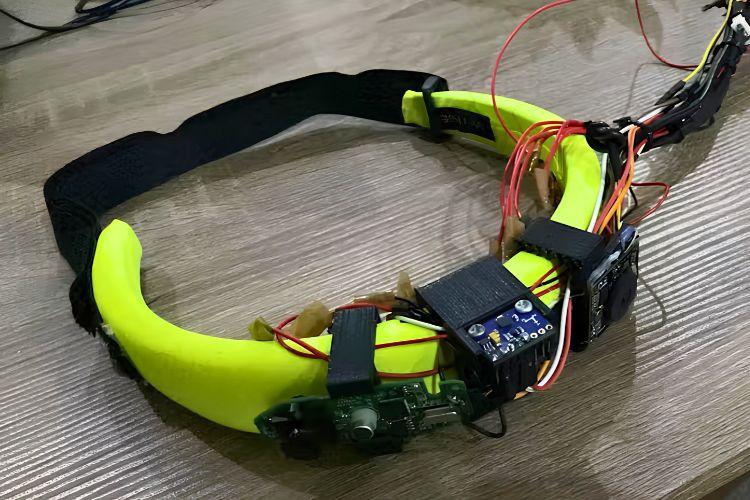
This Arduino UNO Q Headband Uses 13 Vibration Motors for Screen-Free Awareness Through Haptic Feedback Maker pasquale887 has developed HaloSense V1, a wearable haptic headband that helps users sense the direction of people and objects through vibrations instead of looking at a screen. The headband has 13 small vibration motors arranged around the forehead. When a person or target is detected in a particular direction, the motor in the corresponding position vibrates, helping the wearer… |
|
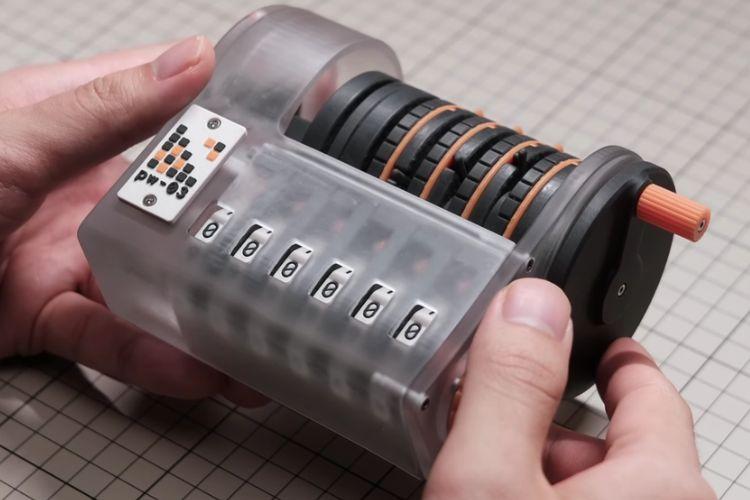
Using Over 130 3D-Printed Parts, This Six-Digit Calculator Lets Gears and a Hand Crank Handle the Logic A maker has built a calculator out of some 3D-Printed parts that can perform up to six-digit addition, subtraction, multiplication, and division that too without any complicated electronics. The machine is made from more than 130 custom designed parts and works entirely through gears, pins, levers, springs, and a hand crank. Its design is inspired by historic mechanical calculators, especially… |
|
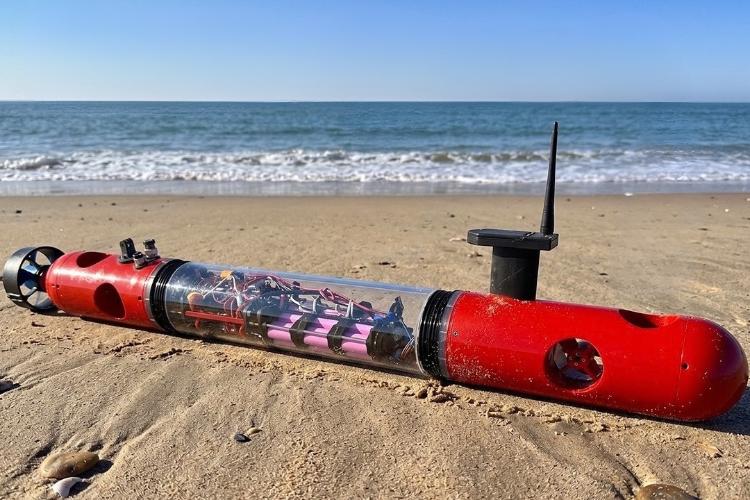
This Autonomous Submarine Uses DVL Sound Waves for GPS-Free Underwater Navigation and Exploration CPSdrone is building a DIY autonomous submarine to explore shipwrecks without needing GPS while underwater. Since GPS signals cannot reach the submarine underwater, the team added a Doppler Velocity Log (DVL) to help it navigate. The DVL sends sound waves toward the seafloor and listens for the signals that bounce back. By measuring how the sound changes as the submarine moves, it can… |
|
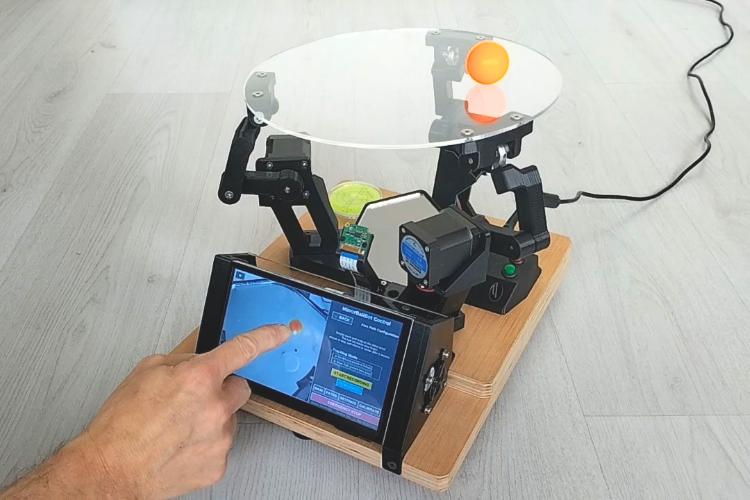
Ball-Balancing Robot Uses a Mirror to Stay Compact; Pi Handles Vision, Leaves Motor Step Timing to 3 RP2040 Chips MirrorBallBot, an open-source ball-balancing robot from a maker using the GitHub handle AndreaFavero71, looks at its platform through a mirror rather than from above. The camera sits to the side and points at a mirror inclined at 27 degrees beneath the platform. The author says that, for the same camera and robot height, this widens the field of view by 58%, which allows a larger platform… |
|
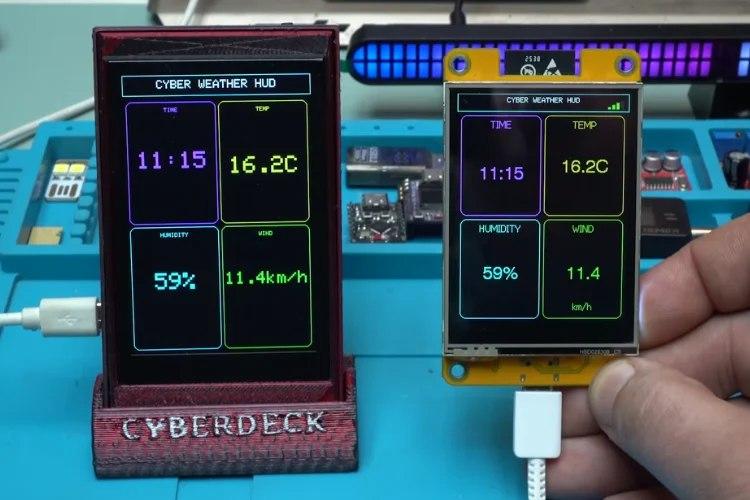
Maker Builds a 5-in-1 Cyber Deck Using an ESP32, 3.5-Inch Touchscreen Display, and Custom 3D-Printed Body Maker from the youtube channel Hacktuber recently made a custom "5-in-1 Cyber Deck" using ESP32. He demonstrated the project using two different ESP32 based development boards. One is a 2.8-inch CYD (Cheap Yellow Display) featuring an integrated touchscreen for quick prototyping, and the other is a 3.5-inch non-touch TFT display connected to an ESP32 C3 Mini, mounted onto a 3D-printed… |
