
DIY
|
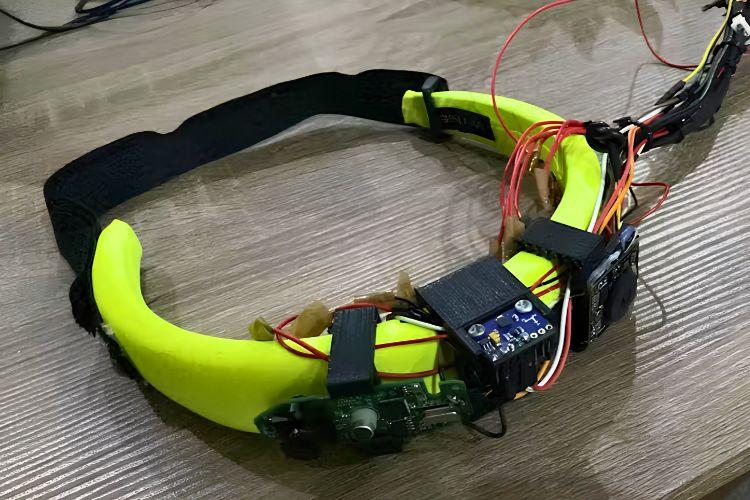
This Arduino UNO Q Headband Uses 13 Vibration Motors for Screen-Free Awareness Through Haptic Feedback Maker pasquale887 has developed HaloSense V1, a wearable haptic headband that helps users sense the direction of people and objects through vibrations instead of looking at a screen. The headband has 13 small vibration motors arranged around the forehead. When a person or target is detected in a particular direction, the motor in the corresponding position vibrates, helping the wearer… |
|
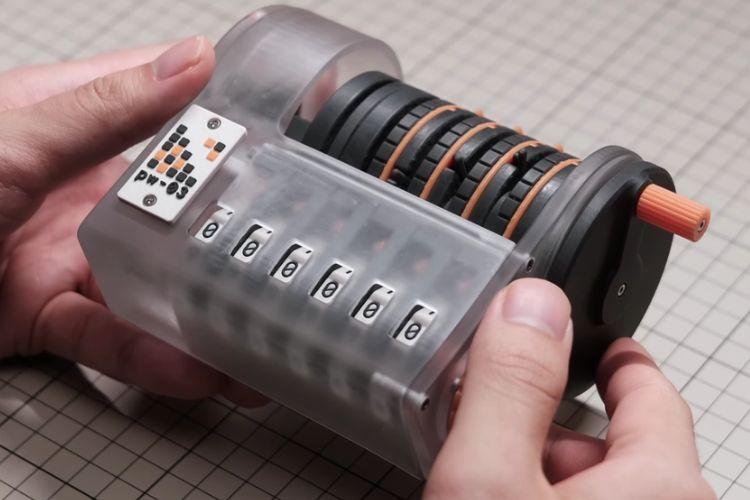
Using Over 130 3D-Printed Parts, This Six-Digit Calculator Lets Gears and a Hand Crank Handle the Logic A maker has built a calculator out of some 3D-Printed parts that can perform up to six-digit addition, subtraction, multiplication, and division that too without any complicated electronics. The machine is made from more than 130 custom designed parts and works entirely through gears, pins, levers, springs, and a hand crank. Its design is inspired by historic mechanical calculators, especially… |
|
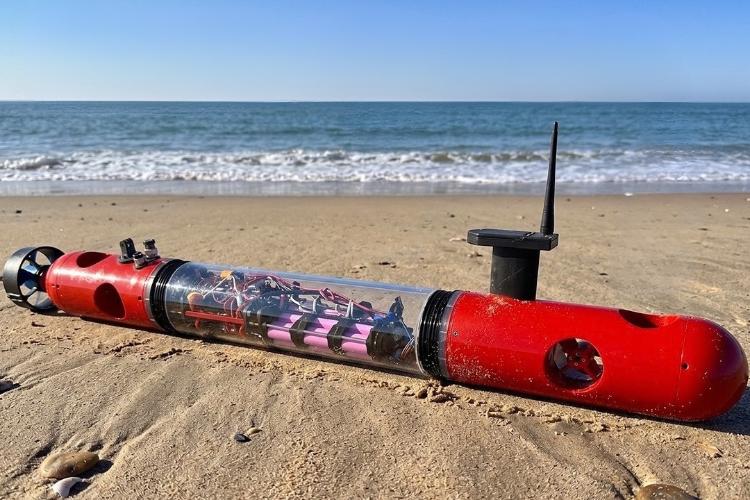
This Autonomous Submarine Uses DVL Sound Waves for GPS-Free Underwater Navigation and Exploration CPSdrone is building a DIY autonomous submarine to explore shipwrecks without needing GPS while underwater. Since GPS signals cannot reach the submarine underwater, the team added a Doppler Velocity Log (DVL) to help it navigate. The DVL sends sound waves toward the seafloor and listens for the signals that bounce back. By measuring how the sound changes as the submarine moves, it can… |
|
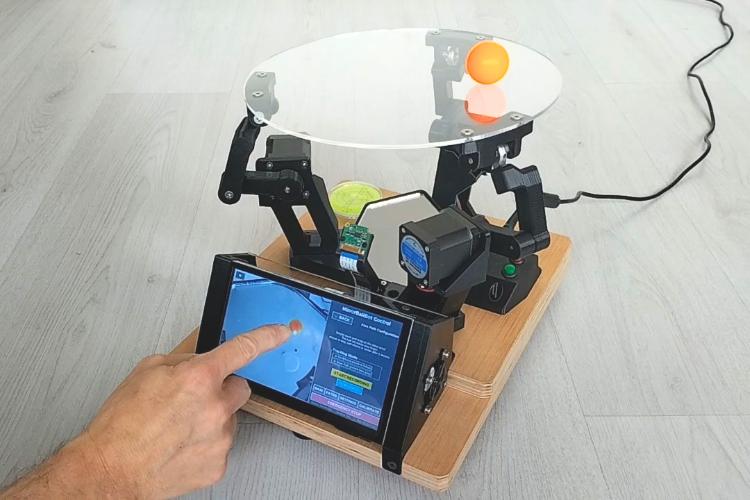
Ball-Balancing Robot Uses a Mirror to Stay Compact; Pi Handles Vision, Leaves Motor Step Timing to 3 RP2040 Chips MirrorBallBot, an open-source ball-balancing robot from a maker using the GitHub handle AndreaFavero71, looks at its platform through a mirror rather than from above. The camera sits to the side and points at a mirror inclined at 27 degrees beneath the platform. The author says that, for the same camera and robot height, this widens the field of view by 58%, which allows a larger platform… |
|
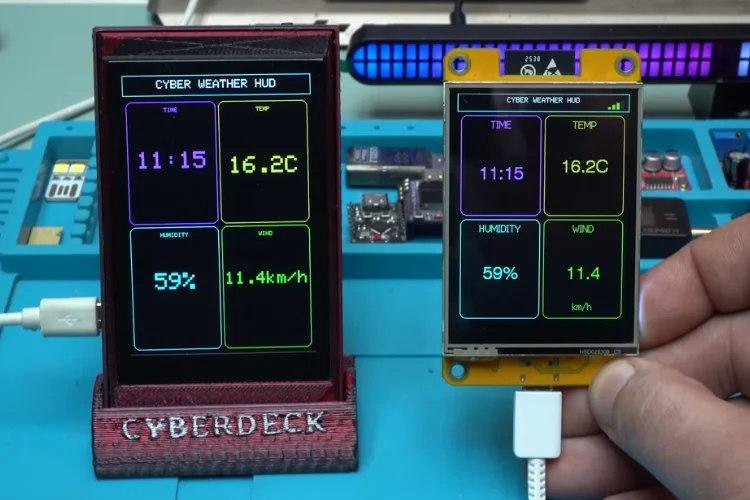
Maker Builds a 5-in-1 Cyber Deck Using an ESP32, 3.5-Inch Touchscreen Display, and Custom 3D-Printed Body Maker from the youtube channel Hacktuber recently made a custom "5-in-1 Cyber Deck" using ESP32. He demonstrated the project using two different ESP32 based development boards. One is a 2.8-inch CYD (Cheap Yellow Display) featuring an integrated touchscreen for quick prototyping, and the other is a 3.5-inch non-touch TFT display connected to an ESP32 C3 Mini, mounted onto a 3D-printed… |
|
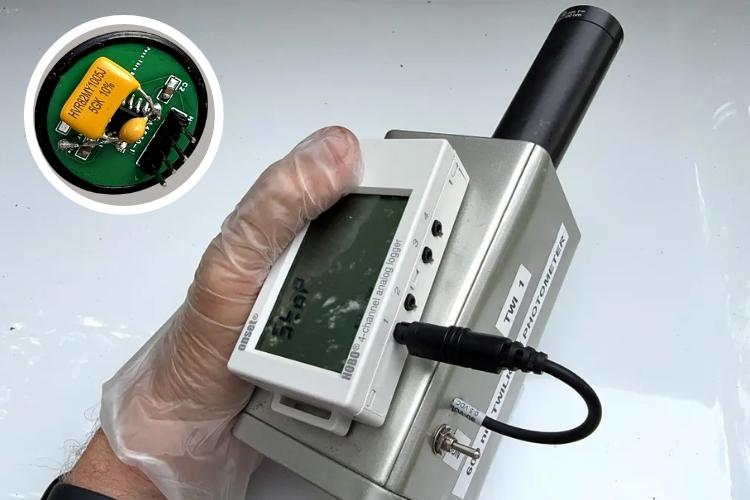
This DIY Twilight Photometer Uses an LED and ADA4530 to Measure the Ozone Layer’s Peak Height from the Ground Forrest M. Mims III has built a DIY twilight photometer that estimates the height of the ozone layer by measuring changes in the brightness of the sky before sunrise or after sunset. The project was inspired by the need for a simpler ground-based method of studying the atmosphere. Mims has worked with professional ozone-measuring instruments and wanted to create a smaller and less complicated… |
|
Top 80+ Beginner-Friendly EEE/ECE Mini-Projects for Electronics Worth Trying .project-card { display: grid !important; grid-template-columns: 330px minmax(0, 1fr); column-gap: 26px; align-items: center !important; width: 100%; margin: 0 0 34px 0 !important; padding: 0 !important; box-sizing: border-box; cursor: pointer; } /* Keep the complete project image visible */ .project-card .project-image { width: 330px; height: 200px; overflow: hidden;… |
|
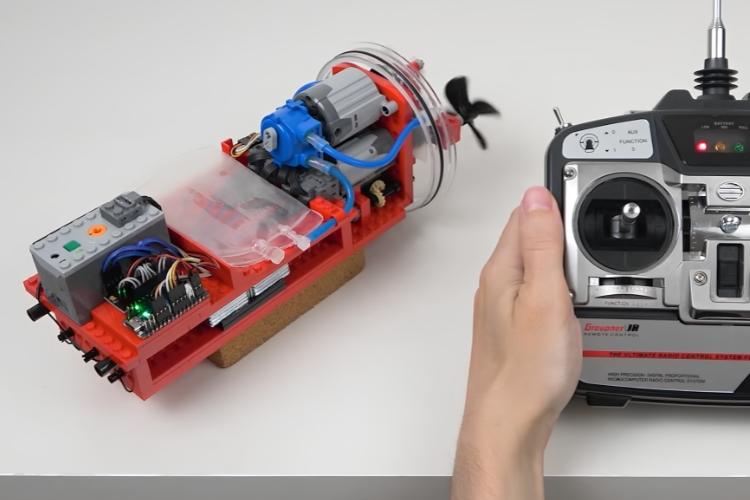
Built Around LEGO Parts and an Arduino Nano ESP32, This RC Submarine Uses a Moving Weight for Pitch Control The Brick Experiment Youtube Channel has built RC Submarine 5.0, a LEGO-based remotely controlled submarine designed to improve on the previous version while making underwater operation easier and more convenient. The submarine uses a 39 cm-long acrylic hull with two propellers for propulsion and differential steering, while a water pump and ballast tank control its buoyancy and depth. One of… |
|
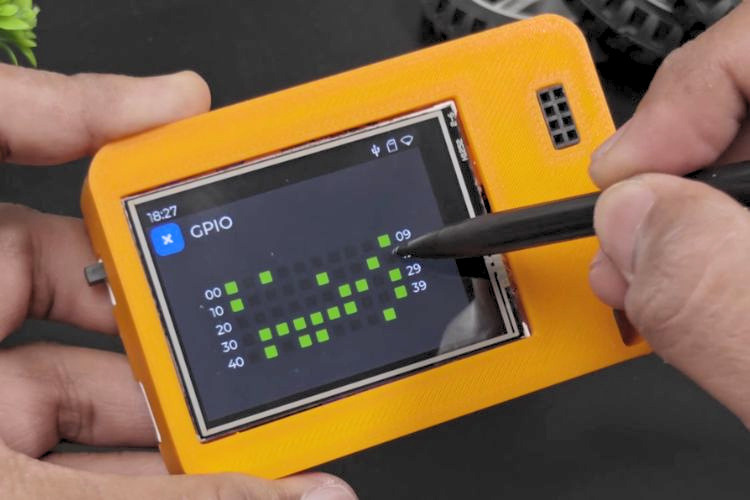
Maker Turns an ESP32 S3 Into a Pocket PC by Porting Open Source Tactility OS to a 2.4 Inch Touch Display This project transforms a compact MaTouch Lite development board into a fully functional, portable touchscreen computer. The project uses an ESP32-S3 microcontroller, featuring 16MB of flash and 8MB of PSRAM, which provides the necessary performance to run a graphical environment. By integrating a 2.4-inch resistive touchscreen and a microSD card for storage, the creator successfully… |
|
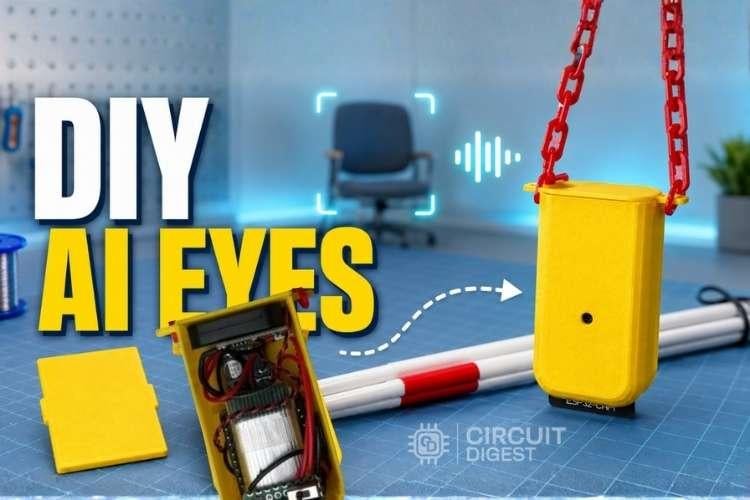
ESP32-CAM AI Vision Assistant Pendant for the Visually Impaired Moving through unfamiliar environments is a challenging thing for visually impaired people. We have a lot of solutions, from sticks to obstacle-avoidance handheld devices on the market, to solve their problem. In the DIY world, a lot of makers have built obstacle-avoidance sticks using Ultrasonic sensors, IR sensors or even a PIR sensor and different variations of… |

|
Arduino Round Segment NeoPixel Clock Digital clocks are one of the most popular Arduino projects, and most of them use traditional seven-segment displays to show the time. While these displays are simple and reliable, they usually have the same familiar rectangular shape and monochrome appearance. When I decided to build a new digital clock for my room, I wanted to create something that worked like a seven-… |
|
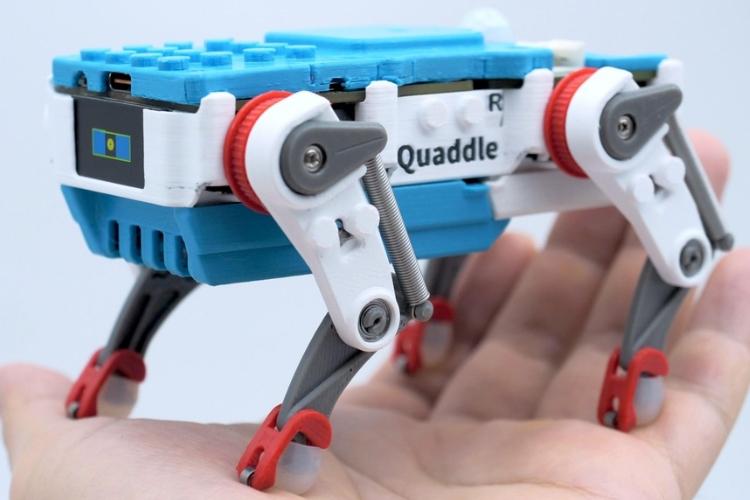
Quaddle Is an Open-Source Desk Robot That Can Move Omnidirectionally With Just 4 Servos Petoi, the team behind the open-source Bittle and Nybble quadruped kits, has opened early access for its next robot, Quaddle. The company describes it as a four-servo quadruped capable of walking, strafing sideways, and spinning in place, a claim that stands out mainly because of how few actuators it uses to pull it off.
Most legged robots that can… |
