

Sanctuary AI is creating general-purpose robots that can think and act like humans. They have reached a new milestone by making improvements in their robotic arms that have 21 degrees of freedom (DOF), making them flexible and capable of doing tricky jobs like assembling parts and handling tiny objects just like how human hands do. They are powered by hydraulic…

Cooking robots have become a growing fascination, with high-end automated systems and futuristic humanoid designs capturing imaginations. Even such robotic chefs have been in service in Japan for years now. However, these solutions are often expensive and inaccessible, leaving hobbyists to experiment with simpler, DIY approaches. A recent project by Josh from the Fungineering YouTube channel…
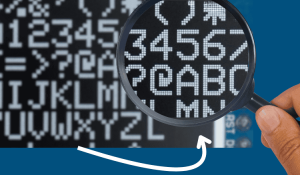
Ever used the standard 6x8 pixel display for your DIY electronics project? often characters appear jagged or distorted at the edges. Changing to a display with 12x16 pixels is one way to solve the problem, but characters often appear blocky and consume more memory when enlarged. To address this problem, David Johnson-Davies has found an innovative way to smooth out…
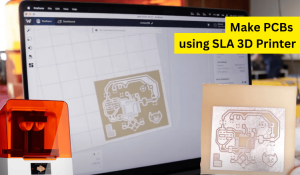
If you have worked with electronics, at some point you have probably wondered or even tried to make your own PCBs at home. Thanks to the magic of 3D printing, that dream is now a reality. Stephen Hawes, CEO of Opulo, on his YouTube channel shows us how you can use an SLA 3D printer to etch your very own PCBs.
First, you'll need to…
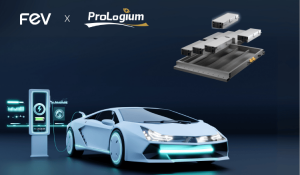
A critical question arises as the automobile industry gradually shifts towards eco-friendly options and sustainable solutions: How safe and time-efficient are these utilities in our daily lives?
FEV, a German based company, and ProLogium, a Taiwanese based company, have collaborated to develop LLCB technology (Large-Footprint Lithium…

Remember the thrill of playing against a computer in classic games like chess or ping pong? Now imagine that experience brought to life, where a robot not only competes against you but predicts your every move. That’s exactly what the DIY Air Hockey Robot does. The DIY Air Hockey Robot was created by the YouTuber known as zeroshotrobotics, and it uses real-time computer vision and predictive…

A company called Clone Robotics has launched a video of their Torso 2, what we believe is designed for their upcoming robot called Alpha. The video shows the second version of the Torso with an actuated lumbar spine and a full set of abdominal muscles that makes this android to move like never before. It’s wrapped in a slick, transparent skin that houses 910 muscle…

Ever wondered what it would be like if a spherical robot patrolled our neighborhood to maintain law and order? It sounds futuristic, but this is the reality. This Robot cop named RT-G is seen patrolling together with the Chinese army, though it remains unclear whether it's a test run or a significant step towards robotic policing. These robot cop are engineered for…
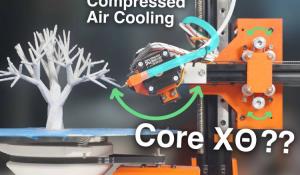
3D printing has revolutionised modern manufacturing and prototyping, becoming a staple across industries and hobbyist communities alike. The sheer variety of 3D printers on the market today is staggering, with the majority of them employing Cartesian or planar kinematics. These systems operate within the familiar X, Y, and Z axes, building objects layer by flat layer. Other innovative designs…
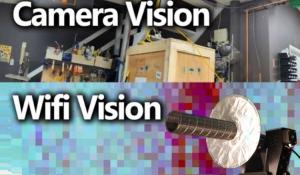
Wi-Fi has become a cornerstone of modern connectivity, enabling wireless data transfer across homes, workplaces, and public spaces. It operates in the microwave range of the electromagnetic spectrum, typically at frequencies of 2.4 GHz or 5 GHz. While essential for internet access, these signals are invisible to the human eye because our vision is limited to the visible light spectrum, leaving…

Medhansh Trivedi, a Class 12 student from Gwalior, has built his own passenger drone called the MTLD-01. This drone, weighing just 32 kg, can carry a person up to 90 kg and fly at 80 km/h, and reach a height of 4 kilometers. What’s really cool about this project is that he used motors from agricultural drones and paired it with big 50-inch propellers to build his…

Breadboards have been a go-to platform for electronics enthusiasts and makers during prototyping, providing a simple and reusable way to prototype circuits. However, one challenge that often arises is monitoring the power being delivered to the components. Traditionally, this task requires separate tools like power analysers or multimeters, which can be expensive and cumbersome for beginners.…