
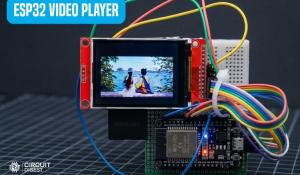
Playing smooth, full-motion video on low-power microcontrollers has been challenging due to memory and processing limitations. But with the dual-core speed, high SPI clock rates and an optimized decoding library on the ESP32, you can turn a simple development board into a working video player. If you want to create custom animations or add dynamic visual UI elements…

In this Physical AI tutorial, we will train a real robotic arm using Hugging Face LeRobot and imitation learning. The project uses the Seeed Studio SO-ARM101 leader–follower robotic arm and a reComputer J4012 powered by NVIDIA Jetson Orin NX.
…
From June to July 2026, AI hardware demand affected more than just GPUs, CPUs, and high-bandwidth memory. TrendForce reported that DRAM contract prices would rise by 13%–18% in Q3 2026. NAND Flash contract prices would rise by 10%–15%. The main drivers are AI inference systems and large data center deployments.
The pressure also…
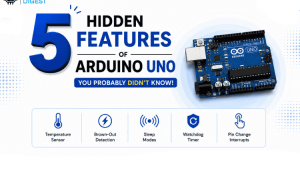
The Arduino UNO R3 is often the first board people use to learn electronics and programming. Connect an LED, read a sensor, control a motor, upload a sketch, and it can seem like you’ve already discovered everything the board can do.But there is much more going on underneath.At the heart of the UNO R3 is the ATmega328P microcontroller. That small chip contains hardware features that many…
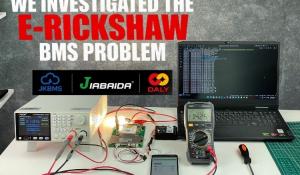
We recently came across reports covered by news outlets about electric vehicles, specifically e-rickshaws, being remotely hacked and stalled in the middle of busy roads. The attackers were using Android apps, some of which were available on the Google Play Store under names like BAT-BMS, Epoch Li-on and Overkill Solar. These apps were apparently able to connect to some specific brands of the…

Our recent Community Webinar featured Yatin Varachhia, Co-founder & CEO at Nosh Robotics, a company that makes a robot that cooks food. He previously worked as a design engineer at Analog Devices and has co-founded two companies. The session was held on a Sunday, with more than thirty people watching live, and included a question and answer segment.
We host monthly live sessions with…
At electronica India 2026, Nitin Jain, co-founder of 1Buy.AI, sat down with Aswinth Raj, editor of CircuitDigest, for an episode of electronica Xchange to discuss the role of artificial intelligence in procurement and its impact on India's supply chain. Nitin called electronica "a vibrant event," saying the first day had been strong and he expected even more inbound interest at the company's…

In this tutorial, we’re going to learn how to send data from an ESP32 to Firebase Realtime Database. We are using ESP32 Firebase Google as our cloud platform. A lot of cloud-based IoT projects on YouTube / GitHub / similar platforms using ESP32, ESP8266, UNO R4, or similar microcontrollers use Firebase as the cloud platform. And this guide covers the complete ESP32…

CP PLUS, the surveillance brand under Aditya Infotech, traces its origins to 2007. That year, the company decided to enter the surveillance technology space, with a vision of CCTV cameras becoming commonplace across India. What was then considered a luxury item for select businesses has since become, as M.A. Johar, President of Strategic Business at CP PLUS, put it, "a necessity" for hotels,…

We're all familiar with live GPS tracking; it tells us where a vehicle or device is right now. But what if the system could do more than just show the location? That's where geofencing using IoT comes in. Imagine receiving an instant alert the moment a vehicle leaves home, reaches college, enters the office, or moves into a restricted area. Instead of…

Imagine you've just sent a parcel through a courier service. As soon as it leaves your hands, you start wondering what is happening to it. Is it being handled carefully? Has it been dropped or damaged? Is it still on the right route? Will it reach the destination safely and on time? The truth is, once we send a parcel, we have very little idea about what happens…

Modern server and data center design places increasing demands on the physical interconnect layer. At 112 Gbps and beyond, connectors are no longer treated as simple passive components; their design has a direct impact on crosstalk, impedance continuity, and mechanical integrity across the system. The following provides a technical overview of four Amphenol interconnect product families…
