
power electronics
|
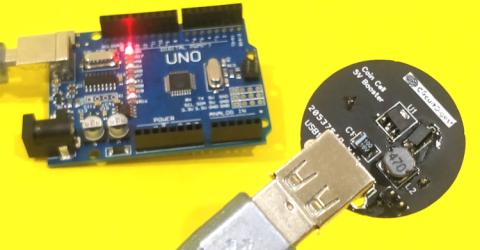
Single Cell Boost Converter Circuit using Coin Cell – 5V Output Battery cells are the most commonly used energy source to power portable electronics. Be it a simple alarm clock or an IoT sensor node or a complex mobile phone everything is powered by batteries. In most cases these portable devices need to have a small form factor (package size) and hence it is powered by a single cell battery, like the popular CR2032 Lithium cell or the… |
|
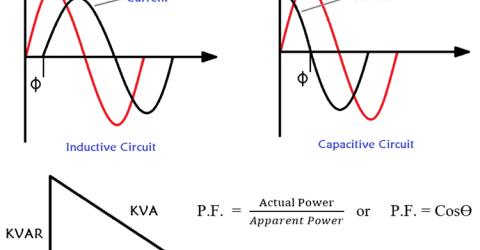
Understanding Power Factor and How It Affects your Energy Bills Aside from safety and reliability, several other goals including efficiency should be pursued in the design and implementation of electrical systems. One of the measures of efficiency in an electrical system is the efficiency with which the system transforms the energy it receives into useful work. This efficiency is indicated by a component of electrical systems known as… |
|
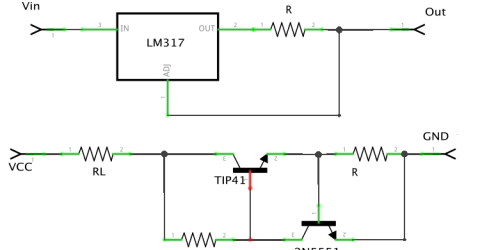
Current Regulators: Construction, Working and Design Types Just like situations in which we need to regulate the voltage in our designs, there are scenarios where we need to regulate the current that’s being supplied to a particular part of our circuit. Unlike transforming (changing from one voltage level to another), which is usually one of the major reasons for voltage regulation, current regulation is usually about keeping the… |
|
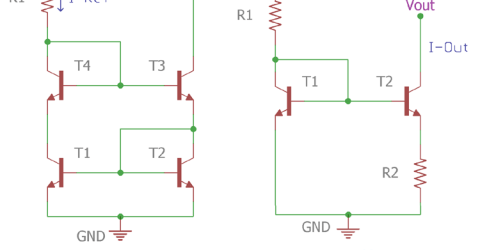
Current Mirror Circuit: Wilson and Widlar Current Mirroring Techniques In the previous article, we discussed about Current Mirror Circuit and how it can be built using a Transistor and a MOSFET. Even though a basic current mirror circuit can be constructed using two simple active components, BJTs and MOSFETs or using an amplifier circuit, the output is not perfect, as well as it has certain limitations and dependencies on the external factors.… |
|
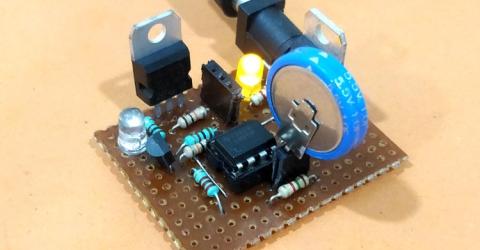
How to make a Supercapacitor Charger Circuit The term Supercapacitors and its possible usage in Electric Vehicles, Smartphone’s and IoT devices are being considered extensively in the recent times, but the idea of super capacitor itself dates back to 1957 when it was first experimented by General Electric to increase the storage capacity of its capacitors. Over the years Super capacitor technology has improved… |
|
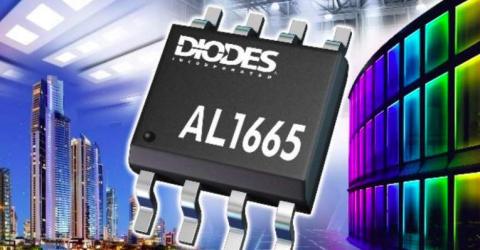
Single-Stage, High Power Factor LED Driver-Controller with Mixed-Mode Dimming Diodes Incorporated released AL1665 single-stage, fly-back and buck-boost controller for commercial, connected, and dimmable LED lighting installations operating at up to 100W. The AL1665 controller can drive an external MOSFET to control LED loads and maintain a high power factor providing a compact and efficient solution that helps minimize the use of additional components… |
|
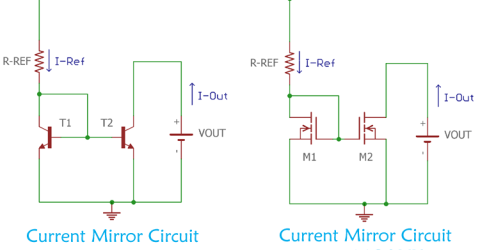
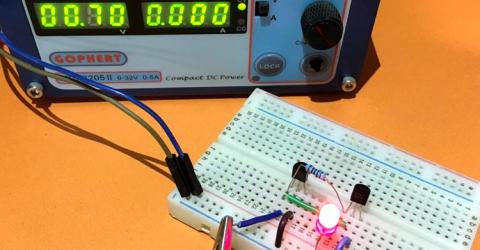
Current Mirror Circuit (Part 1): Introduction, Characteristics and Construction The Current Mirror is a widely popular technique for monolithic IC design. In this technique, the circuit is designed in such a way that it copies the current through one active device to another active device with current control feature. In this, the current is flowing through one device can be copied into another device but in inverting form. If the current of the first… |
|
Sziklai Transistor Pair Sziklai Transistor Pair was first designed by George Sziklai to overcome some efficiency related issues with Darlington pair, which will be discussed later in this article. It is also known as compound or pseudo-Darlington pair. This transistor pair consists of two bipolar transistor pairs, where one is NPN and another is PNP. The Sziklai pair looks similar to the Darlington… |
|
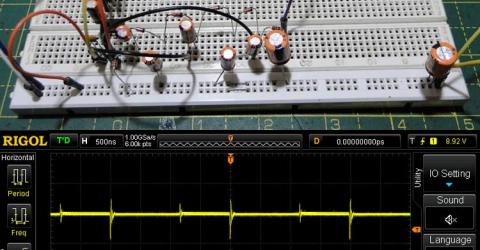
Charge Pump Circuit - Getting Higher Voltage from Low Voltage Source The situation is simple – you have a low voltage supply rail, say 3.3V, and you want to power something that needs 5V. This is a tough call, especially if batteries are involved. The only apparent way is a switch mode converter, more specifically a boost converter. This is where we hit a roadblock – boost converters are inefficient at low powers,… |
|
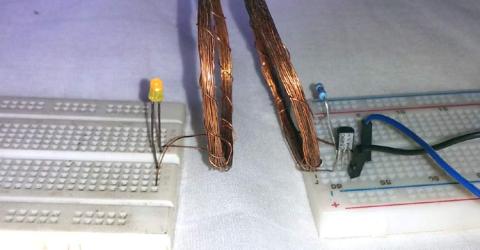
Simple Wireless Power Transmission Circuit to Glow an LED The Wireless Electricity Transfer concept is not new. It was first demonstrated by Nikola Tesla in the year 1890. Nikola Tesla introduced electrodynamics induction or resonant inductive coupling by lighting up three light bulbs from the distance of 60 feet from the power source. We have also built a Mini Tesla Coil to transfer the energy. Wireless… |

|
How HVDC Transmission can be the Future of Renewable Energy Generation The need for an efficient and flexible electricity transmission system has been consistently felt in today’s industrialized economies. There are a number of options available to policymakers and commercial entities, with high voltage direct current (HVDC) transmission systems emerging as a feasible mechanism of energy management. The development of… |
|
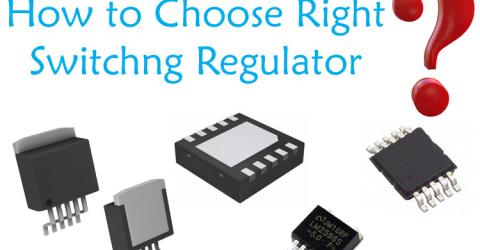
Selecting the Right Switching Regulator for Your Application Power is an important part of any electronics project/device. Irrespective of the source, there is usually a need to perform power management tasks like voltage transformation/scaling, and conversion (AC-DC / DC-DC) among others. Choosing the right solution for each of these tasks can be key to the success (or failure) of the product. One of the most common power management… |
