

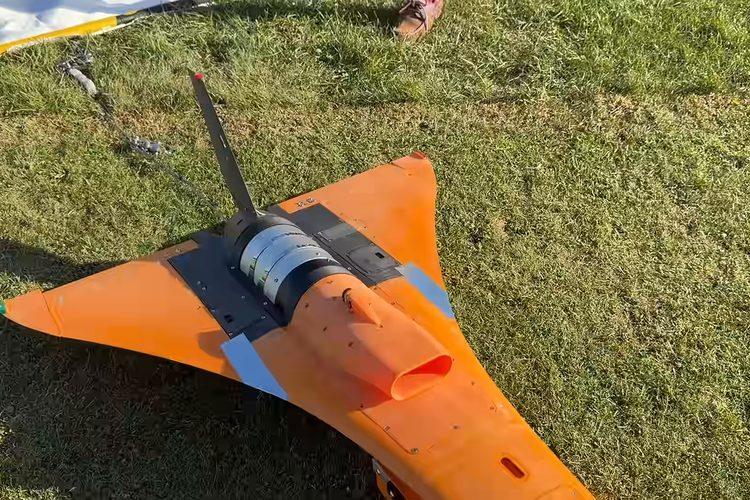
Most 3D-printed RC planes are slow foam-and-PLA cruisers. King Chaser is not. The Mach Initiative, a small team presented on camera by Josh Martin and Dan Sykes, has flown its 1-metre, 3D-printed jet for the first time, and it reached 273 mph (about 440 km/h) on a short private airfield. The team's goal is the Guinness World Record for the fastest jet-powered model aircraft, which currently stands at 465 mph, and their own models say King Chaser could reach 500 to 610 mph with enough room. The maiden flight video passed 366,000 views in its first three days.
Video: Flying the World's Fastest 3D-Printed Fixed Wing RC Aircraft by The Mach Initiative.
Three years, three aircraft
The team says it started the project three years ago with exactly this aircraft in mind, and got there in steps. First came a 3D-printed electric prototype to sort out the aerodynamics, avionics and handling. Then a version with a small 60 N turbojet, to learn how to integrate a jet engine and handle higher speeds. King Chaser is the third step: the same 3D-printed approach, but with a 300 N micro turbojet and a ground launcher designed for it.
On the maiden flight the pilot flew entirely in manual, by line of sight, and spent most of the first pass at full throttle. That pass reached 273 mph. Using their in-house engine and flight-performance models, the team estimates the aircraft would have reached 500 to 610 mph if the pilot had about 6 km of straight space to keep accelerating. A dive would shorten that distance a lot, which is part of the plan for the record attempt.
What broke, and what they are fixing
The video is unusually honest about the problems, which is what makes it useful to anyone building fast models:
- Flutter: even with all play removed from the linkages and hinges, the 3D-printed elevons and wing tips flexed at speed. They are now coated in a layer of carbon fibre to stiffen them.
- 11 g at the wing root: the aircraft pulled 11 g, which caused large deflections where the wing meets the body. The fix is to box the carbon-fibre spars directly into the carbon-fibre engine bay.
- Engine cover: it broke on the second 270 mph pass and set off a series of barrel rolls. It is not structural, but it is being reinforced.
- Video link: the analog FPV backup underperformed, so the team is considering a move to digital FPV before going faster.
- Landing damage: the landing knocked off the airspeed sensor and antenna and cracked the underside. Because the airframe is printed, these parts are quick to reprint and replace.
- Control: the 70 kg-cm servos had plenty of torque margin, so the team will change the linkage gearing to get finer control at high speed.
Key details
- Aircraft: King Chaser, about 1 m long, 3D-printed airframe with carbon-fibre spars and engine bay
- Engine: 300 N micro turbojet
- Maiden flight: 273 mph (about 440 km/h), flown manually by line of sight
- Predicted top speed: 500 to 610 mph with about 6 km of run, or less in a dive
- Record to beat: 465 mph for the fastest jet-powered model aircraft
- Next step: ground-based structural tests and FPV range checks, then a record attempt at a larger test range
Our take
The interesting part here is not just the number. It is how far 3D printing can be pushed in a structure that pulls 11 g and is designed for more than 500 mph, as long as you know where to add carbon fibre. Every failure in this flight (flutter in printed control surfaces, flex at the wing root, a cover coming loose) is the kind of thing a maker would hit on a much slower model too, just later. If the team gets a proper range, the 465 mph record looks well within reach.
Image credit: The Mach Initiative, frame from the YouTube video, cropped and resized.
About the author: Aswinth Raj is an electronics engineer and the editor of CircuitDigest, where he has published more than 150 hands-on projects and tutorials across Arduino, PIC, ESP32, Raspberry Pi and EV battery systems. He selects the stories on this page for what engineers and makers can actually learn or build from. Connect on LinkedIn

Add a comment
No account needed. Your comment appears once a moderator has reviewed it.