
potentiometer

|
Controlling NEMA 17 Stepper Motor with Arduino and A4988 Stepper Driver Module A stepper motor is a type of DC motor that works in discrete steps and is used everywhere from a surveillance camera to sophisticated robots and machines. NEMA 17 stepper motor provide accurate control and can be differentiated based on torque, steps per revolution, and input voltage. In our previous project, we controlled a 28-BYJ48 stepper motor using Arduino. 28-… |

|
Programming ATtiny13 with Arduino Uno to control a Servo Motor Servo motor works on the principal of Pulse Width Modulation (PWM) and its angle of rotation is controlled by the duration of the pulse applied to its control pin. Here in this tutorial we will control a servo motor with ATtiny13 microcontroller using PWM technique. So before going any further we will first learn about PWM, Servo Motor and how to program ATtiny13 with… |

|
How to Use BH1750 Ambient Light Sensor with Arduino When you take your phone in sunshine or in high lighting, then it automatically adjusts the brightness according to the lighting conditions. Most of the display devices now a days, whether it’s a TV or mobile phone, have the Ambient Light Sensor inside to adjust the brightness automatically. Today in this tutorial, we will use one such sensor BH1750 Light Sensor Module… |

|
How to use I2C in Arduino: Communication between two Arduino Boards In our previous tutorial learned about SPI communication in Arduino. Today we will learn about another Serial Communication Protocol: I2C (Inter Integrated Circuits). Comparing I2C with SPI, I2C has only two wires while SPI uses four, and I2C can have Multiple masters and slaves, while SPI can have only one master and multiple slaves. So there are more than one… |

|
Pulse width Modulation (PWM) in STM32F103C8: Controlling Speed of DC Fan In previous article we have seen about ADC conversion using STM32. In this tutorial, we will learn about PWM (Pulse Width Modulation) in STM32 and how can we control brightness of LED or speed of DC fan using PWM technique. We know that there are two types of signal: Analog and Digital. Analog signals have voltages like (3V, 1V...etc) and digital… |

|
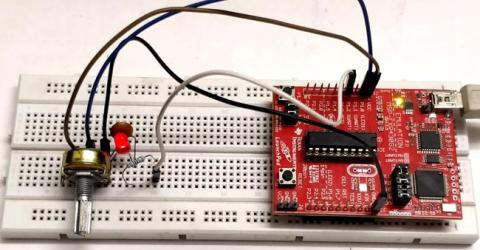
I2C communication with MSP430 Launchpad MSP430 is a powerful platform provided by Texas Instruments for embedded projects, its versatile nature has made it to find ways into many applications and the phase is still going. If you have been following our MSP430 tutorials then you would have noticed we have already covered wide a range of tutorials on this microcontroller starting from the very basics.… |
|
Pulse width Modulation (PWM) using MSP430G2: Controlling Brightness of LED This tutorial is a part of series of MSP430G2 LaunchPad tutorials in which we are learning to use the MSP430G2 LaunchPad from Texas Instruments. So far we have learnt the basics of the board and have covered how to read analog voltage, interface LCD with MSP430G2 etc. Now we proceed with the next step of learning about PWM in MSP430G2. We will do that by controlling the… |
|
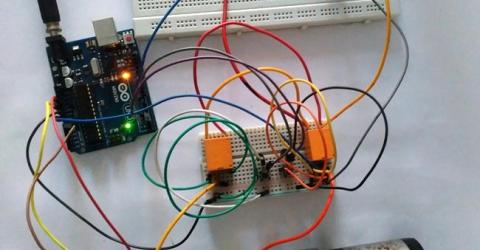
Arduino DC Motor Speed and Direction Control using Relays and MOSFET In this project we control direction and speed of a 24v high current motor using Arduino and two relays. No power switches are needed for this circuit, just two push buttons and in Potentiometer to control the direction and speed of DC Motor. One push button will rotate motor clockwise and other will rotate it counter clockwise. One n-channel MOSFET is required to… |

|
Simple Audio Tone Control Circuit In simple language, Tone Control Circuit is the circuit, using which we can control the output of audio device. To control the output means we can control the Volume, Treble and Bass of the Audio output. So, to achieve this aim we have to control the output frequency. If we can control output frequency than our aim is achieved! To control the output… |
|
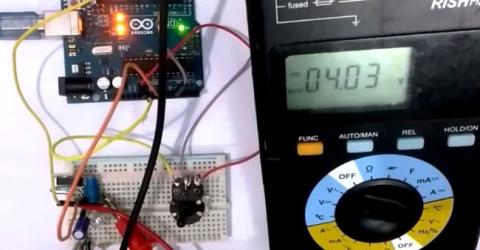
DC-DC Buck Converter Circuit - How to Step Down DC Voltage In this project we are going to make a Buck Converter Circuit using Arduino and N-Channel MOSFET with a maximum current capacity of 6 amps. We are going to step down 12v DC to any value between 0 and 10v DC. We can control the output voltage value by rotating the potentiometer. A buck converter is a DC to DC converter, which steps down DC voltage.… |

|
How to Control Stepper Motor using Potentiometer and Arduino Stepper motors are increasingly taking its position in the world of the electronics. Starting from a normal Surveillance camera to a complicated CNC machines/Robot these Stepper Motors are used everywhere as actuators since they provide accurate controlling. In this tutorial we will learn about the most commonly/cheaply available stepper motor 28-BYJ48 and how to interface… |

|
Arduino based Angry Bird Game Controller using Flex Sensor and Potentiometer It’s all started with a small game from the dark ages called “Mario”, right from the time of being a tiny little guy jumping on ducks to save my princess till being a masculine handsome Prince roaming in Persia (Prince of Persia) fighting against darkness to save my world behind I have been a great fan of playing video games and I grew up playing them. But they do get bored… |