
Diode
|
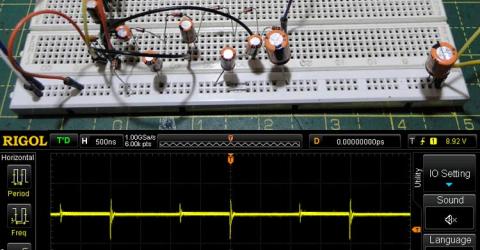
Charge Pump Circuit - Getting Higher Voltage from Low Voltage Source The situation is simple – you have a low voltage supply rail, say 3.3V, and you want to power something that needs 5V. This is a tough call, especially if batteries are involved. The only apparent way is a switch mode converter, more specifically a boost converter. This is where we hit a roadblock – boost converters are inefficient at low powers,… |

|
Simple Curve Tracer Circuit: Tracing the Curve for Resistor, Diode and Transistor Most of electronics deals with Tracing Curves, be it the characteristic transfer curve for a feedback loop, a resistor’s straight VI line or a transistor’s collector voltage versus current curve. These curves give us an intuitive understanding of how a device behaves in a circuit. An analytical approach might involve plugging in discrete… |

|
IGBT7 and EC7 diode for industrial drives applications Infineon Technologies released its new 1200V TRENCHSTOP IGBT7 and emitter-controller EC7 diodes based on the new micro-pattern trench technology with industry-standard EasyPIM housing for the current classes 10A and 25A. . The new released TRENCHSTOP IGBT7 chip performs with much lower static losses compared to the IGBT4. The devices released today provide higher power… |
|
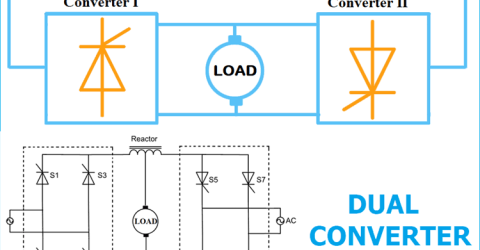
An Overview of Dual Converters In the previous tutorial, we saw how a Dual Power Supply Circuit is designed. Now, we learn about Dual Converters, which can convert AC to DC and DC to AC at the same time. As the name suggests, Dual Converter has two converters, one converter works as a rectifier (Converts AC to DC) and the other converter works as an inverter (converts DC into AC). Both converters are… |

|
AC to DC Converter Circuit In the modern era, almost every household electronics works on Direct Current (DC) but we get Alternating Current (AC) from power generation plants via transmission lines becuase AC can be transmistted more efficiently than DC in lower cost. So every appliance which works on DC has and AC to DC converter circuit. We previously built a 5v cell phone charger which also… |

|
Soft Start Circuit for Power Supply A Soft Start Circuit prevents the sudden current flow in the circuit during the start. It slows down the rate of rising output voltage by minimizing the excess current flow during the start. It is useful to protect the devices or electronic components from the damage caused by instantaneous high input current. Some components which are current limited and having poor load… |
|
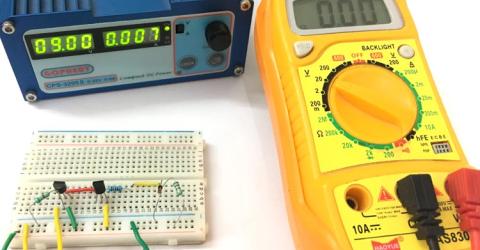
Overvoltage Protection Circuit Protection circuits, like reverse polarity protection, short-circuit protection, and over/under voltage protection, are used to protect any electronic appliance or circuit from any sudden mishap. Generally fuse or MCB is used for overvoltage protection. Here in this circuit, we will build a simple overvoltage protection circuit without using a fuse. … |

|
Simple Bridge Rectifier Circuit The process of converting alternating current into direct current is rectification. Any offline power supply unit has the circuit for rectification which converts either the AC wall supply into a high voltage DC or stepped down AC wall supply into low voltage DC. The further process will be filtering, DC-DC conversion and etc. So, in this article we are going to discuss… |

|
Reverse Polarity Protection Circuit Batteries are most convenient power source to supply voltage to an electronic circuit. There are many other ways, to power up electronic devices, like adapter, solar cell etc but the most common DC power supply is Battery. Generally all the devices come with Reverse Polarity Protection Circuit but if you have any battery operated device which don’t have reverse polarity… |

|
Push-Pull Amplifier Circuit Circuit schematics are crucial for electronics engineers to understand. For the majority of real-world applications, Class A amplifiers offer the lowest distortion, Class B amplifiers the most efficiency, and Class AB amplifiers the best resolution. The particular needs for power, distortion, and efficiency will determine the choice. A push-pull… |
|
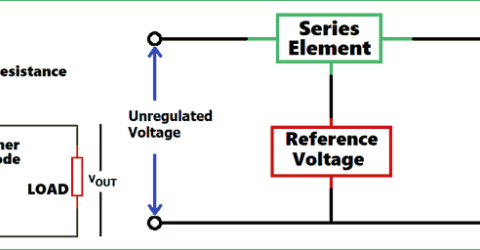
Voltage Regulator Circuits Voltage Regulator, as the name suggests, is a circuit that is used to regulate the voltage. Regulated voltage is a smooth supply of voltage, free from any noise or disturbance. The output from the voltage regulator is independent of load current, temperature, and AC line variation. Engineers can create reliable power supply systems with the aid of these voltage… |

|
Solenoid Driver Circuit Solenoids are very commonly used actuators in many process automation systems. There are many types of solenoids. For instance, there are solenoid valves which can be used to open or close water or gas pipelines, and there are solenoid plungers which are used to produce linear motion. One very common application of a solenoid that most of us would have come across is the… |
