
community news
|
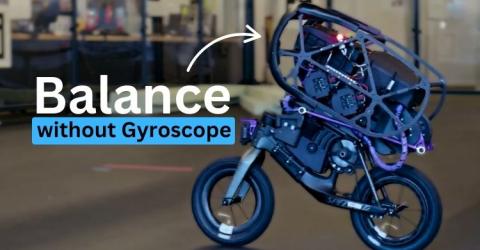
Advancing Robot Bikes with Reinforcement Learning The Robotics and AI (RAI) Institute has developed the Ultra Mobility Vehicle (UMV), a self-balancing robotic bike capable of navigating challenging terrain and even jumping onto high surfaces. Reinforcement learning (RL) is playing a key role in helping robots adapt to complex situations and perform better. Unlike traditional… |

|
Can High Voltage Electricity Help Solve Water Scarcity? Water scarcity remains one of the most pressing challenges of our time, particularly in dry regions where access to fresh water is a constant struggle. While traditional solutions involve drilling deeper wells or implementing inefficient fog nets, a new approach leveraging high-voltage physics could revolutionise water collection. In a new experiment, Jay Bowles from the Plasma Channel tested… |
|
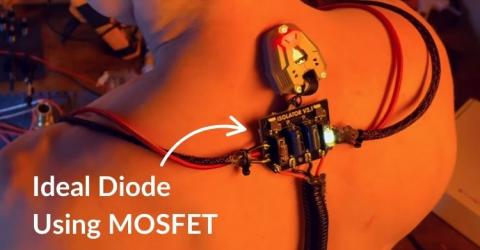
Hybrid Power Management System with Ideal Diode Technology A YouTuber has developed a combat suit featuring a spinal battery system designed for improved power efficiency and reliability. The system includes voltage regulation, overcurrent protection, and cell isolation to prevent damage from physical impacts. The suit incorporates an "ideal diode" circuit using MOSFET-based switching… |
|
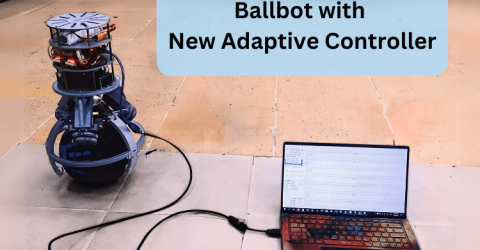
Making Ballbots More Stable with New Adaptive Nonlinear PID Controller System Ballbots are a fascinating type of robot that can move in any direction, but controlling them is no easy task. Traditional controllers, like PID (Proportional-Integral-Derivative), struggle to handle these balancing issues, while more advanced methods can cause instability and excessive movements. A team of researchers, led by Dr. Van-Truong Nguyen from Hanoi University of Industry,… |

|
An RP2040-Powered Cyberdeck That Runs on MicroPython We have seen cyberdecks built around Raspberry Pi and other single-board computers, but this is the first time we’ve come across one powered by dual RP2040 chips. In a recent video, Abe from Abe’s Projects presents a compact cyberdeck using the Pimoroni PicoVision, a board that combines two RP2040 microcontrollers—one acting as a CPU and the other as a GPU—to drive an HDMI display. This setup… |

|
Low-Cost Arduino Solution for Frequent Ammonia Monitoring A fully automated micro-lab has been developed to measure ammonia concentration in blood and urine. The system provides frequent and cost-effective ammonia testing, addressing the limitations of standard medical coverage. The micro-lab uses the Berthelot reaction, which detects ammonia through a color change. Instead of the… |
|
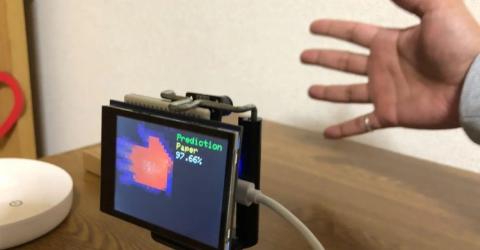
Using Thermal Cameras for Gesture Recognition with AI Thermal imaging is commonly used in industries like security and diagnostics, but it also has applications in computer vision. Unlike regular cameras, thermal cameras detect heat, making them useful in low-light conditions. In our past projects, we explored thermal camera applications and worked on computer vision projects like license plate recognition and face recognition. However,… |
|
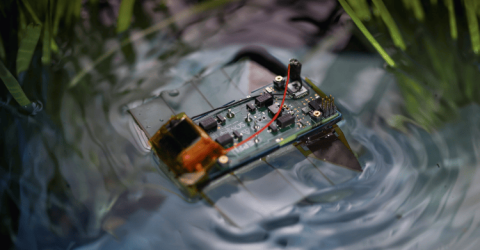
Tiny Swimming Robot with Soft Fins to Protect Aquatic Life A team of researchers from EPFL School of Engineering and The Max Planck Institute for Intelligent Systems have created a tiny, ultra-light swimming robot that could help track pollution, study aquatic ecosystems, and monitor water quality in delicate areas like coral reefs and lakes. These robots move and swim like tiny migraine flatworms with its soft, undulating fins. Smaller… |
|
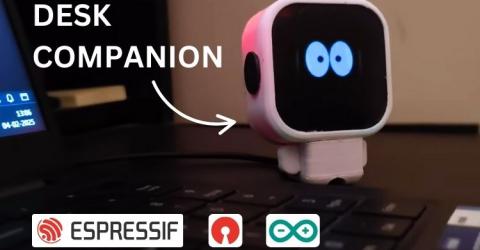
Gus v2 - A Desktop Buddy That Reacts to Your Environment An electronics hobbyist has made, Gus 2.0 a desktop companion that monitors air quality, temperature, and humidity. It features expressive eyes that visually indicate room comfort by adjusting eyelid positions based on sensor data. Powered by the Seeed Studio XIAO ESP32-C3, this companion integrates a Grove Air Quality Sensor, DHT22… |

|
This DIY Submarine Explores The Ocean on Its Own A team of DIY engineers is working on building a fully autonomous submarine. They are different from the previous models that rely on joysticks for navigation and control. The new design aims to navigate independently into the depths of the ocean. One big challenge is that GPS doesn’t work underwater, so the submarine has to… |

|
Open-Source Prosthetic Hand with 19 DOF Researchers from the University of Science and Technology of China (USTC) have developed an Open-Source Prosthetic Hand that replicates human dexterity with 19 degrees of freedom (DOF). The device utilizes shape-memory alloy (SMA) actuators, which function as artificial muscles. These actuators offer a high power-to-weight ratio, allowing the prosthetic to achieve… |

|
BeagleBoard’s PocketBeagle 2 is Now Available, Featuring TI's AM6232 Dual Core SoC BeagleBoard has introduced the PocketBeagle 2, a compact and affordable single-board computer (SBC) designed for developers, students, and hobbyists. It retains the small form factor of its predecessor, measuring 55 x 35 mm while improving performance and features. With a focus on embedded applications, IoT devices, and education, the PocketBeagle 2 offers an efficient platform for prototyping… |