
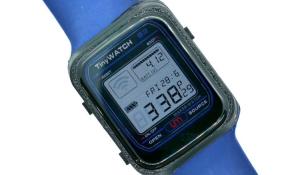
Maker and and YouTuber Seon Rozenblum aka Unexpected Maker has just launched his new open-source smartwatch kit called the Tinywatch S3. We have seen many such smartwatch projects in the past and we have even made our own esp32 based smartwatch a year back. The watch kit comes with some impressive specs, it is powered by an ESP32-S3 Pico SoC featuring two 32-bit Tensilica Xtensa LX7…
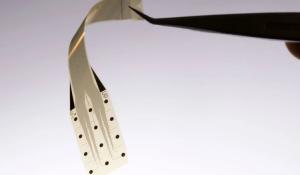
Brain implants have been here for a very long time. Doctors and researchers even use them for treatments for neurological issues like Alzheimer’s or Parkinson’s disease and even for behaviour corrections using selective simulations. However, the problem with existing implants is that they use meal electrodes, which result in Faradaic reactions, where the electrode reacts with bodily fluids…

We all know the Flipper Zero, the portable multi-tool that has taken the geek community by storm. We have seen users using the Flipper Zero to hack or manipulate basic devices to most modern electronic devices, like simple garage openers, PA systems and even iPhones. Even though it supports most of the wireless protocols, it always lacked support for industrial wired protocols such as CAN Bus…

Engineers at the University of Michigan have developed a camera technology called PrivacyLens, designed to enhance privacy by preventing the capture and dissemination of identifiable images and videos from smart devices.
How PrivacyLens Works?PrivacyLens combines a high-resolution video camera and a thermal imaging camera to detect and anonymize people in the footage. The…

Arduino just released their new starter kit Arduino Plug and Make Kit aimed at makers of all ages. As the name suggests the kit includes plug-and-play modules to construct various projects. The kit consists of an Arduino Uno R4 WiFi development board along with a modulino base, seven modulino nodes and other hardware components including USB cables, QWIIC cables, screws, spacers and nuts.…

We're excited to announce the launch of our IoT & Edge AI Project Challenge 2024, presented by CircuitDigest and sponsored by DigiKey. This online design contest invites engineers, students, and makers from India and ASEAN countries to showcase their skills and creativity in electronics.
What's New this year? Participants can choose from three interesting development boards –…

MeatPi Electronics, an Australian based Hardware developer firm, announced their new open-source OBD scanning tool called WiCAN Pro. It is set to be launched on the ground funding platform Crowdsupply. Built on the infamous ESP32-S3 SoC, WiCAN Pro runs on the open-source WiCAN firmware. The WiCAN Pro features a dedicated OBD interpreter chip, ensuring comprehensive support across…

There are cases where amputations significantly challenge people in their day-to-day activities. While many innovations aim to address this issue, robotic prosthetics have introduced hope among amputees. However, these technologies have often lacked natural movements over time, giving a more robotic feel. This is where an innovation by MIT researchers comes into play. Their New Prosthetic Leg…

If you are an electronics engineer or a hobbyist, you certainly know the importance of a breadboard during early prototyping. anyone who has used a breadboard would agree that even though the breadboards make the prototyping easier, they too come with their demerits, such as the connections can get loose over time or the connections may not be reliable or it would be harder to debug or to make…

You might be wondering why the Raspberry Pis are so popular despite there are desktops or laptops that are much more powerful than a Pi. Apart from the small form factor and low power usage one of the major advantages is the availability of the GPIOs. With that, we can integrate them into any project from bare minimum to advanced robotic projects. So why can’t we use…

Light and sound waves have long been known to manipulate objects, giving rise to technologies like optical and acoustic tweezers. These tools have found applications in fields such as biomedical engineering and quantum optics. However, their effectiveness has been limited to controlled environments. Researchers at EPFL have recently demonstrated a new technique that…

A group of researchers from Japan has introduced perforation-type anchors that could be used to adhere living skin to robotic surfaces, which is essential for mimicking real human-like expressions in humanoids. They initially tested this method with 2D robots and then applied it to a 3D facial mold.
Recently this month, a team of…