
Electric Vehicles
|
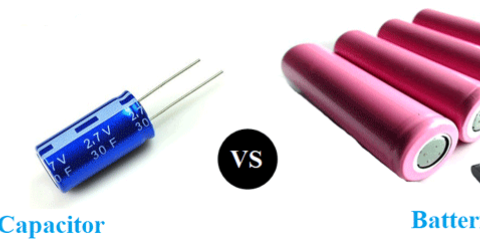
Supercapacitor vs Battery - Comparison and Case Study There is a long debate that Supercapacitors will overrule the battery market in the future. A few years back when Supercapacitors were made available, there was a huge hype about it and many expected it to replace the batteries in commercial electronic products and even in Electric Vehicles. But, nothing like that actually happened, because both Supercapacitors and… |
|
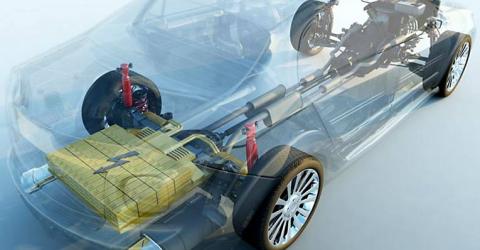
Electric Vehicle HIL Test Architecture to Shorten Test Schedules Vehicle manufacturers and suppliers are facing increasingly complex automotive systems as well as a long list of test scenarios to validate the operation of advanced driver assistance systems (ADAS). The list expands with each new consumer-driven innovation, which eventually increases the time to market. This is why National Instruments has partnered with ETAS, the… |
|
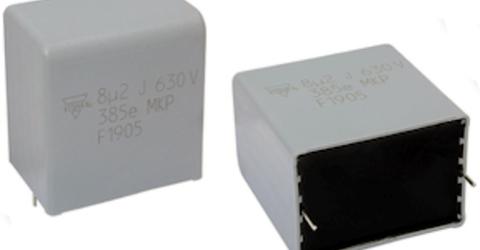
MKP385e – Automotive Grade AC and Pulse Film Capacitors for Hybrid and Electric Vehicles Vishay Intertechnology, Inc has introduced MKP385e, a new series of Automotive Grade AC and pulse metalized polypropylene film capacitors for hybrid and electric vehicles. These capacitors have a maximum operating temperature of 125°C (Observing voltage derating) and they ensure compliance with IEC 60384-17 and AEC-Q200 Revision D. These new radial potted capacitors are… |

|
Biggest Electric Vehicle Manufacturers that are Tackling Climate Change Smartly Air pollution, we all know is a major global issue that is causing premature deaths and illnesses throughout the world. Each one of us intentionally or unintentionally is leaving the carbon footprints and posing environmental hazards. The vehicles like cars, two-wheelers that we use for commuting are among the major contributors to the environment pollution. In… |

|
Understanding Solid Electrolyte Interface (SEI) to Improve Lithium Ion Battery Performance These days Lithium-ion batteries are gaining more attention due to their widespread application in Electric Vehicles, Power backups, Mobiles, Laptops, smartwatches, and other portable electronic goods, etc. a lot of research is happening on lithium batteries with the increased demand for electric vehicles for much better performance. One important parameter that decreases… |
|
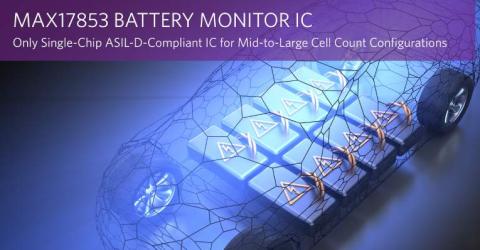
Single-Chip ASIL-D-Compliant Battery Monitor IC for Mid-to-Large Cell Count Configurations Designers can now achieve ASIL-D compliance for automotive applications using just a single chip for a safer, more cost-effective battery management system with the MAX17853 battery monitor IC from Maxim Integrated Products. Targeting mid-to-large cell count configurations for automotive applications, such as battery packs for electric and hybrid vehicles, MAX17853’s unique… |
|
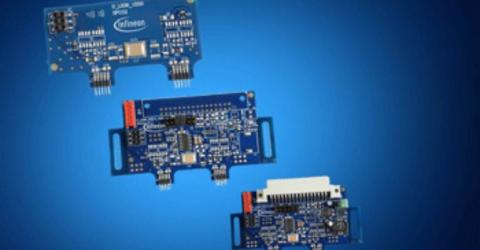
Infineon Light Electric Vehicles Solution Page
Offers One-Stop Resource for Vehicle Design Projects Mouser Electronics now offers customers a new page dedicated to the comprehensive lineup of solutions for Light Electric Vehicles (LEVs) from Infineon Technologies. LEVs support the growing demand for emission-free travel in large cities, and Infineon’s broad selection of motor control units supports both high-power and low-power applications. The application-… |

|
Electromagnetic compatibility in Electric Vehicles - Sources of EMI and Guidelines to reduce it When current passes through a conductor it creates electromagnetic fields and almost all electronic devices like TVs, washing machines, induction stove, traffic lights, mobile phones, ATMs and laptops etc., will emit the electromagnetic fields. Fossil fueled vehicles also suffer from Electromagnetic Interference (EMI) - The ignition system, starter motor and switches cause… |

|
Lithium Ion Battery Manufacturing: 3 Ways to Minimize the Cost A new JRC science-for-policy report by the European Commission's science and knowledge service projects that the prices of lithium ion batteries will collapse significantly by 50% in 2030 and further decline by 75% in 2040. This will impose relentless pricing pressure on manufacturers, pushing them to find new ways to mitigate manufacturing costs, including raw material… |

|
14-Cell Li-ion Battery Management IC Maximizes Battery Cell Life and Driving Range for Hybrid and Electric Vehicles Renesas Electronics Corporation released its fourth-generation lithium-ion (Li-ion) battery management IC ISL78714 offers unmatched lifetime accuracy. The ISL78714 delivers accurate cell voltage and temperature monitoring. Also, the new IC comes with cell balancing and extensive system diagnostics to protect 14-cell Li-ion battery packs while maximizing range and driving… |
|
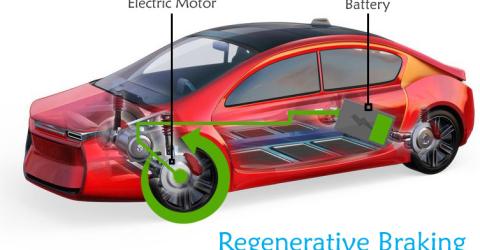
How Regenerative Braking Works in Electric Vehicles Braking is one of the important aspects of a vehicle. The mechanical braking system which we use in our vehicles has a big drawback of wasting the kinetic energy of the vehicle as heat. This brings down the overall efficiency of the vehicle by affecting the fuel economy. In the urban drive cycle, we tend to start and stop the vehicle more often when compared to highway drive… |
|
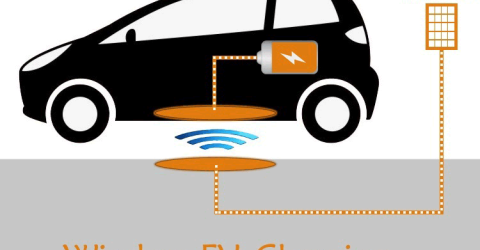
Wireless Electric Vehicle Charging System (WEVCS) Nowadays, the world is shifting towards electrified mobility to reduce the pollutant emissions caused by nonrenewable fossil-fueled vehicles and to provide an alternative to pricey fuel for transportation. But for electric vehicles, travelling range and the charging process are the two major issues affecting their adoption over conventional vehicles. Wireless charging… |