

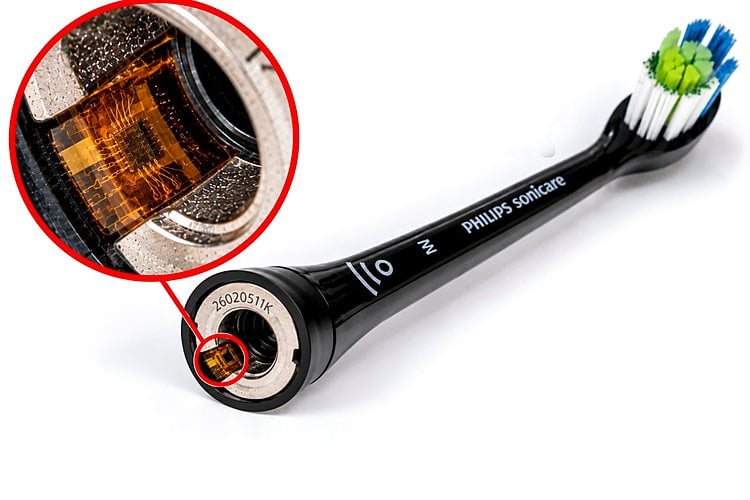
A toothbrush head is a plastic stick with bristles, so why does Philips put a microchip in it? YouTuber Circuit Helper wanted to know, so he built a small NFC reader, read what a Sonicare brush head stores about the person using it, rewrote that data, and finally used an old brush head as a key to unlock his Mac. The chip sits under a small brown dot near the base of the head and needs no battery: it runs entirely on the 13.56 MHz field from the reader in the handle.
The reader: ESP32-S3 plus a PN532
The hardware is about as simple as it gets. A PN532 NFC module talks to an ESP32-S3 dev board over I2C, and the ESP32-S3 passes the data over USB to a small Python app on the computer. Place a brush head on the PN532's antenna and the reader's field powers the tag, which answers with its memory contents.
What the brush head knows
Comparing a brand new head with a well-used one showed what changes:
- Total brushing time, counted to the second. One used head had logged more than five hours
- Brushing intensity and brush type, plus a web address
- A wear counter that drives the "replace your brush head" reminder
He then brushed on purpose with heavy pressure and found that the wear count rises faster. When the handle's pressure sensor detects too much force, the recorded use is effectively multiplied, so heavy brushers are told to replace heads sooner.
Rewriting it, then unlocking a Mac
The memory is password protected, but earlier reverse engineering work by Cyrill Kuenzi, Markus Birth and atc1441 made it possible to write new values. Circuit Helper reset a used head to report 50% life left. He also set up an old brush head as an NFC key that unlocks his Mac. He ends by cutting a head apart to show the tiny chip and its antenna coil.
Our take
This is a great first NFC project because it starts from a product most people already own. It also shows how much quiet logging now happens in "dumb" consumables, from printer cartridges to filters and brush heads. One caution if you try the unlock trick: simple NFC tags can often be copied or cloned, so treat it as a fun convenience, not real security.
Image credit: Circuit Helper (YouTube), cropped and resized.
About the author: Aswinth Raj is an electronics engineer and the editor of CircuitDigest, where he has published more than 150 hands-on projects and tutorials across Arduino, PIC, ESP32, Raspberry Pi and EV battery systems. He selects the stories on this page for what engineers and makers can actually learn or build from. Connect on LinkedIn

Add a comment
No account needed. Your comment appears once a moderator has reviewed it.