

Nowadays, many people enjoy keeping a small desk robot in their workspace. These little companions not only add a playful touch to the desk but also help bring out the inner child and provide a brief escape from daily stress. Among the latest additions to this trend is the Deskimon, a compact and creative 3D-printed desk robot. Unlike other desk robots that require separate components for the…
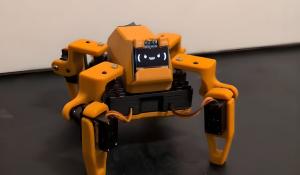
A new open-source quadruped robot called Sesame Robot is making legged robotics more affordable and accessible. Developed by Dorian Todd, Sesame is built using an ESP32 microcontroller, 3D-printed parts, and eight low-cost servos, keeping the total build cost around $50–60. With complete CAD files, firmware, and detailed assembly guides available on GitHub, users can easily build, customize,…
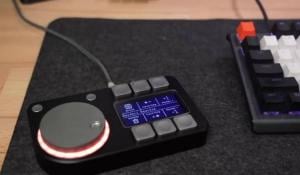
Ever thought of controlling your computer using buttons and a knob that actually feel different when you use them? Most input devices, like keyboards and mice, only give visual feedback on the screen and do not provide any physical sensation to indicate how an action feels. The Macropad changes this experience by adding the sense of touch to everyday computer controls. This is a six-button…
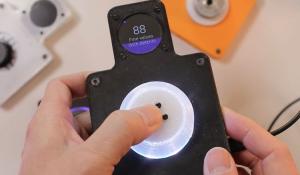
This is a simpler, more beginner friendly version of the original SmartKnob designed to make smart haptic controls easier to build and understand. By removing much of the complexity found in earlier designs, this version is easier to assemble and supports more motor options, making it an approachable project for hobbyists and first time builders alike.
Kokensha Tech redesigned the…
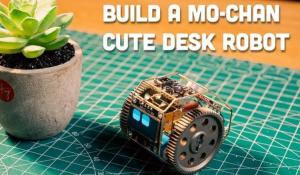
A small do-it-yourself desk robot named Mo-chan has been shared with makers, demonstrating how individuals can build simple robotics and electronics projects on their own. This project uses an ESP32-C3 microcontroller, small DC motors, an OLED screen, and a motor driver to create a robot that looks nice and functions well as a companion for a desk.
The robot is constructed using a metal…
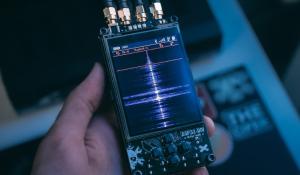
If you've been following the world of portable pentesting tools, you know the Flipper Zero reigns supreme. But for the makers among us who prefer "built not bought," a serious contender has arrived. Creator CiferTech has just released the ESP32-DIV V2, a completely open-source, multi-band wireless testing toolkit that aims to be a more accessible and customizable alternative to commercial…
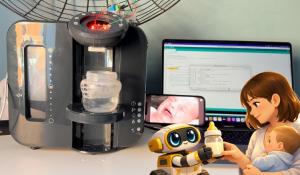
Late-night infant care often leaves little room for precise or repeatable routines, which makes even simple tasks feel demanding. Addressing this reality, Manivannan has created a DIY edge-AI system that automatically starts a bottle preparation machine when a baby’s cry is detected. The project, shared through his YouTube channel MakeTinyML, focuses on augmenting an existing appliance rather…

A developer named Martin Devido took a different approach and experimented with an idea in which an AI named Claude was given full responsibility to take care of a tomato plant without any human intervention or support. Ever thought it was possible? The results now give the answer as “Yes”, because the AI has taken care of the tomato plant for the past 38 days without any human support.
…
The next generation of computer chips may not come from factories on Earth, but from satellites circling the planet. A UK company’s successful test of a 1,000°C furnace in space is bringing that futuristic vision closer to reality. Space Forge, a startup based in Cardiff, Wales, has confirmed that its microwave sized orbital furnace was successfully switched on and reached the temperature…
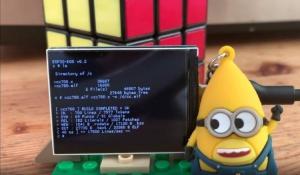
The xcc700 is a very small, lightweight C compiler designed specifically for the ESP32 microcontroller. It is like a mini version of GCC or clang, but this system has some limitations. Instead of generating Windows .exe files, it produces ELF binaries for the Xtensa CPU, which is the processor architecture used in ESP32. Because it is so small, the compiler itself can run on the ESP32 and…
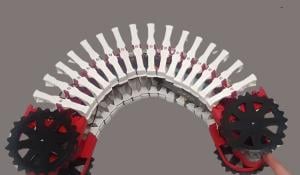
When robots face tight spaces and unpredictable terrain, most machines come to a stop. Researchers at the University of Genoa’s RICE Lab are changing that with Porcospino Flex, a bio-inspired single-track robot designed to go where traditional wheeled or legged robots fail. Inspired by segmented invertebrates, it features a flexible 3D-printed vertebral column made from ABS and TPU, allowing…

A new breadboard-friendly power supply called ProtoV MINI has been announced and is expected to launch soon. Roughly the size of a credit card, the device is designed to plug directly into a standard breadboard and power both rails independently using a single USB Type-C input. Each channel can be adjusted up to 20 V with fine digital control and includes current limiting and built-in…
