

Leviathan Engineering, a tech-focused YouTube channel, has recreated Rocky from Project Hail Mary as a real AI-powered robot by combining mechanical design, on-device speech recognition, and modern AI that responds in real time. The robot runs on a Raspberry Pi 5 (4GB RAM) and uses 10 MG996R servo motors for movement.
A major part of what makes this build impressive is the software…

Researchers at Aston University have developed a new AI-based robot training approach aimed at reducing the long-standing “sim-to-real” gap in robotics. The work focuses on improving how robots transfer skills learned in simulation into unpredictable real-world environments, where differences in material properties, sensor noise, and physical interaction often cause systems to fail despite…
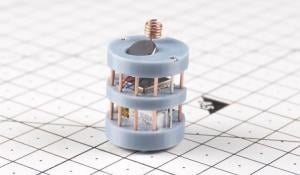
Is it possible to control a robot using only one motor? yes, a popular YouTube channel, Pro Know, has done a simple yet innovative robot that can move forward, backward, left, and right all with a single motor. Traditionally, robots depend on differential drive systems or steering mechanisms that require multiple motors. However, this project showing how smart design and control logic can…

Maker Brae Barnes is developing a conversational Baymax-style robot that combines animatronic motion with an AI-driven speech system. The current prototype focuses on the head assembly, featuring articulated neck movement, blinking eyelids, and the ability to respond to spoken input using a speech-processing pipeline. The goal is to create a robot that not only talks but also conveys…
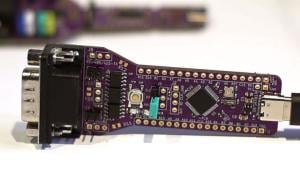
The FalCAN Probe is an open-source communication and debugging tool created by Anders B. Nielsen to simplify testing in automotive electronics, industrial automation, and embedded systems. It works as a powerful bridge between a computer and hardware devices using popular communication protocols such as UART, CAN Bus, RS-422, and RS-485. These protocols are widely used in car diagnostics, CNC…

Sony AI Zurich has unveiled Project ACE, a Revolutionary physical AI system that can compete with and even outperform elite human table tennis players. Led by engineer Peter Dürr , the project pushes artificial intelligence beyond simulations and into the real world, proving that AI can now operate at the extreme speeds required for professional sports. Table tennis is considered one of…
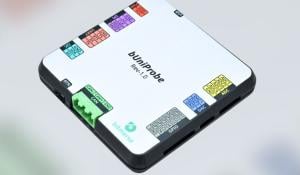
There's no shortage of tools to test and debug hardware, but not many feature interfaces for SPI, I²C, UART, CAN, GPIO, ADC, and DAC in one device. bUniProbe is one of the few, and its hardware side is just half the story. It hosts its own web interface over Wi-Fi, so anyone on the network can open a browser, connect, and start working. This means multiple users can work together without the…

Shane Wighton, the engineer behind the popular Works By Design channel, developed this innovative “unpickable” lock. Known for building complex mechanical systems, he set out to solve a long-standing problem in security: how to create a lock that a key can open but tools cannot. Traditional locks rely on pin tumbler mechanisms, which can often be manipulated with enough skill. His approach,…
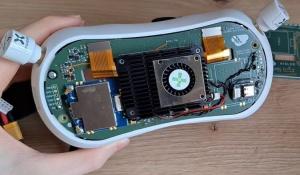
DIY creator Artur Pękosz has shown that high-quality drone viewing doesn’t need expensive or closed systems, By building a fully functional pair of FPV goggles from scratch. Using the open-source OpenIPC HD wireless transmission system, the creator designed a custom solution that captures, transmits, and displays live HD video. The project replaces traditional proprietary hardware with a…

We have all seen old rubber band wind-up planes built by crazy makers. Tom Stanton, a youtuber, just turned one into a 21st century electric wind-up plane powered by a supercapacitor. He is an engineer and a maker who loves to mix physics, 3D printing and clean energy storage. Instead of winding up a rubber band, he used his hand crank generator to charge a supercapacitor. This stored energy…

Strong buyer turnout, active business engagement, and wide international participation mark the edition
Visitor turnout: 20,922 participants, including key buyers and sourcing decision-makers turn up for Greater Noida edition Business engagement: The event facilitated 1,500+ buyer-seller meetings, focused on localisation, supplier discovery, and supply chain partnerships …
Engineer and creator Shane Wighton has upgraded his robotic mini-golf system to tackle complex, physics-heavy shots with near-perfect accuracy. The project combines a motorized golf club with a full motion-capture setup, allowing the system to precisely track the ball, club, and course geometry. By scanning real-world mini-golf layouts into a digital model, the system can analyze terrain…
