
Thyristor

|
Three Phase Inverter Circuit - 120 Degree and 180 Degree Conduction Mode We all know about an inverter - it is a device which converts DC into AC. And we previously learned about Different types of inverters and built a single-phase 12V to 220V inverter. A 3 Phase Inverter converts the DC voltage into a 3 Phase AC supply. Here in this tutorial, we will learn about the Three-Phase Inverter and its working, but before going any further, let… |

|
High Performance 50mm and 60mm Thyristor/Diode Modules for Drives and UPS applications Infineon Technologies expands its product portfolio of thyristor/diode module with the new Prime Block 50mm modules which feature solder bond technology and 60mm modules pressure contact technology. These Prime Blocks are designed for higher performance when the desired current exceeds 600A for a 60mm footprint or 330A for a 50mm footprint. This avoids the paralleling of… |

|
Littelfuse SIDACtor Protection Thyristor Safeguards CVBS Signal Lines Against Damaging Overvoltage Transients Littelfuse released the first PxxxxS4xLRP Series SIDACtor Protection Thyristor. The new Thyristor is touted as a robust solution for protecting Composite Video Blanking Sync (CVBS) signal lines and ports from damaging overvoltage transients. The combination of 6V operating voltage and 100A 5/310µs surge peak current capability and a low junction capacitance rating make the… |
|
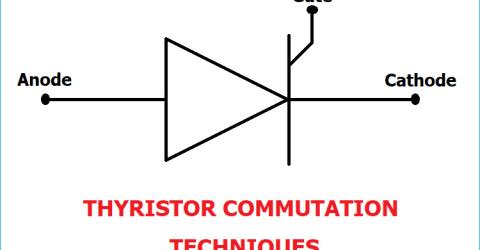
Thyristor Commutation Techniques To turn on a Thyristor, there are various triggering methods in which a trigger pulse is applied at its Gate terminal. Similarly, there are various techniques to turn off a Thyristor; these techniques are called Thyristor Commutation Techniques. It can be done by bringing the Thyristor back into the forward blocking state from the forward conduction state. To bring the… |

|
Introduction to Different Types of Inverters Power inverters are fundamental devices for power electronics that convert DC (Direct Current) into AC (Alternating Current). There are many types of power inverters specific for use in residential, commercial, and industrial systems. It is important to understand the types of power inverters in power electronics to make the appropriate decision about the type of power inverter you would like… |

|
Crowbar Circuit The reliability of any electronic device depends on how well the hardware protection circuits have been designed. The end user (consumer) is prone to make mistakes and it is the responsibility of a good hardware designer to protect his hardware from any mishappening. There are ample types of protection circuits each with its own specific applications. The most common type of… |

|
Thyristor Switching using Snubber Circuit Snubbers are the energy absorbing circuits used to smooth the voltage spikes caused due to the circuit’s inductance. Sometimes, due to the overcurrent, overvoltage and overheating the component gets fail. So, for the overcurrent protection of the circuit we use fuses at suitable locations and for overheating we use heat sinks or fans. Snubber… |
|
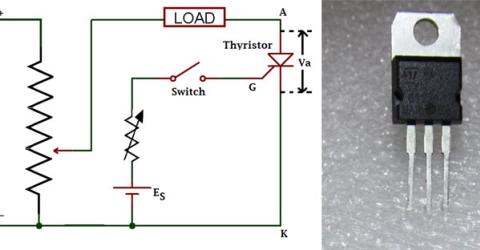
What is Thyristor and How it works? In general, Thyristors are also switching devices similar to transistors. As we already discussed, Transistors are the tiny electronic components that changed the world. Today we can find them in every electronic device like TVs, mobiles, laptops, calculators, earphones, etc. They are adaptable and versatile, but that doesn’t mean that they can be used in every… |

|
DC Motor Control using Thyristor Thyristors are semiconductor devices designed for high-power switching applications. Like Thyristors, transistors are also used as switching device. Transistors are the tiny electronic component that changed the world, we can find them in every device like TVs, mobiles, laptops, calculators, and earphones etc. Transistors are adaptable and versatile we can use them… |
