
This section covers electronics projects based on NodeMCU ESP8266 board. The NodeMCU is basically an open source firmware, and also commonly used term for the popular ESP8266 Development Board, which is a low cost, development board designed for IoT applications.

By Aditya Shekhar Das
Medication adherence is one of the most critical challenges in modern healthcare. Patients with chronic conditions often need to take multiple medicines at specific times every day. Missing doses, taking incorrect medicines, or double dosing can reduce treatment effectiveness and in severe cases lead to serious…
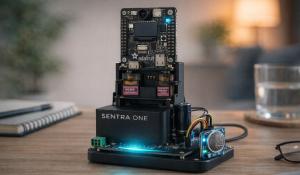
By Teerath Agrawal
Problem StatementEnsuring the safety of loved ones—especially children and the elderly—is a constant concern for families. While caregivers want to stay connected and responsive at all times, it is practically impossible to monitor someone continuously. Existing solutions often address only one scenario: either home monitoring or personal safety on the go, forcing…
By Ameya Angadi
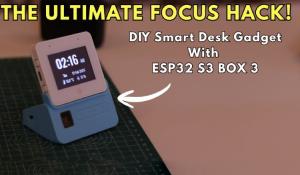
In an era of endless notifications and remote work, our greatest challenge isn't a lack of tools, it’s a lack of focus. We often turn to our smartphones for a simple timer or a to-do list, only to find ourselves sucked into social media ten minutes later. This "Digital Fatigue" is a real problem, I faced similar problems while studying for my exams. I realized that using…
By Gautham Chenoth Praveen
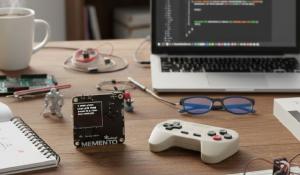
I created Memento-Flex, a flexible camera designed specifically for students.It is a programmable camera that changes its "brain" depending on what you need to do. Instead of buying a separate expensive camera for photography and a separate sensor for scientific work, this one device does both.
The Three Modes
Creative Mode: A "fun" camera for…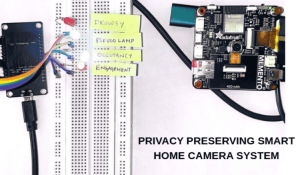
By Angel Lalu
Smart home systems are increasingly adopting intelligent sensing technologies to understand indoor environments and automatically adapt to the user's needs. Among these technologies, cameras play a critical role in tasks such as human presence detection, room occupancy monitoring, and context-aware automation for…

This project aims to develop an intelligent robot that can automatically collect and sort waste using artificial intelligence and camera-based sensing. The robot utilizes the Adafruit Memento Camera powered by the ESP32-S3 microcontroller as the main vision and processing unit. The camera captures images of waste materials and runs an on-device AI model to detect and…
By Ojas Chanakya, Aniruddh Viswananthan
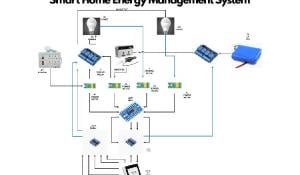
We have developed a smart home energy management system prototype that divides the house into sectors and efficiently chooses which sector is powered by what energy source. The reason why we developed this project was that in India, the adoption of renewable energy is still not widespread, despite the subsidies and…
By Jaseem Akhtar
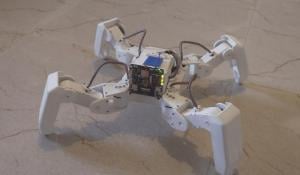
IntroductionA smart cute, friendly, intelligent robot pet. Desk companion, helps you in almost everything - reminding of medication, understanding behavior and emotion, helping in loneliness and anxiety, etc. Fully remote controllable with also sense of environment with Camera and AI model as brain for making…
By Biswa Pratik Parida
The Privacy-Centric Edge AI Station
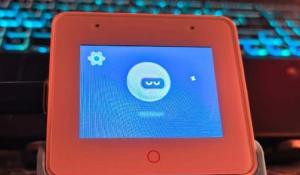
The S3 Private AI Station was developed to address the growing concern regarding data privacy in the ecosystem of smart home assistants. Traditional smart speakers rely heavily on cloud-based processing, which necessitates the continuous…

By Karthick Nagaraj
Bringing Knowledge to Life: Meet SmartLearn Avatar
SmartLearn Avatar is a revolutionary AI-powered educational ecosystem that breathes life into static study materials. By transforming PDFs, lecture notes, and web resources into a vibrant, dual-voice conversation, it provides…

By Nikhil A E
This project is a smart vault built on an Memento Programmable Camera Board that uses physical objects / items for two factor authentication (2FA). Instead of just relying on a standard username and password, the system requires a physical key to grant acces but rather than a metal key, it uses an everyday object like a coffee mug, a toy, or a keychain. When you want to…
By Krishna Chauhan
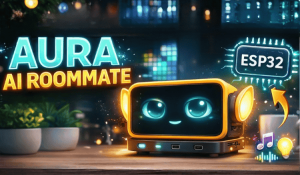
The Aura AI system is built on a Client-Server architecture that splits the workload between an Edge Device (the physical interface) and a powerful Python Backend (the brain).
1. Firmware (The Edge - aura_firmware.c) The code for the ESP32-S3-BOX-3 is written in C using the ESP-IDF framework. It handles real-time interaction with zero latency.
Wake Word…