

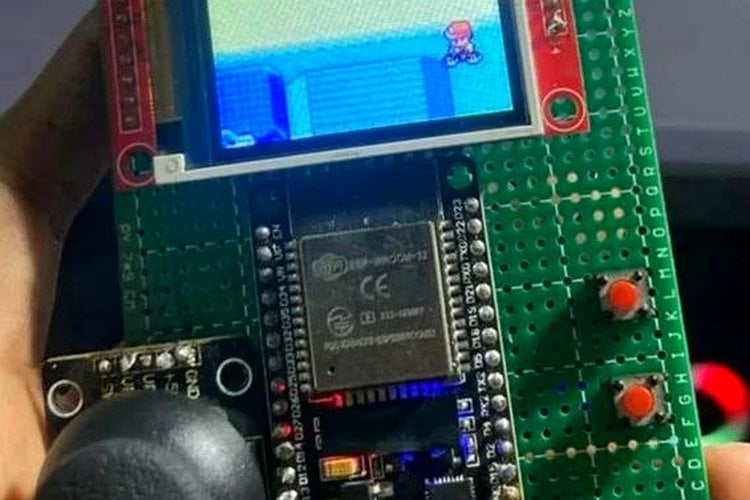
A leftover LCD does not have to stay in the parts drawer. Reddit maker Engineeroids turned a spare ST7735 and an ESP32 DevKit V1 into a from-scratch Game Boy emulator handheld that runs Pokemon, Zelda, Tetris and Contra. The post drew about 650 upvotes on r/esp32, and Hackster followed with a write-up on 5 Nov. Everything sits on a 7x9 cm perfboard: screen, analog joystick, two buttons and the DevKit, with no enclosure and USB power only.
Peanut-GB on Arduino
The firmware uses Peanut-GB, a small Game Boy emulator written in C99, built in C under the Arduino framework. That keeps the stack thin enough for a stock ESP32 without a custom gaming SoC. Engineeroids first tried loading ROMs from an SD card so several games could sit on the device at once. Small titles worked; larger ones failed. The reliable path for now is to flash one ROM into the ESP32's onboard flash. Save support and a custom splash screen are still on the to-do list.
The hardware is deliberately boring in the best way: SPI for the 160x128 ST7735, ADC for the joystick, GPIOs for the two face buttons. There is no battery management yet, so the handheld stays tethered to USB, which cuts the power-path work and leaves the focus on getting the emulator and display timing right.
Our take
Perfboard Game Boys are a useful calibration for anyone eyeing a custom handheld PCB. Prove Peanut-GB, the LCD and the controls on a DevKit first, then spend board spins on battery, buttons and case. If you want a related ESP32 retro-console path with a bit more structure, our ESP32 retro gaming console project walks through display and control wiring on the same class of board.
Image credit: Engineeroids / Hackster, cropped and resized.
About the author: Aswinth Raj is an electronics engineer and the editor of CircuitDigest, where he has published more than 150 hands-on projects and tutorials across Arduino, PIC, ESP32, Raspberry Pi and EV battery systems. He selects the stories on this page for what engineers and makers can actually learn or build from. Connect on LinkedIn

Add a comment
No account needed. Your comment appears once a moderator has reviewed it.