
By Sumit Shingane
Rural Primary Health Centers (PHCs) often face staff shortages, making continuous patient monitoring difficult, especially during night shifts. Critical changes in patient vitals such as Heart Rate (HR) and Oxygen Saturation (SpO2) can go unnoticed, leading to delayed medical intervention.
To address this challenge, I developed the Smart Ward Assistant, a low-cost, scalable patient monitoring system using ESP32 technology. The system consists of wearable vital monitoring tags for patients and a centralized smart hub at the nurse station. Patient vitals are monitored continuously and transmitted wirelessly to the hub, where alerts are generated instantly if abnormal conditions are detected. This system reduces manual workload, improves patient safety, and enables faster medical response in resource-limited healthcare environments.
Components Required
| Component Name | Quantity | Datasheet/Link |
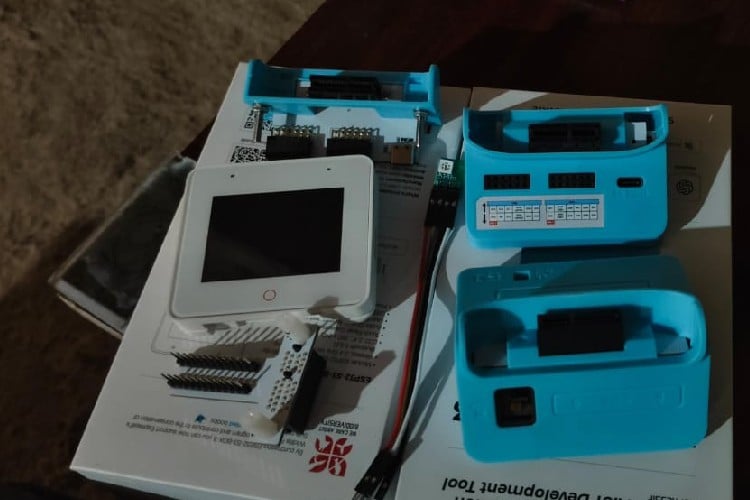
| ESP32-S3-BOX-3 | 1 | - |
Circuit Diagram
Smart Alert & Display Hub
Wearable Patient Tag Connections
MAXREFDES117 Bio-Sensor → ESP32
VCC → 3.3V
GND → GND
SDA → GPIO 21
SCL → GPIO 22
ESP32 Power
Powered via 3.7V Li-Po battery
TP4056 module used for battery charging and protection
Smart Hub (ESP32-S3-BOX-3) Connections
Built-in Touch Display used for configuration
Built-in Microphone & Speaker used for voice alerts
SD Card Module
CS → GPIO 10
MOSI → GPIO 11
MISO → GPIO 13
SCK → GPIO 12
External speaker connected for loud audio alerts (if required)
Hardware Assembly
Wearable Patient Monitoring Tag
Connect the MAXREFDES117 sensor to the ESP32 using I²C pins.
Connect the Li-Po battery to the TP4056 charging module.
Power the ESP32 from the TP4056 output.
Secure all components on a small PCB or perfboard.
Place the assembled circuit inside a compact enclosure suitable for wrist or finger mounting.
Smart Alert & Display Hub
Place the ESP32-S3-BOX-3 at the nurse station.
Connect the SD card module for data logging.
Connect an external speaker if higher volume alerts are needed.
Power the BOX-3 using a USB adapter.
Verify wireless connectivity with all wearable tags.

Add a comment
No account needed. Your comment appears once a moderator has reviewed it.