
featured

|
Schottky Diode – Characteristics, Parameters and Applications A diode is one of the basic components that are commonly used in electronic circuit designs; it can be commonly found in rectifiers, clippers, clampers and many other commonly used circuits. It is a two-terminal semiconductor device that allows the current flow in only one direction, that is, from Anode to Cathode (+ to -) and blocks the current flow in the reverse direction… |

|
IoT based Smart Irrigation System using Soil Moisture Sensor and ESP8266 NodeMCU Most of the farmers use large portions of farming land, and it becomes very difficult to reach and track each corner of the large land. Sometimes there is a possibility of uneven water sprinkles. This results in the bad quality crops, which further leads to financial losses. In this scenario, the Smart Irrigation System using the Latest IoT technology is helpful and leads to… |

|
Wireless Electric Vehicle Charging System (WEVCS) Nowadays, the world is shifting towards electrified mobility to reduce the pollutant emissions caused by nonrenewable fossil-fueled vehicles and to provide an alternative to pricey fuel for transportation. But for electric vehicles, travelling range and the charging process are the two major issues affecting their adoption over conventional vehicles. Wireless charging… |

|
Bluetooth Module Interfacing with ESP8266: Controlling an LED This comprehensive guide shows you how to interface the HC-05 Bluetooth module with the ESP8266 NodeMCU using Arduino IDE. Nowadays, Bluetooth has become an integral part of digital devices, and it comes built-in in most of the devices such as smartphones, laptops, PC, cameras, Watches, Fitness Bands and many more. Bluetooth has always been the dominant protocol in wireless… |

|
Interfacing Vibration Sensor Module with Arduino There are several critical machines or expensive equipment which suffer damage due to vibrations. In such a case, a vibration sensor is required to find out whether the machine or equipment is producing vibrations or not. Identifying the object which is continuously vibrating is not a tricky job if the proper sensor is used to detect the vibration. There are several types of… |
|
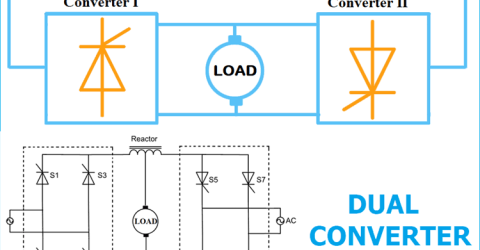
An Overview of Dual Converters In the previous tutorial, we saw how a Dual Power Supply Circuit is designed. Now, we learn about Dual Converters, which can convert AC to DC and DC to AC at the same time. As the name suggests, Dual Converter has two converters, one converter works as a rectifier (Converts AC to DC) and the other converter works as an inverter (converts DC into AC). Both converters are… |

|
What is JFET: Its Construction, Working and Biasing Techniques JFET is a Junction gate field-effect transistor. A normal transistor is a current-controlled device which needs current for biasing, whereas a JFET is a voltage-controlled device. Similar to MOSFETs, as we have seen in our previous tutorial, JFET has three terminals: Gate, Drain, and Source. JFET is an essential component for precision-level voltage… |
|
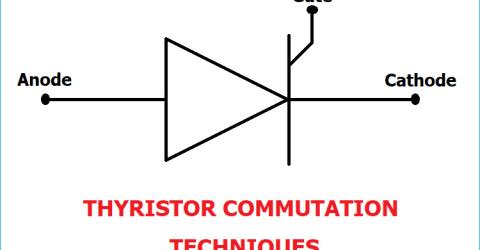
Thyristor Commutation Techniques To turn on a Thyristor, there are various triggering methods in which a trigger pulse is applied at its Gate terminal. Similarly, there are various techniques to turn off a Thyristor; these techniques are called Thyristor Commutation Techniques. It can be done by bringing the Thyristor back into the forward blocking state from the forward conduction state. To bring the… |
|
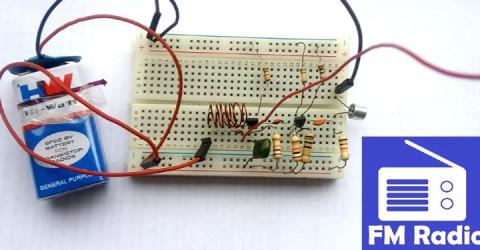
How to Build FM Transmitter Circuit One of the cool projects I always wanted to build is an FM transmitter with a good range. I have always been fascinated by some of the applications of the transmitter, especially when I was younger and, like everyone else, spent most of my time imagining how cool it would be to have some of the equipment and devices used in spy movies. So recently, while going over one of my… |
|
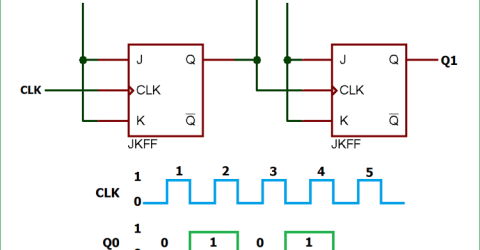
Asynchronous Counter An asynchronous counter (or ripple counter) is a sequential digital circuit in which the outputs of flip-flops are connected in series, so that the output of one flip-flop serves as the clock input to the next stage. Not all flip-flops may change state at the same time as synchronous counters, so asynchronous counters are easier to design but may experience propagation delays. Table of… |

|
Automatic Water Dispenser using Arduino This tutorial describes how to make an automatic water dispenser from Arduino and an ultrasonic sensor. This tutorial describes how to make an automatic water dispenser using an electronic diagram, a code snippet, a list of things, and a demonstration of how to make your water dispenser work. Table of Contents Why Build an Automatic Water Dispenser? Components… |
|
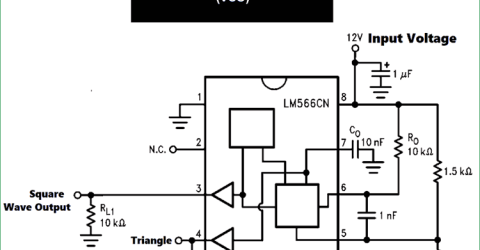
Voltage Controlled Oscillator (VCO) Most of the consumer electronic devices around us, such as mobile phones, TVs, Radios, and MP3 players, are a combination of Digital and Analogue electronics. Wherever wireless transmission/reception, or audio signals are involved in an electronic design, we will need periodic oscillating electronic signals. These signals are called Oscillating signals and are very useful in… |
