
arduino tutorial

|
DS3231 RTC (Real Time Clock) Interfacing with Arduino to build DIY Digital Clock In the digital world today, being able to accurately tell time is crucial for various embedded systems, IoT devices, and automation projects. The DS3231 RTC module is the most accurate and reliable real-time clock module to use in your Arduino projects. Unlike low-end timekeeping ICs found in basic timekeeping devices, the Arduino real time clock DS3231 features a temperature-… |

|
How Does the TCS3200 Color Sensor Work and how to Interface it with Arduino? A color sensor is a simple, and easy-to-use device that can be used to identify the color of an object and after detecting the color, appropriate action can be triggered. This type of sensor provides easy solutions for sorting and packaging in an industrial environment while expensive sensors are used in industries, the economical ones such as TCS3200 can be used for… |

|
How Does the Pulse Sensor Work and how to Interface it with Arduino? In one of our basic projects, we have shown you how you can interface a MAX30102 Pulse Oximeter and Heart Rates Sensor With Arduino, but one of the major problems with that sensor is its inconsistency, and lack of support for Arduino IDE which is why in this article we thought to use a simple pulse sensor to measure the heartbeat. This pulse sensor is a well-designed… |
|
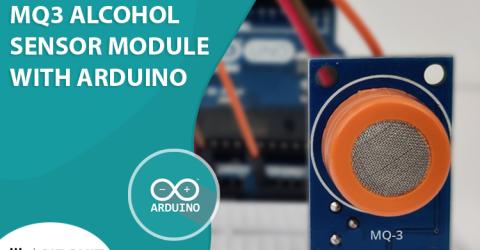
How Does MQ-3 Alcohol Detector Work with Arduino and detect Alcohol? Sensors now play an essential role in the safety and security of a wide range of flats, houses, and businesses by detecting smoke, fire, or gas and alerting the appropriate person. Today's post will discuss one such Sensor, the MQ-3. The MQ-3 is Alcohol Sensitive Sensor that is often used in a breath analyzer. So, let's jump right into it. MQ-3 Alcohol Sensor… |

|
Interfacing NTC Thermistor with Arduino Thermistors are simple, inexpensive, and accurate components that make it easy to get temperature data for your projects. Thermistors or THERMally sensitive resISTORs are variable resistors, whose resistance will be changed with the temperature. This feature enables us to read the temperature or change in temperature by… |
|
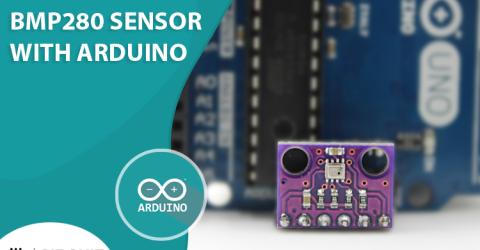
BMP280 Sensor Module Working and Arduino Interfacing Guide In many of our previous articles, we have used many different types of temperature and humidity sensors like DHT22, DHT11, DS18b20, and LM35 to measure environmental parameters. In every one of those articles, the one thing in common is that none of those sensors measure barometric pressure. So in today's article, we wanted to interface the BMP280 with an Arduino and measure… |
|
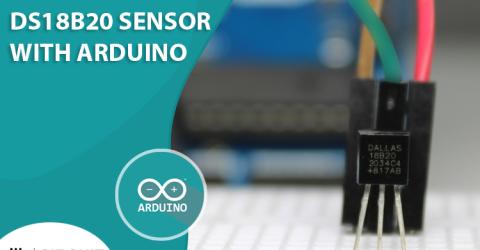
How Does a DS18b20 Temperature Sensor Work and how to Interface it with Arduino? In one of our previous tutorials, we have shown you how you can interface LM35 Temperature Sensor with Arduino because it's cheap, easy to use, and requires minuscule power for stable operation. But one of the major disadvantages of the LM35 sensor is that it is analog in nature, so it's sensitive to external noise. There are a variety of sensors that may be used to solve… |

|
How Does a Sound Sensor Work and how to Interface it with Arduino?
A sound sensor is a simple, easy-to-use, and low-cost device that is used to detect sound waves traveling through the air. Not only this but it can also measure its intensity and most importantly it can convert it to an electrical signal which we can read through a microcontroller. But do you know how… |
|
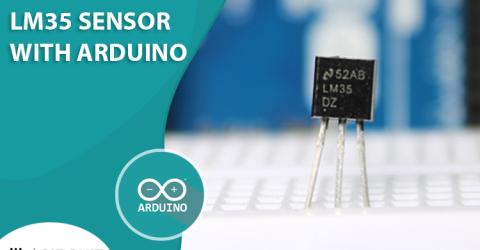
How Does a LM35 Temperature Sensor Work and how to Interface it with Arduino? If you are looking for an inexpensive, accurate, easy-to-use temperature sensor, then LM35 is an excellent choice. It has an accuracy of ±¼°C at room temperature and ±¾°C over a full −55°C to 150°C temperature range. It does not require any external trimming, although the main drawback of this sensor is that it outputs data in analog format, making it … |

|
Interfacing Hall Effect Sensor Module with Arduino A Hall effect sensor or Hall sensor is a magnetic non-contact sensor that generates an electrical signal proportional to the magnetic field applied to it. Hall effect sensors are widely used in industrial applications like current-sensing, position detection, and contactless switching. They are basically like a small reed switch, and when a magnetic field is around, the… |
|
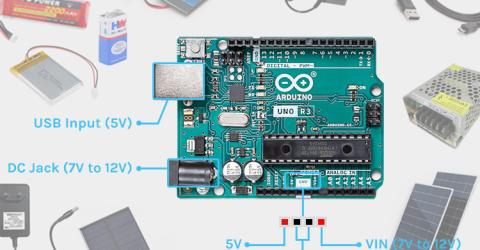
Different Ways to Power Your Arduino Boards We use Arduino boards in many of our projects. Most of the time we will power it through the USB port. But, that’s not the only way to power an Arduino. In this article we will learn about the four different ways to power an Arduino UNO board. While making any projects, knowing these techniques will be handy in instances when flexibility with regards to the power supply is required. 1… |

|
How Does a Rain Sensor Work and how to Interface it with Arduino? When it comes to detecting certain changes in weather conditions, it's pretty unpredictable, and rainfall is one of the most unexpected parameters of weather. So in this article, we decided to Interface the Rain Sensor with an Arduino. The raindrop sensor also known as rain detector sensor is an easy-to-use device that can detect rainfall. It acts as a switch when… |