

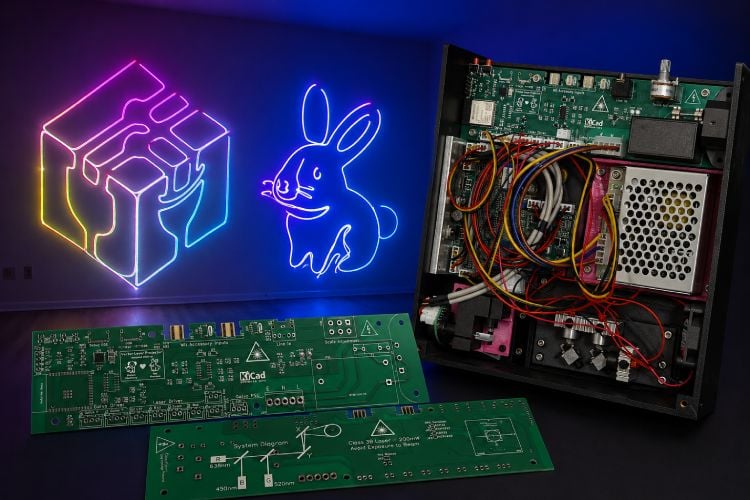
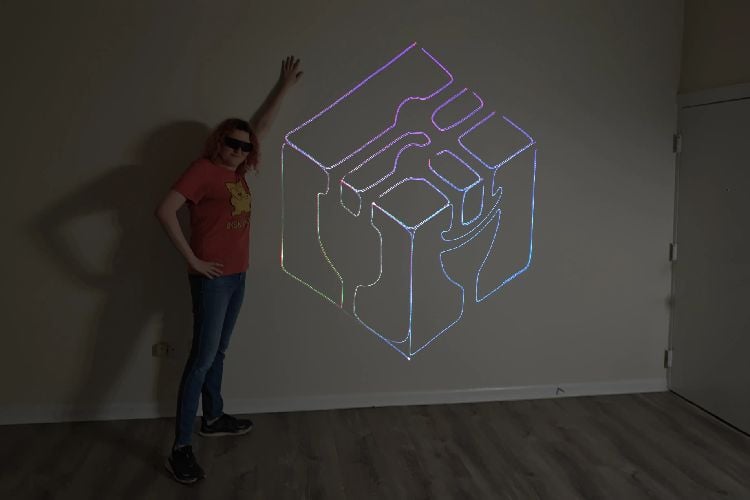
A new DIY laser projector project from breq.dev is getting attention in the maker community for mixing old-school vector graphics with modern embedded hardware. Built by Brooke Chalmers and Mia Kiesman, the system uses a pair of galvanometer mirrors to steer RGB laser beams and draw graphics directly in the air. Instead of using a normal display panel, the projector creates smooth vector-style images similar to classic arcade machines and oscilloscopes. An ESP32 handles the control side, while Wii Nunchucks and audio input support add interactive features and music visualisation.
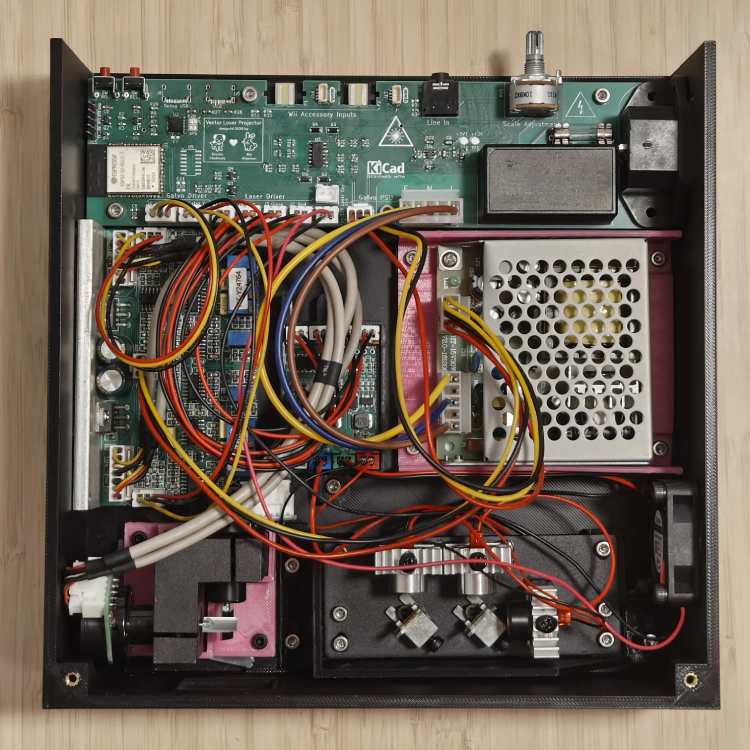
What makes the project stand out is how approachable it feels despite the complexity behind it. The creators explain the design process in a very open and practical way, covering everything from DAC choices and laser safety to PCB routing and enclosure design. The build combines custom PCBs, 3D printed parts, Rust firmware, and inexpensive galvo hardware to keep the overall cost lower than commercial laser systems. The write-up also shares the problems they faced during assembly, especially with fine-pitch USB-C connectors and surface-mount soldering, which gives the project a very real hobbyist feel instead of reading like a polished commercial product.
The projector is capable of more than simple shapes. The firmware can display SVG artwork, maps pulled from OpenStreetMap data, oscilloscope music visuals, and even a playable version of Asteroids. One of the more interesting touches is the support for external audio signals through a 3.5 mm input, allowing the projector to behave almost like a giant laser oscilloscope. The team also experimented with both the ESP32’s internal DAC and external DAC options, showing how much performance can still be achieved with affordable parts and clever software tuning. Projects like this continue to show why the hardware community remains so active online. Instead of hiding the difficult parts, the creators documented the entire process, including failed ideas, tuning challenges, and safety concerns around high-power lasers. The result is not just a flashy demo, but also a detailed learning resource for people interested in embedded systems, motion control, optics, PCB design, and firmware development. The full project files, firmware details, and hardware breakdown are available on the project page for anyone wanting to explore further.